



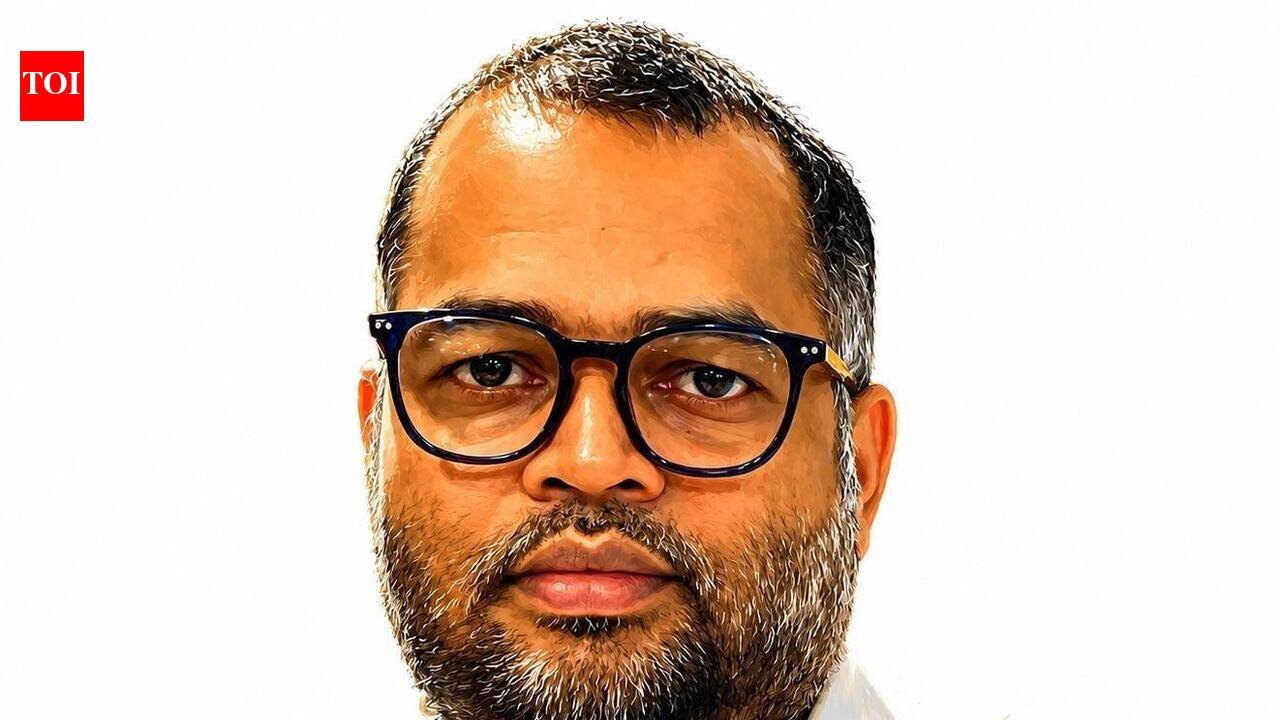
Mangaluru: Pradeep Kenchanuru, who won the National Award for his book ‘Naaniruvude Nimagaagi Naadiruvude Nanagaagi: Kannada Cinemada Thathva Matthu Rajakeeya,’ at the 72nd National Film Awards, said that now he plans to explore post-2000 films and independent cinema in the state.Pradeep Kenchanuru received the honour which carries the Swarna Kamal and a cash prize of Rs 1 lakh.He is from Kenchanuru in Byndoor taluk, and is a lecturer of history at the Govt PU college in Sullia. He holds a PhD from Hampi Kannada university.He said that since 2000’s due to many reasons, there has been a surge of new phenomena of Kannada cinema, and that he wants to discuss and write about it.Speaking about “Naaniruvude Nimagaagi Naadiruvude Nanagaagi: Kannada Cinemada Thathva Matthu Rajakeeya,” Kenchanuru said the book was driven by a desire to raise critical questions rather than offer definitive conclusions. “My intention was not to arrive at fixed answers, but to pose serious questions,” he said.The book emerged from his study of Kannada cinema across different periods, genres, and filmmakers, while examining the relationship between cinema and society. He emphasised that questioning this relationship is central to understanding cinema.One of the key concerns in his work, he said, is the idea of Kannada cinema itself, including whether it adequately represents the cultural and geographical diversity of Karnataka. He pointed out that mainstream Kannada cinema often reflects a specific regional culture, raising questions about broader representation.Meanwhile, Kenchanuru also pointed to the lack of a strong institutional base for film studies in Karnataka. He noted that there are very few dedicated departments or structured academic programmes, and much of the existing literature focuses on compilation rather than critical analysis.He also expressed concern over the broader decline of the humanities, noting that access to serious academic training is increasingly limited, and often confined to urban institutions.On contemporary cinema, Kenchanuru said politics in films should not be reduced to electoral themes alone.Instead, cinema must engage with everyday power structures such as caste, gender, and social hierarchy. “Politics begins in the kitchen,” he said, adding that mainstream films often reinforce patriarchal and caste-based norms rather than challenging them.


