








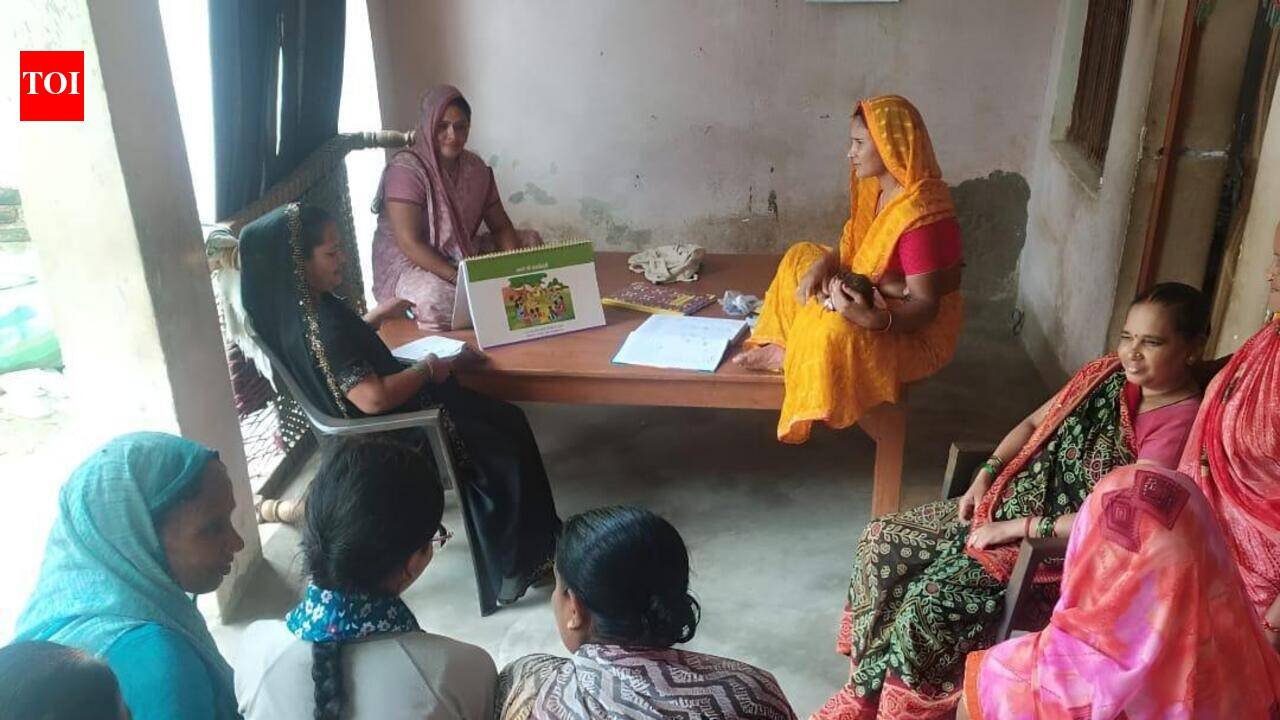
Prayagraj: As a part of efforts towards strengthening rural health infrastructure, ‘Swasthya Sakhis’ (health companions) have been selected for healthcare services in villages. They have been given the tasks to bring improvements in health, nutrition, hygiene and gender-related awareness.In rural areas, women often conceal their illnesses due to a lack of awareness and hesitation. To address this, Swasthya Sakhis act as a bridge between the health department and local women by taking on the responsibility of monitoring and spreading health awareness.Deputy commissioner (NRLM), Shama Singh, said, “Under the State Rural Livelihood Mission, women from self-help groups have been roped in as ‘Swasthya Sakhis’ to make healthcare services accessible and effective in rural areas. In Prayagraj district, as many as 1,208 women from different SHG groups have been entrusted with the responsibility.”Eligible women were selected through a transparent process and a written examination at the block level. Selected candidates were imparted specialised training in maternal and child health, first aid, nutrition and immunisation, enabling them to spread health awareness across rural belts of the district.Swasthya Sakhis are members of the self-help groups based in the very village where they operate. Consequently, women can speak to them about issues like physical ailments, pregnancy-related complications and menstrual hygiene without hesitation and share their health concerns freely.Swasthya Sakhis are functioning as a strong link between rural families, ASHA workers, ANMs and nearby health centres, said Singh. Their key responsibilities include ensuring timely check-ups and proper nutrition for pregnant women in the village; encouraging institutional deliveries and facilitating the transport of women to primary and community health centres (CHCs) for childbirth; conducting regular screenings for basic health parameters—such as blood pressure and anaemia—using primary health kits; and coordinating with Anganwadi workers and ANMs to ensure routine infant immunisation and the prevention of malnutrition.Additionally, Swasthya Sakhis are also tasked with linking every pregnant woman to govt welfare schemes and arranging immediate hospital transport via ‘102’ or ‘108’ ambulance services in cases of childbirth or sudden illness.‘Swasthya Sakhis’ play a vital role in strengthening and expanding healthcare services in trans-Ganga and trans-Yamuna areas. They receive an honorarium based on their work, helping them to elevate their social and economic status.District mission manager (Prayagraj) Viraj Singh explains that Swasthya Sakhis are not required to work all 30 days of the month. They work for a minimum of 10 days, for which they receive a daily honorarium of Rs 200.Sarita Pal, a Swasthya Sakhi from Madhopur village in Soraon block, says she utilises the spare time left after household chores to perform her duties as a Swasthya Sakhi, with which she earns a monthly honorarium of up to Rs 2,200. She uses this amount for her household needs.Sonam, a resident of Dudi Bagh village in Phulpur, shares that helping village women in this role has given her a new identity in the village and neighbourhood. She commands greater respect, and the honorarium helps manage the household budget.


