





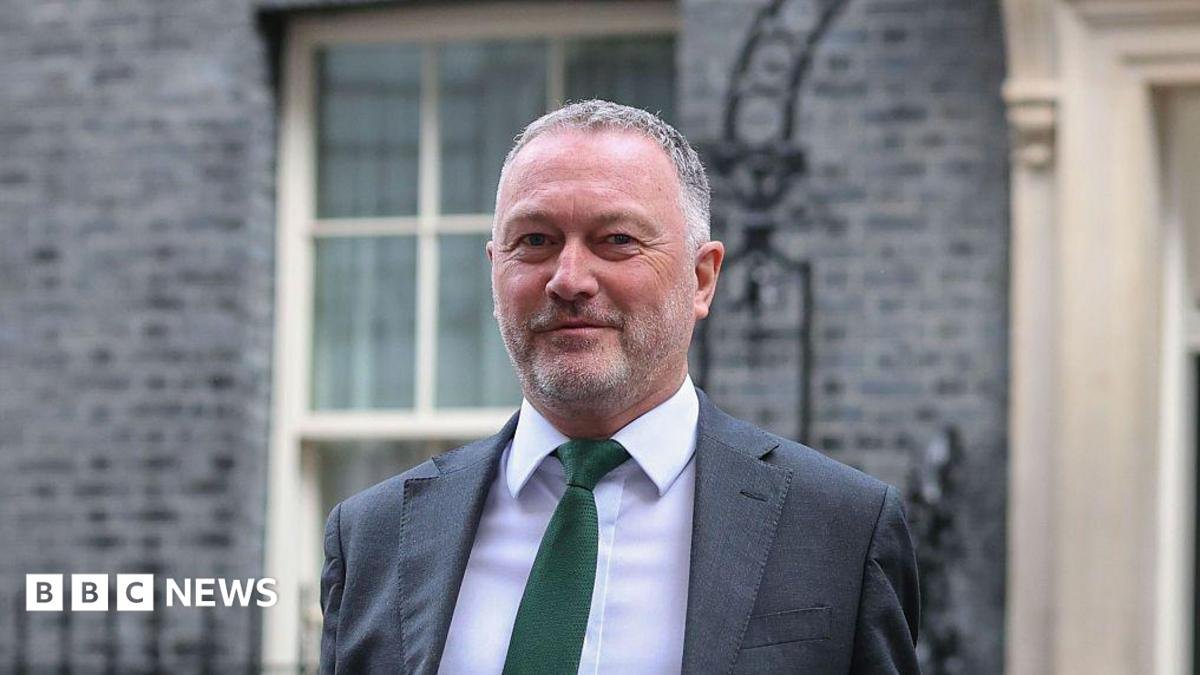
Steve Reed, secretary of state for housing, communities and local government, said replacing the current “inefficient” system would deliver savings by reducing “wasteful” duplication and improving public services.
“Some of our smaller cities are highly productive, but have been constrained by tight boundaries, set decades ago, which stop them from building the homes they need,” he said.
“Others are more rural, with significant demand for social care services and affordable housing. Local government should be set up to address the unique circumstances of each area and design public services tailored to each community.”
The government is facing legal challenges over previously announced proposals to reorganise councils in Essex, Hampshire, Norfolk and Suffolk.
James Cleverly, the shadow secretary of state for housing, communities and local government, accused the government of reorganising councils for political gain.
“These top-down changes are purely partisan,” he said.
“Steve Reed is once again fiddling with democracy. His legacy will be one of taking power away from local communities, imposing an unfair funding review on councils, and gerrymandering local government for party political advantage.”
The Liberal Democrats said the proposals had created “chaos” and “uncertainty”, leaving many communities “arbitrarily divided” and feeling “done to not done with.”
Reed claimed the majority of the proposals had “cross-party support” and were the best option to deliver economic growth.
The reorganisation of local government is key to the government’s devolution agenda.
It wants to create new council structures followed by more regional mayors – which are central to Andy Burnham’s plans to devolve powers out of Whitehall in the hope of driving “good growth in every postcode.”
The government says elections to the new councils will take place next May, with the authorities being up and running by 2028.
There have been concerns about the pressure the timescale will put on already stretched councils.
Sean Matthews from the County Councils Network said: “With unprecedented levels of splitting services and boundary change, this approach will inevitably end up costing local taxpayers more while causing greater fragmentation and upheaval to services for the most vulnerable – with new rural councils potentially most exposed to significant additional costs and service risks.”
Cllr Richard Wright, chair of the Local Councils Network, said district and county councils should “pull together” to make a success of the reorganisation.
“By overcoming past divisions, we can build a new local government which puts people at the centre of everything we do and facilitates a transformation of the local public sector,” he said.
He added that while in many cases the new councils represented a fair compromise, decisions would not be universally welcomed everywhere.
During a debate in the House of Commons, some Labour backbenchers expressed concern about the impact in their areas.
Jo White, MP for Bassetlaw, said the proposals for Nottinghamshire and Nottingham – which would see existing councils replaced by two unitary authorities – would not “solve the problems left-behind communities have experienced.”
The government has set aside funding to help authorities manage the transition, saying there would be more than £1m for each new council.


