



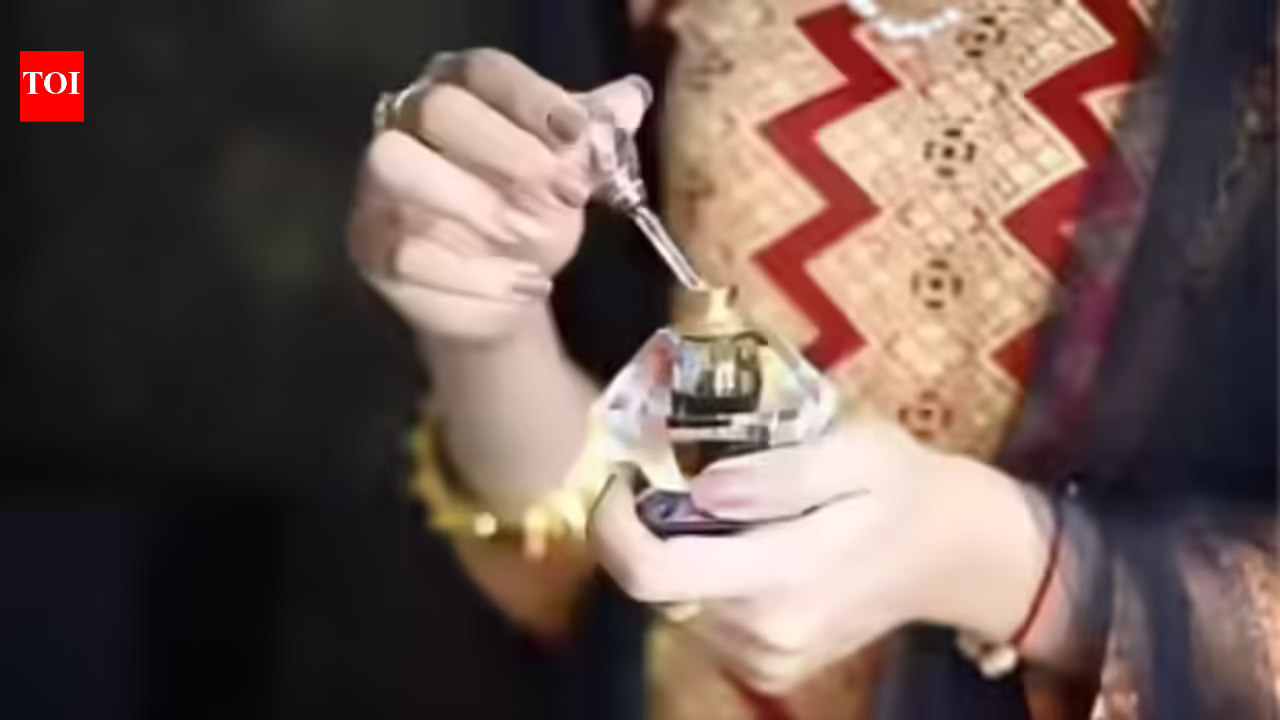
New Delhi: In the fragrant lanes of Kannauj—India’s undisputed perfume capital—third-generation ittar maker Dheeraj Saini stands amid stacks of unsold essences: kewra, khus, mitti, gulkand and rosewater. His family firm, Lala Pragdutt Kamta Prasad Perfumers, has produced fragrances since 1909. But this Ramadan–Eid season, the usual rush of Gulf-bound consignments has stalled as tensions across West Asia—particularly between Iran and Israel—disrupt cargo routes and freight movement.Kannauj’s fragrance industry—valued at over Rs 1,200 crore and sustaining livelihoods for a large share of the district’s population—is facing a difficult festive season. The core ittar trade alone is estimated at around Rs 600 crore annually, with exports worth Rs 50–60 crore.Exporters say a majority—nearly 35–45% of these exports—typically occur during Ramadan–Eid, when shipments usually double.Fragrances are widely bought for prayers, gatherings and gifting during this time.This year, however, distilleries that prepared months in advance are sitting on unsold stocks amid freight disruptions and uncertain cargo routes.“Export work has stopped for now,” said Alam Qureshi of Perfume Square, whose business supplies Gulf markets such as the UAE, Oman and Saudi Arabia, major buyers of oil-based, alcohol-free perfumes widely used during Ramadan.According to UN Comtrade, India exported about $228 million worth of perfumes in 2023 (aroundRs1,880–₹1,900 crore), with Gulf countries among key markets.Exporters say buyers in Dubai have paused orders as shipping routes and supply chains remain uncertain. The trade depends heavily on global supply networks, with fragrance ingredients moving through hubs like Dubai and France’s perfume centre, Grasse. “French fragrance chemicals usually reach us through Dubai. With the current situation, shipments have been affected,” Qureshi said.Manufacturers are also battling rising costs. “Every input—from flowers to packaging—has become expensive,” Saini said, noting petroleum-based perfumery derivatives that earlier sold for aboutRs160 per kg now exceedRs200. Traditional attars are produced using the centuries-old deg-bhapka hydro-distillation method, which requires firewood. “Babool wood has become costly and labour expenses have also increased,” he said.The Kannauj cluster includes around 650 perfume and allied units, exporting to 50+ countries and sustaining tens of thousands of livelihoods, from flower farmers to distillery workers and packagers.Rinku Siddiqui of the Indian Fragrance Firm, selling Ittar for nearly five decades, said, “Exports usually move through ships. When ports face disruptions or freight costs increase, trade slows down. Some raw materials, like oud and other fragrance ingredients, are also sourced from abroad, so supply delays affect production.”With container freight rates to West Asia rising sharply—in some cases by 200–300% due to war-risk and fuel surcharges—India’s Directorate General of Shipping on March 11 asked carriers to avoid “predatory and opportunistic pricing” after exporters complained of steep hikes.“Orders worth crores prepared for Ramadan and Eid markets in the Gulf are stuck as buyers delay shipments due to freight disruptions and payment uncertainties,” said Pawan Trivedi, president of the Kannauj Attar Business Association.Even so, parts of the industry that rely on local raw materials and sell in domestic markets say they are somewhat shielded from supply disruptions. “We use locally sourced flowers and materials for traditional attars,” said Vipin Mishra of the Ittar Business Association. “But when export demand slows, the entire market still feels the impact,” he added.According to economist Prof. Sanatan Nayak of Babasaheb Bhimrao Ambedkar University, exports from sectors such as perfumes, leather goods, handicrafts and carpets rely heavily on Gulf markets under the One District One Product initiative.“The West Asian conflict has disrupted routes and raised freight costs, leading to cancellations of orders. There is a 40–50% decline in exports to Gulf countries,” Nayak said, adding that the country must diversify its markets.For perfumers like Saini, the timing could not be worse. “Eid is when our sales usually peak,” he said. “But demand is uncertain this year, and ittar cannot be produced overnight.”In Kannauj’s distilleries, where copper stills usually run day and night ahead of Eid, many producers are now waiting—hoping global tensions ease before the industry loses its most important season.


