



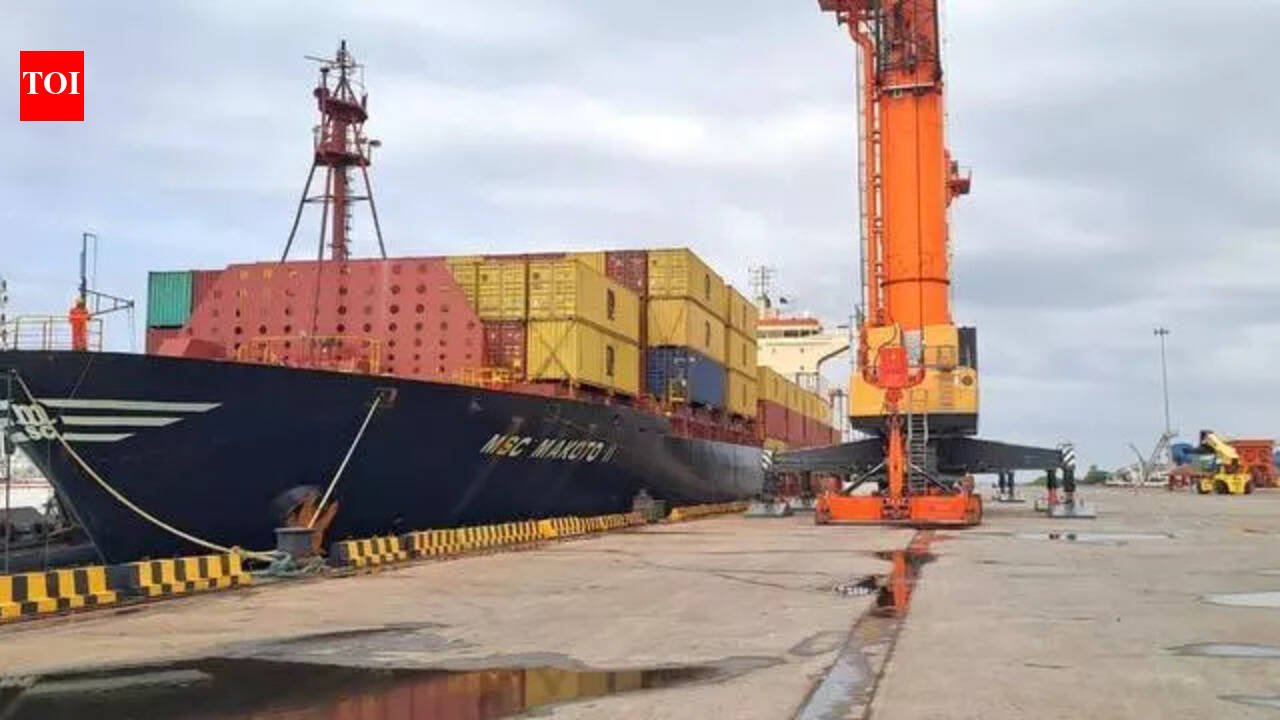
Mangaluru: In the wake of the crisis in West Asia, cargo movement linked to crude oil and LPG has witnessed a noticeable decline at New Mangalore Port, though sources said the overall impact is still limited.New Mangalore Port Authority (NMPA) sources said traffic related to crude oil and LPG dropped by nearly 30-40% compared to usual levels. However, the reduction was not uniform across all sectors. “There was definitely an impact. The numbers were reduced compared to regular days. The main impact was seen in crude oil and LPG,” the source said. Officials explained that the movement of crude oil cargo is determined by several factors, including refinery processing capacity and demand from the hinterland. At present, crude oil received at the port is mainly transported to MRPL for refining, before being supplied to different parts of the state. The process involves several stakeholders and is influenced by multiple logistical and market factors. An official added that the port also began receiving cargo from alternative sources, which could help balance the temporary decline in crude movement. Industry competition also plays a role in cargo flows. Major energy companies such as Reliance, Nayara Energy, HPCL and BPCL operate their own refineries in different states and import crude oil directly for their facilities. Another key factor influencing crude import is govt policy. Earlier, MRPL used to source a significant portion of its crude oil from Russia. “MRPL is now sourcing crude from other countries such as the US, Venezuela and Nigeria. Each type of crude oil has distinct characteristics, and not every refinery is equipped to process all varieties,” a source said. “Traditionally, MRPL has relied on crude imports from Middle Eastern countries such as Qatar, Saudi Arabia, Kuwait and Iraq,” the source added. LPG cargo movement is indirectly linked to crude oil processing, as LPG is a by-product produced during the refining process. So, when crude processing changes, LPG movement is also affected. Also, refineries maintain sufficient storage and backup reserves to manage fluctuations. Apart from crude and LPG, most other cargo segments at the port remained largely unaffected, with shipments of coal and iron ore continuing as usual. However, exports to Middle Eastern countries saw some disruptions, sources said.


