



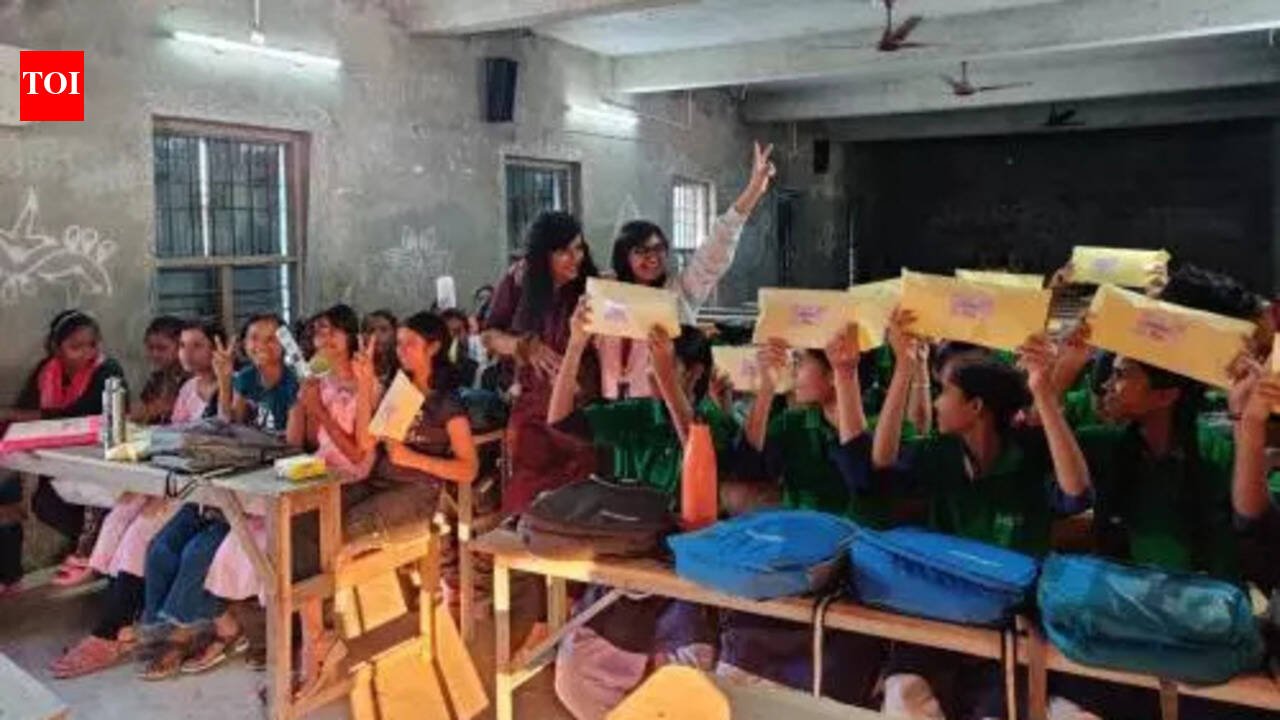
Udupi: A group of engineering students from Manipal Institute of Technology (MIT) launched ‘Project Ecosanitation’, an initiative to create awareness about menstrual health, while promoting sustainable hygiene practices.The initiative was founded by Sristi Bose, who was inspired to start the project after noticing the stigma and lack of awareness surrounding menstruation in many communities. She said that during school outreach programmes at Jamshedpur, she observed that several girls were frequently absent during their menstrual cycles. “At first, I thought the reason might be financial difficulties, but when I asked teachers, I learnt that many girls simply stayed away from school during their periods,” she told TOI.The issue became clearer when she visited rural and tribal areas during the outreach programmes. “We came across women who did not use sanitary napkins and often relied on traditional practices due to social taboos and lack of awareness. In several communities, menstruation is still considered a taboo subject. Many women hesitate to talk about it openly, and some are not aware of the biological process behind menstruation. During our sessions, we explain what periods are, why they happen, and why menstrual hygiene is important,” Sristi said.She also noted that in many schools, boys are often asked to leave the classroom during lessons on menstruation, creating a sense of discomfort and misunderstanding. “It is important for boys as well to understand menstruation, and we are now exploring ways to conduct joint awareness sessions for both boys and girls.”During their campaigns, students also address related health issues such as polycystic ovarian syndrome (PCOS), and polycystic ovary disorder (PCOD). “In almost every session, we find two or three girls who relate to the symptoms,” Sristi said.The team is also working on developing biodegradable sanitary napkins made from natural materials like bamboo and hemp. The project already produced its first prototype, and the team plans to develop a second version within the next six months.The start-up is incubated at MAHE and is part of the beVisioneers: The Mercedes-Benz Fellowship programme. Once funding support is secured, the team plans to establish small-scale production units in villages where campaigns have been conducted, employing local women to manufacture and distribute sanitary pads at affordable prices. The core members include Urja Srivastava head, Mumbai chapter and Bhavana Peri, head, Hyderabad chapter. Since its first campaign in West Bengal in Dec 2024, the initiative organised eight awareness drives across Maharashtra, Telangana, West Bengal, Jharkhand, Rajasthan, Bihar and Karnataka. “We are all engineering students and our fields are very different, but we are driven by the impact this work can create,” Sristi said.Urja Srivastava, said the community responses vary across regions. “In cities like Mumbai, people are more open to asking questions once they find a safe space. In some rural areas, there is still hesitation,” she said.


