



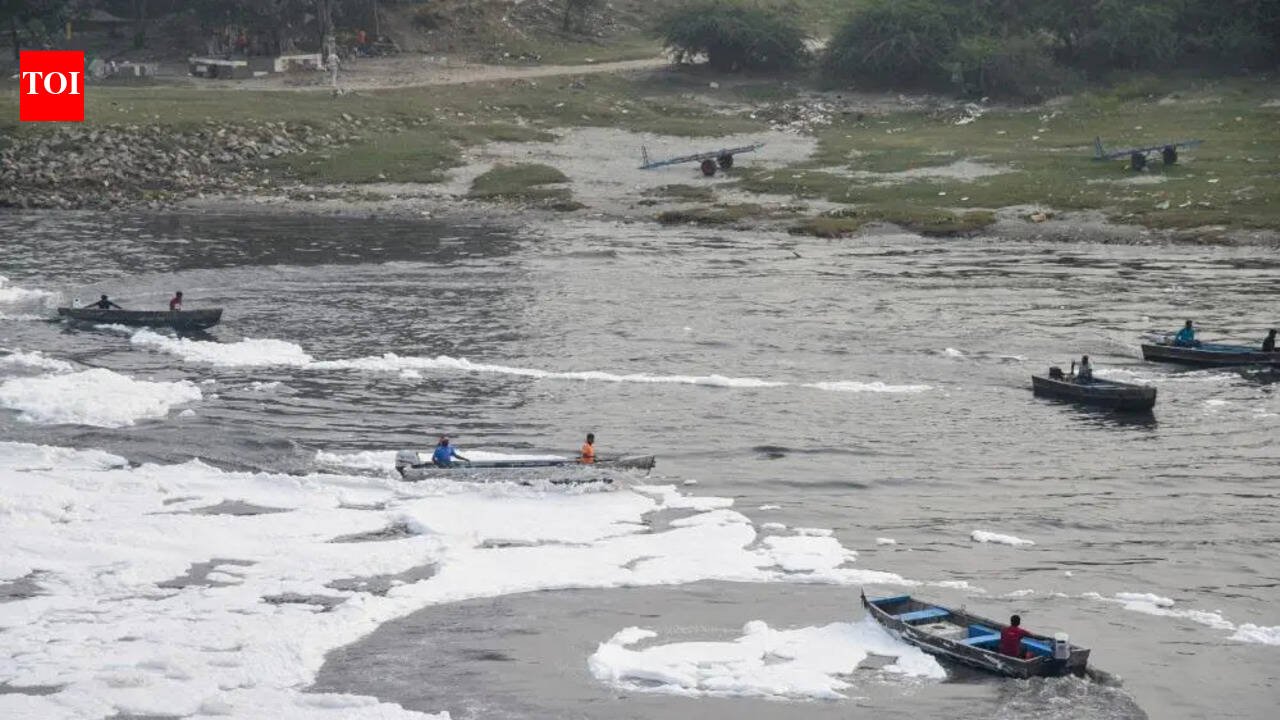
New Delhi: The pollution load in the Yamuna shot up this March compared to two months prior, according to Delhi Pollution Control Committee’s (DPCC) monthly analysis. The water quality, however, is better than it was in March 2025.According to the analysis, peak faecal coliform level in March at Asgarpur — 400,000 MPN/100 ml — was nearly four times that of Feb. But it was significantly lower than 1,300,000 MPN/100 ml in March last year.The trend and location of the pollution spikes, however, remain the same, with an increase seen at ISBT bridge after the confluence of the Najafgarh drain, which accounts for over 80% the river’s pollution in Delhi, and later at Okhla barrage.The rise is significant between Wazirabad and ISBT bridge — where the Najafgarh drain meets the river. At Wazirabad, the fecal level was 4,300 MPN/100 ml, which increased at ISBT bridge to 160,000 units — a 37-time spike in pollution load.A significant increase in ammoniacal nitrogen, biochemical oxygen demand (BOD), chemical oxygen demand (COD) and dissolved oxygen (DO) was also seen between the two locations.Fecal coliform is an indicator of untreated sewage, while BOD indicates the level of oxygen required to decompose biological matter. Dissolved oxygen (DO) is an indicator of life in the river. The safe limit for fecal coliform is 2,500, and the desired level below 500 MPN/100 ml. BOD levels must not exceed 3 mg/l for bathing standards, and DO must be above 5 mg/l.The best DO this March was at Palla – where river enters Delhi, at 4 mg/l.Activists have raised questions regarding the improvement. “If we talk about the Najafgarh drain, the BOD was 65 in Feb and 60 in March, which means the pollution load has dropped but data shows that the river is far more polluted now than it was in Feb,” said environment activist Pankaj Kumar, from Earth Warrior.“DPCC’s latest monthly Yamuna water quality test report only reconfirms that a great river continues to be ecologically dead and is functioning like a toxic sewage canal,” said Bhim Singh Rawat from South Asia Network on Dams, Rivers and People (SANDRP). “It is totally unfit for any kind of use and this has grave health implications,” he said.“That fecal coliform levels are six times higher even at Palla shows that untreated effluents are entering from Haryana and contaminating potable water supply in Delhi,” he added. “Overall, it underlines the abysmal failure of pollution prevention, control mechanisms as fundamental flaws continue to plague the treatment infrastructure in the city.” He added that the river’s flow is almost similar to last year, ruling out improvement due to dilution.


