



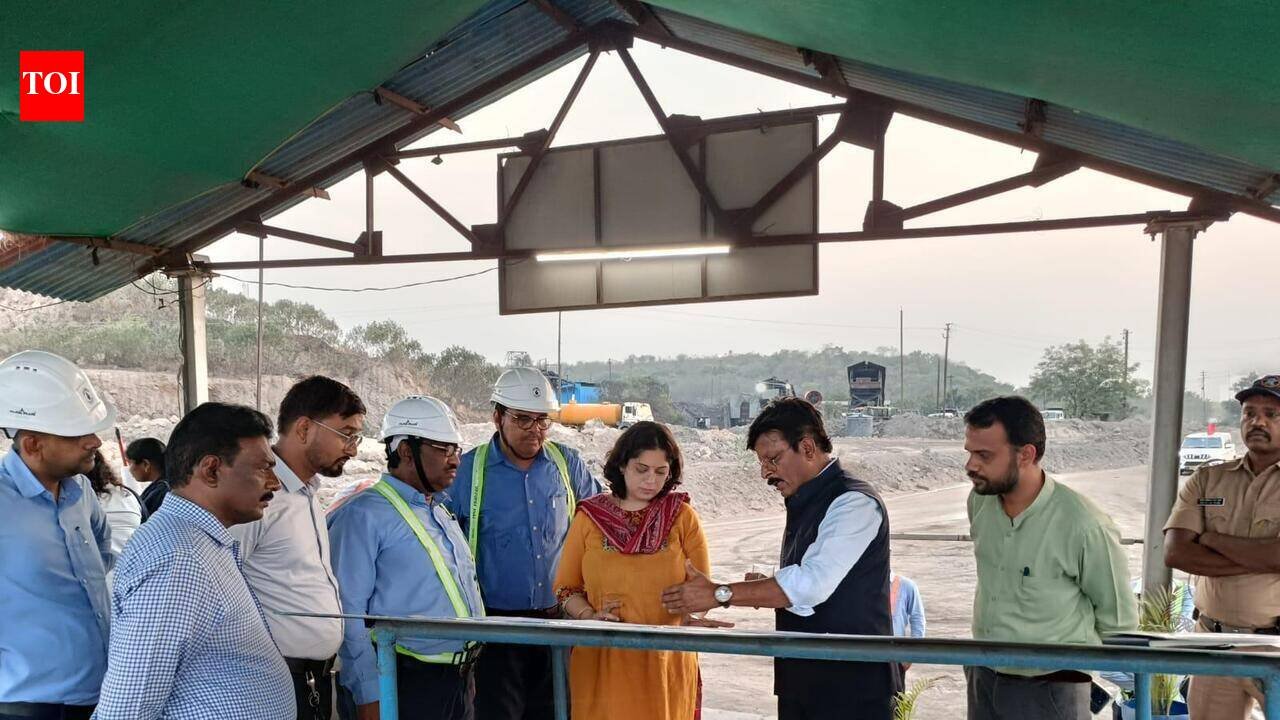
Nagpur: What happens to a coal mine after the coal is gone? In Chandrapur, the answer could be surprisingly different from the usual mine-closure story. Instead of leaving behind excavated land and water-filled pits, district administration wants to turn its mining legacy into eco-tourism destinations, fish farms, green spaces and livelihood hubs.The vision — which could offer a template for repurposing exhausted mine areas elsewhere in the country — was presented by Chandrapur collector Vasumana Pant to Union minister for coal G Kishan Reddy. “The administration has identified Murpar, Lalpeth, Ghugus and WCL Colony area for different forms of redevelopment, with the focus on combining ecological restoration with tourism and local employment,” Pant told TOI.The next step, however, depends on a nod from the Western Coalfields Limited (WCL) chairman-cum-managing director, with the district administration now waiting to take the proposals forward.The most ambitious idea is at Murpar, where the administration wants to create a green eco-tourism and livelihood hub. Rather than treating the former mining area simply as land requiring reclamation, the proposal seeks to make it a destination in its own right.“The plan includes nature trails, viewpoints, agroforestry and herbal gardens, rural stays, community homestays and a market for local products. Existing facilities such as site office, canteen and dormitories could be renovated and reused,” said Pant.Then comes an unusual tourism proposition — dark-sky tourism.A stargazing deck and astro-activities have been proposed, along with 10 premium tented accommodation units. Adventure activities including trekking, mountain biking, ziplining, rappelling and rock climbing are also envisaged.The administration’s pitch is not just about attracting visitors. It wants tourism to become a vehicle for local livelihoods.A bamboo training workshop and a pottery-making workshop/training centre are proposed to help local communities develop skills and create enterprises. The broader plan includes community markets, handicrafts and other local-product opportunities.Murpar’s location could strengthen the tourism proposition. The presentation highlights its proximity to several Tadoba-Andhari Tiger Reserve safari gates, including Shedegaon, Navegaon, Nimdela, Kolara and Alizanja.If Murpar is positioned as a tourism and livelihood destination, Lalpeth could become the district’s experiment in turning a mine pit into a source of food and income.At Hindustan Lalpeth open-cast mine, the administration has proposed pilot-scale cage aquaculture. The mine’s water body has a spread of around 17 hectares and a depth of about 55 metres, according to the presentation. The proposed integrated cage-culture model would involve Tilapia and Pangasius, with 18 FRP cages — 16 grow-out cages and two nursery cages. A floating godown, outboard engine, solar power system and safety equipment are also part of the project.The estimated cost is Rs77.52 lakh, including a capital cost of Rs61.66 lakh and institutional overheads.The larger vision extends beyond individual projects. The administration has proposed a seven-hectare eco-park model, with bamboo plantations, nature trails, recreational spaces, tourism and camping facilities, water conservation and biodiversity enhancement.The idea is to make former mining areas productive again — but through activities that do not depend on extracting coal.The proposed economic ecosystem could include tourism operations, food and hospitality, security and maintenance, guides, adventure activities, bamboo products, tribal handicrafts, local markets and transport services.In that sense, Chandrapur’s proposal is less about simply beautifying old mine sites and more about changing what a mine can mean after mining ends.For decades, the district’s economic identity has revolved around coal. The administration is now pitching a different possibility: when extraction stops, regeneration can begin.If approved and implemented, the experiment could turn mine closure from an endpoint into a starting point — with abandoned or exhausted mining landscapes becoming places where people come not to extract coal, but to experience nature, produce food, build livelihoods and spend leisure time.For now, though, the blueprint remains a pitch. The district administration has made its presentation before the Union coal minister. Its immediate expectation is a green signal from WCL leadership.For Chandrapur, the question is no longer simply what its mines produced while they were operational. It is what they can produce after coal.INFOGRAPHICSCHANDRAPUR’S MINE-TO-MODEL PLAN ABONDONED MINES — MURPAR — LALPETH — OTHER MINES NEW USE — Eco-tourism — Aquaculture — Eco-parks KEY FEATURE — 10 luxury tents — 18 fish cages — Bamboo & green cover SCALE — 5-ha development— 17-ha water spread — 7-ha pilot eco-park LIVELIHOOD — Tourism, crafts — Fisheries — Bamboo, tourism GOAL — Green destination — Fish production — Mine restoration THE PARTNERS: DISTRICT ADMINISTRATION; WCL; FOREST DEPT; COMMUNITIESONE VISION TURN MINING LEGACY INTO GREEN GROWTH RESTORE • REPURPOSE • REGENERATE • EMPLOYMENT


