



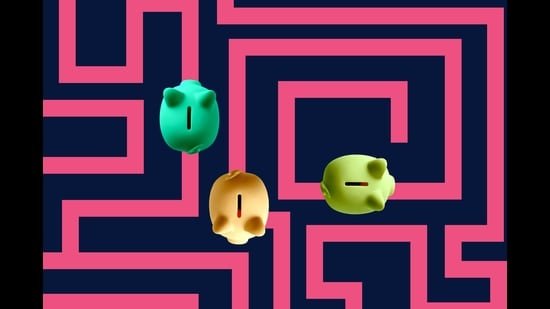
We may not think of it as such, but most of us grew up with a fairytale about capitalism: study, work hard, make the right choices, and life will get so much better.
That story matters more than any textbook definitions.
Capitalism does not need to appear equitable or just; it needs to feel open. People need to feel their future is not fixed.
For a long time, that belief held, in the US, in India, in places like China where the alternatives felt worse.
For a long time, the promise held. Millions with dreams of more moved from villages to cities. New jobs appeared in new industries. Families began to buy refrigerators, cars, air-conditioners, vacations, educations abroad; then second cars and second homes. Not everyone succeeded, but enough people did that the system felt like it was working.
The system felt legitimate.
***
Now imagine the same system, with one change.
You study. Get a job. Earn. But the things that used to move you forward no longer do.
Houses are too expensive to own. Salaries don’t grow fast enough. Jobs don’t lead to savings. Risk becomes dangerous instead of rewarding. You are not unemployed, or excluded. But you are not progressing either.
You are moving, but not upward.
This is the shift that defines the present moment. It is useful to think of it as a different phase of capitalism, one in which the system is no longer organised around opportunity but around access.
Instead of building ownership, one keeps paying to remain inside. Rent a home, pay different platforms for various services, service debt to sustain a lifestyle.
This is what can be called “capitollism”: a system in which economic life is structured like a series of toll gates. One may move through the system, but only as long as one keeps paying. Most people will never own enough to exit onto the freeway; the best they can do is stay in the loop, paying continuously.
What makes this harder to see is that the system has not broken down. It has splintered.
Large parts of the economy still look familiar. Small businesses compete. Large companies fail. Founders take risks. There is innovation and growth.
Other layers operate very differently. Global giants control vital infrastructure. They earn not from what they produce but from the access points they control (web services, the internet, social media and other everyday technology). Goliaths are protected from failure. They grow larger even in crises of their own making.
All these parts exist within the same system. All are called capitalism. But different rules apply. This internal split, “capitalschism”, creates confusion.
***
What’s shaping all this, as it evolves?
Economists used to describe markets as being guided by an invisible hand. People made choices and trends, patterns and macro outcomes emerged from those choices.
Late-stage capitalism is a system shaped not so much by a guiding hand as by invisible tentacles. They do not propel so much as hold one in place, tethered to work, finance, debt, housing, credit history, consumption, identity. In this way, they ensure continued participation. Chop off the tentacles, after all, and where would one be?
***
The problem for most people — that pressure one feels — stems from this loss of flexibility. And it has very real consequences.
When effort no longer alters outcomes in a meaningful way, and risk is increasingly regretted rather than rewarded (as a result of profits accruing to the very, very few; and most rewards being handed out in tiny increments to those who toe the line and do not attempt to soar), people adjust their behaviour. They settle for stability rather than growth. They do not revolt. They recalibrate.
Capitalism then feels like an oppressive economic caste system, the billionaires its high priests, and a preordained destiny already awaiting everyone else.
Historically, capitalism corrected itself when things went too far. Workers could organise. Strikes could disrupt production. Elites depended on large numbers of people for both labour and stability. That created pressure for change.
Automation has long since reduced the need for labour. Capital has co-opted political power and, through regulatory capture, vested interests have eroded political will. The balance has shifted.
New factors are intensifying this shift. Social media and AI have fostered an environment in which noise overwhelms signal. A “universal basic instinct” for novelty, validation and arousal is systematically exploited. In such a reality, trust declines and resistance is less likely to bear fruit.
***
The massive system we have built, meanwhile, operates within a larger boundary that cannot be ignored. The economy depends on energy, water, climate stability.
Markets never factored into their cold calculus this planetary depletion.
What emerges is not collapse, but a hardening. The system continues to function. Goods are produced. Services are delivered. Technology advances. But mobility declines further.
For some, it shifts direction, and they begin to move downward.
In place of the belief with which many of us were raised, what we have is compliance. This creates the “tragedy of the commoner”, in which such choices grant silent assent to a state of shared precarity.
Each individual decision — work harder, accept less, embrace uncertainty — still appears rational. But now, a slight breeze may, at any moment, upend the house of cards.
***
At this point, the argument about capitalism’s future converges with a much older question: Can society sustain itself without catastrophe?
Hindu cosmology gives this phase a name: Kali Yuga, or the Age of Darkness. An era of collapse and inversion. A time when systems function while rewarding the wrong traits.
In a Kali Yuga, speed displaces judgment. Power detaches from common good. Appearance overtakes substance. Everything operates, but order thins.
Late-stage capitalism or the Capitalocene fits this description precisely. Every civilisation has elements it refuses to put a price on: community, faith, life, dignity, duty. Our version of capitalism replaces them all with a singular goal: economic growth.
Meanwhile, we have become an aging species, on a roiling planet. So small; trapped in a dream that now demands we ignore the alarm, and never wake up to see what’s happened to the world.
(Kashyap Kompella is a CFA charterholder, tech industry analyst and author of three books on AI)


