



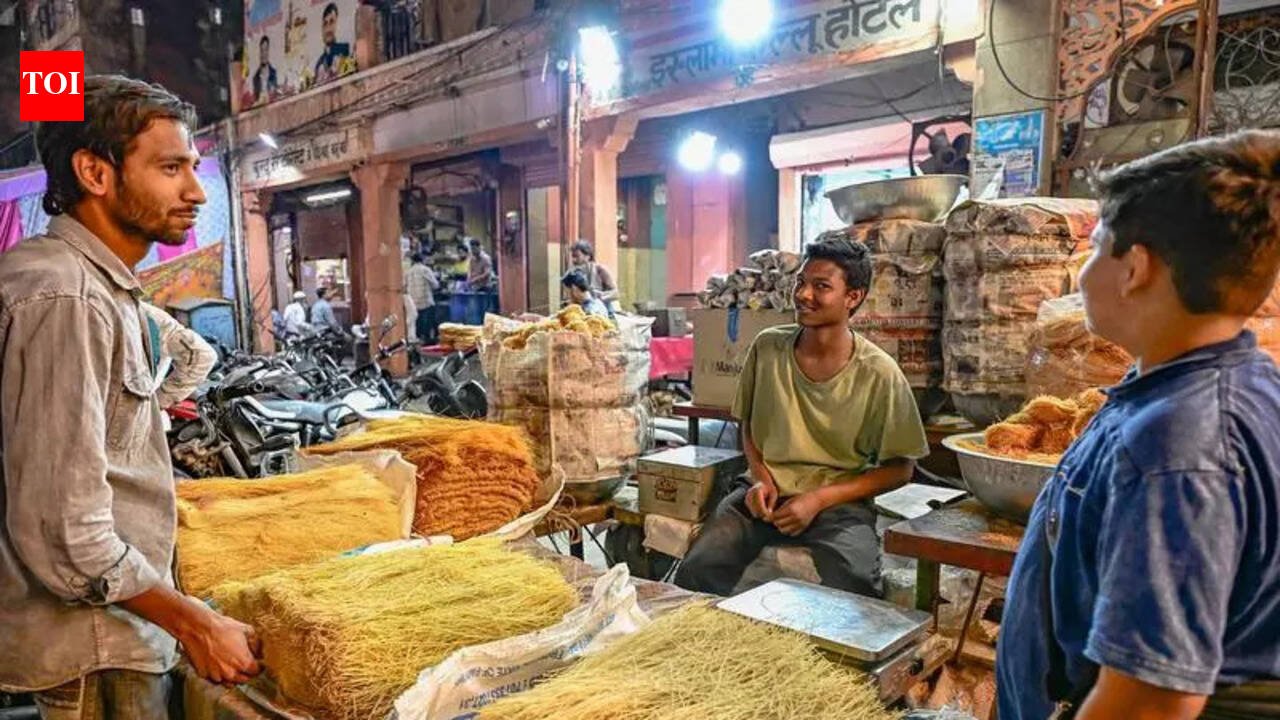
Jaipur: On the last Friday night before Eid, Jaipur’s Walled City came alive with the sights, sounds and aromas of Ramzan festivities.The air was filled with the smell of traditional dishes such as mutton nahari, nalli paya, qorma and stew, reflecting the city’s rich culinary heritage.On Friday, the day of Jamat-ul-Vida, several individuals organised community dawats on different roads across the Walled City and other parts of Jaipur.The menus featured delicacies ranging from fruit chaat and samosas to main courses that often included chicken biryani, mutton nahari and paneer dishes. The dawats concluded with desserts such as sheer khorma and phirni.“Jamat-ul-Vida, or the last Friday of Ramzan, is a significant day in Islamic culture. It is often called Alvida Jumma or the Friday of farewell as it signifies the end of the holy month. We organised a dawat with locals of the Jalupura area on Friday,” said Imran Qureshi, secretary of the Pradesh Congress Committee.Several residents also broke their fast with friends, family and community members at prominent restaurants inside and on the outskirts of the 300-year-old Walled City. Many of these eateries remained overcrowded with people who came with friends to enjoy Mughlai delicacies.While iftar celebrations extended beyond the Pink City, the heart of Jaipur remained a hub for Mughal cuisine. Dishes from other countries also featured on iftar menus.“Now we celebrate iftar beyond the Walled City as well. Besides traditional dishes and desserts such as sheermal, the younger generation prefers different cuisines too. Koshary — the national dish of Egypt — and several Middle Eastern dishes have become popular in Jaipur, especially during iftar,” said Rafeek Khan, a resident of C-Scheme.


