


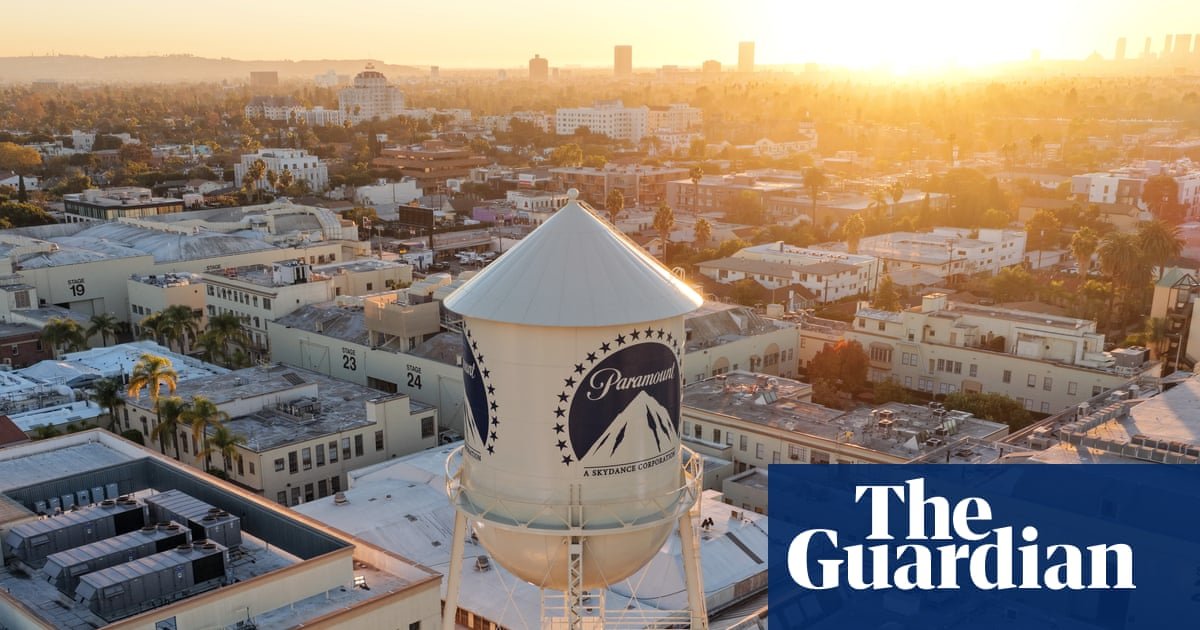
A dozen US state attorneys general are seeking to block the $110bn merger of Paramount Skydance and Warner Bros Discovery, arguing in a lawsuit filed on Monday that it would hurt competition and lead to higher prices for consumers.
The coalition behind the lawsuit is led by the California attorney general, Rob Bonta, who has been a staunch critic of the merger since it was agreed to in February after a bidding war between David Ellison’s Paramount Skydance and Netflix.
The lawsuit was joined by the states of Arizona, Colorado, Connecticut, Massachusetts, Minnesota, Nevada, New Jersey, New Mexico, New York, Oregon and Washington.
“Today, I am leading a coalition of states in challenging the proposed merger of Warner Bros and Paramount and asking the court to block the deal,” Bonta said in a statement. “The unlawful merger of these two entertainment behemoths would lead to higher prices, lower quality, and less content for film and television, harming movie theaters, basic cable distributors, and ultimately, audiences on every sofa and movie theater seat in the US.”
Bonta and his fellow state attorneys general are now asking a judge to stop the merger until the judicial process plays out. “In this country, no one is above the law,” he said. “With this lawsuit, California and our sister states are fighting for free and fair markets, not rigged markets. America has no kings in government or our economy.”
The lawsuit was filed in US district court for the northern district of California.
The widely anticipated lawsuit comes a month after the US Department of Justice signed off on the deal, clearing a major obstacle for the merger. While dozens of countries have also agreed to the deal, it still awaits approval from regulators in the UK and Europe. On 30 June, Lisa Nandy, the UK culture secretary, said she was “minded” to intervene and asked both the communications regulator, Ofcom, and the Competition and Markets Authority (CMA) to further investigate the deal, which would delay its timeline.
Paramount Skydance and Ellison have maintained that the merger will increase competition and preserve the Hollywood theatrical status quo.
“The lawsuit filed by the state attorneys general, in the most generous light, reflects a fundamentally flawed application of the antitrust laws and is wrong on both the facts and the law,” Paramount said in a statement on Monday. “We will vigorously defend the transaction and demonstrate that this challenge is inconsistent with sound competition policy and the competitive realities of the media marketplace. Delaying this transaction will only harm entertainment workers who have already suffered over recent years as technology has disrupted their livelihood and cost California tens of thousands of entertainment jobs.”
The close ties between David Ellison; his father, the Oracle billionaire Larry Ellison; and members of the Trump administration have raised questions about whether the regulatory playing field was tilted toward the deal’s approval, despite the concerns of actors, journalists and many prominent politicians.
“Antitrust enforcement is democracy’s check on oligarchy,” Bonta told reporters in a press conference. “Antitrust enforcement is a check on billionaires currying favor with the president so he’ll do their bidding.”
Paramount Skydance is keen to close the deal by 30 September, after which time the company has agreed to pay a “ticking fee” of an additional $0.25 per share each financial quarter until the deal closes, potentially adding hundreds of millions of dollars to the final purchase price.
Journalists at CBS News and CNN have expressed concerns about whether the merger of the networks’ parent companies would lead to job cuts. While the lawsuit does not delve into implications for the news networks, focusing instead on competition for movies and cable subscription fees, Bonta acknowledged the impact on the journalism business in his press conference.
“This merger will mean fewer journalists informing the electorate,” he said. “It will mean fewer opportunities for Americans to hear the full breadth of information and opinions on a subject, and then come to their own conclusions.”
