


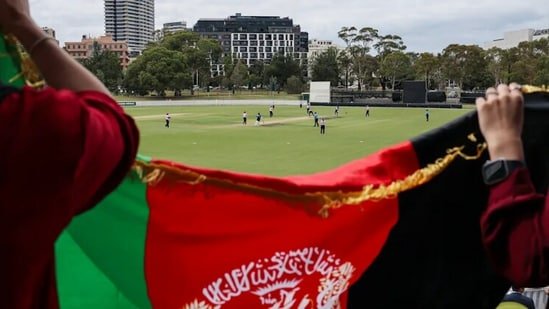
In good news for Afghan female cricketers, the International Cricket Council (ICC) has reconstituted a “Special Taskforce” to facilitate their cause. Most of the Afghan national players now reside outside Afghanistan, having been banned from playing cricket by the Taliban, who have been running the central Asian country since 2021. And because the refugee women cricketers don’t have their country’s recognition and support, they can’t compete in ICC tournaments, including the qualifiers. But that is going to change now as the ICC looks serious to develop “a roadmap for the Afghan refugee women’s team to participate in ICC’s qualification pathways by 2030.”
Recently, during the women’s T20 World Cup in England, the Afghan refugee cricketers, most of whom are now based in Australia, met King Charles, and the monarch supported their cause unequivocally. In a media release on Monday, the ICC stated: “The ICC Board, at its Annual Conference in Edinburgh, endorsed the continuation of the Development Pathway Programme for Afghan refugee women cricketers. It also reconstituted the Special Taskforce and assigned it the responsibility to develop a roadmap for the Afghan refugee women’s team to participate in ICC’s qualification pathways by 2030.
“The ICC Board also approved the appointment of its Independent Director Dr Ros Rivaz, and ICC Chief Executives’ Committee member, Sarah Keane, to the Special Task Force. They join the Task Force alongside its existing members (from BCCI, Cricket Australia and England & Wales Cricket Board) and will support the ongoing oversight of the programme, seeking to balance the imperatives of exposure, representation and enhanced competitive standards for the women.”
Refugee cricketer Firooza Afghan was delighted at the development: “Over the past year, the opportunities to come together as a group and tour India and England have provided us with some of the most memorable experiences in our lives. The support to train in our home locations with quality coaches plays a big role in our progress. A long-term view of participation in ICC qualification pathways gives us a clear goal to work towards, and we are determined to make the most of every opportunity along that journey,” she said.
Shabnam Snahsan, one of the players present at the meet-up with King Charles last month, said: “Back in Afghanistan, women don’t have the right to play cricket, even to go out, to study or anything. We’re here to play cricket – but it’s not just cricket, we’re here to fight for them, and this has meant a lot for us.”
