



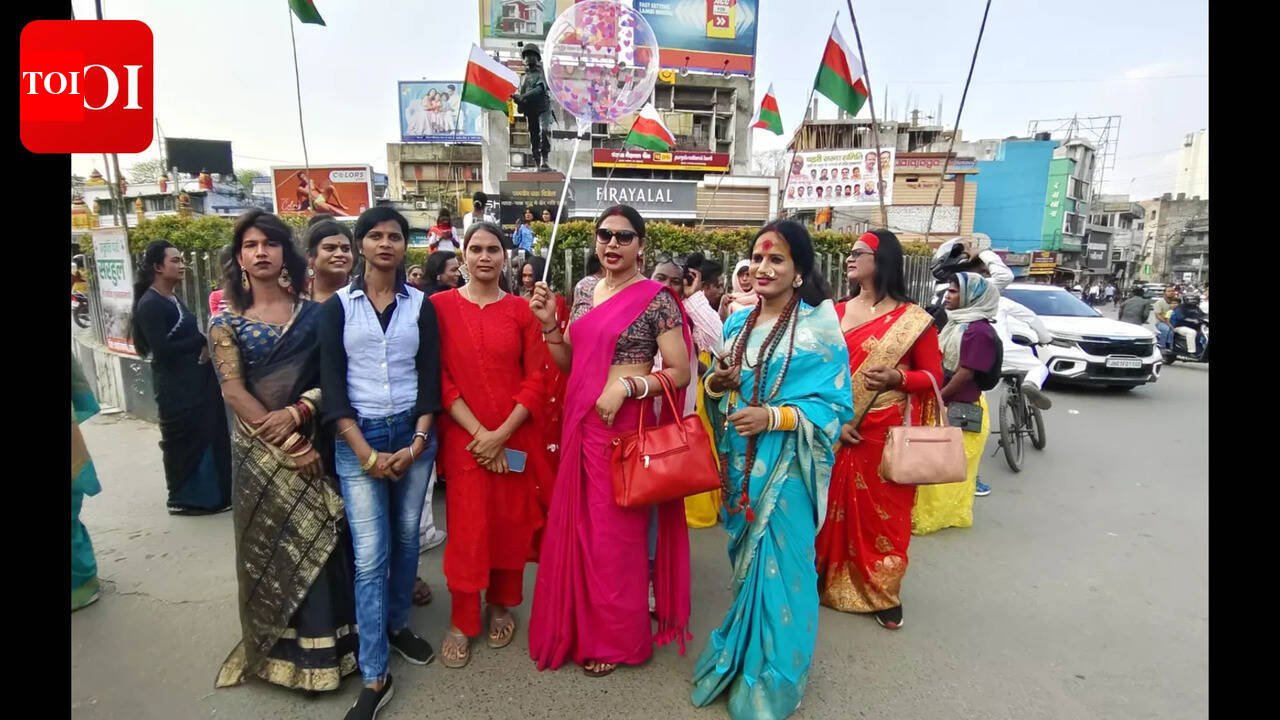
Ranchi: Members of the transgender community staged a protest at Firayalal Chowk on Sunday against the Transgender Persons (Protection of Rights) Amendment Bill 2026 presented in the Parliament, claiming that it weakens existing legal protections, excludes sections such as trans men, and undermines the identity and rights of the community.Participants from East and West Singhbhum, Seraikela-Kharsawan, Ramgarh, Hazaribag and Ranchi gathered at the site, raising slogans and demanding equality, dignity and freedom.The proposed Transgender Persons (Protection of Rights) Amendment Bill, 2026, seeks to alter the 2019 law by tightening the definition of transgender persons and limiting recognition to select socio-cultural identities and intersex individuals.Protesters argued that its provisions contradict the spirit of the NALSA judgment 2014, which recognised transgender persons as the third gender and guaranteed them fundamental rights.The demonstrators also highlighted long-pending issues in Jharkhand, including the lack of proper implementation of welfare measures.They said the transgender welfare board, though constituted after court intervention, remains largely inactive and has failed to deliver tangible benefits to the community.Concerns were also raised over the absence of shelter homes, community spaces, employment opportunities and unfulfilled promises such as reservation benefits.The protest concluded with a demand for policy revision and immediate govt action to address systemic gaps and safeguard the rights of transgender persons.“The existence of trans men itself is under threat, and for trans women, board verification may become mandatory. Why should outsiders decide our identity? This shifts gender recognition from self-identification to institutional approval, which could exclude many and take away our autonomy,” said Amarjeet Nand Giri, a member of transgender community, who led the protest.Activists said it moves away from self-identification, a key principle upheld in the NALSA judgment 2014. This may exclude trans men, non-binary and genderqueer persons, making access to identity documents, welfare benefits and services more difficult.


