






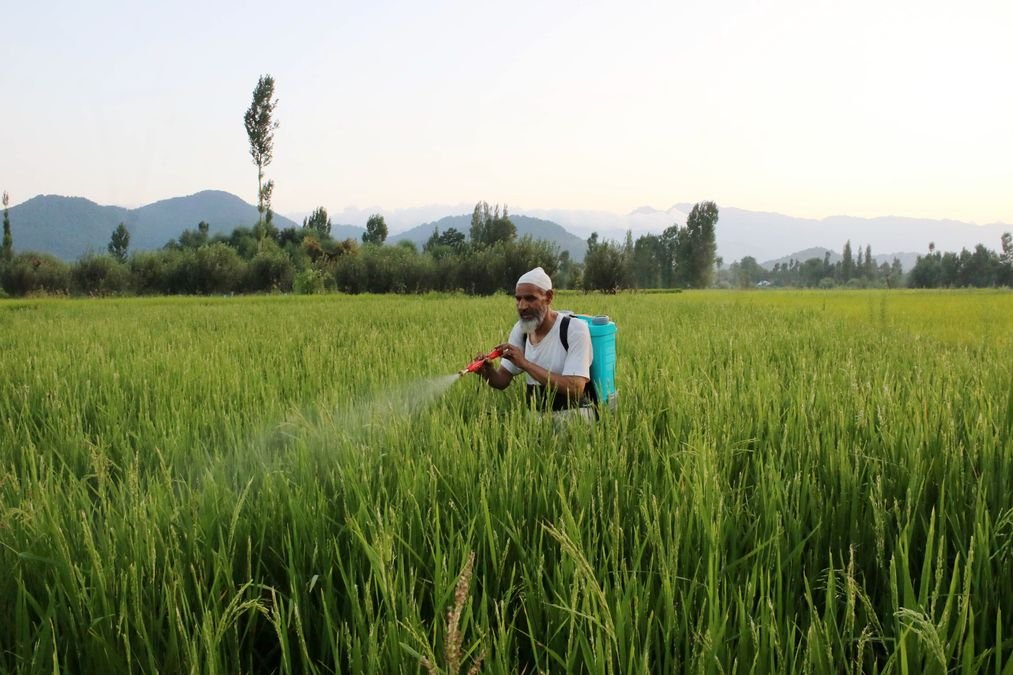
Kashmir’s golden paddy fields have long been more than a seasonal spectacle. They are part of the Valley’s rural economy, cultural memory and food-security system. The latest agricultural figures, however, reveal a disturbing transformation: Kashmir is producing more rice from every hectare, but it is cultivating far fewer hectares than it did four decades ago. Paddy acreage in Kashmir Division has declined from nearly 1.69 lakh hectares in 1980-81 to around 1.29 lakh hectares in 2023-24. The loss of roughly 40,000 hectares represents a contraction of nearly 24 per cent. Though the area recovered temporarily to about 1.36 lakh hectares in 2017, the subsequent decline confirms that the erosion of paddy land is not a temporary fluctuation. It is part of a deeper structural change. The rise in productivity offers little room for complacency. Kashmir’s average rice yield increased from 26.02 quintals per hectare in 2022-23 to 26.78 quintals in 2024-25. This improvement reflects the resilience of farmers, advances in cultivation practices and the potential of better seeds, irrigation and farm support. But higher yields cannot indefinitely compensate for the disappearance of agricultural land. Productivity gains have limits; fertile land, once lost to concrete, cannot easily be recovered. The forces driving this change are visible across the Valley. Unplanned urbanisation, road expansion and construction have placed agricultural land under relentless pressure, especially around towns and growing urban centres. In many places, paddy fields are being treated as vacant spaces awaiting conversion rather than as productive assets essential to the region’s future. Farmers, too, are responding to changing realities. Crop diversification, market returns, water availability and climate pressures are altering traditional cropping patterns. The large area under mustard cultivation during winter reflects the increasing intensity and flexibility of Kashmir’s agriculture. Diversification can strengthen farm incomes, but it must not become an excuse for the unchecked conversion of prime paddy land. Water stress adds another layer of vulnerability. Paddy requires dependable water at crucial stages, while erratic rainfall, changing snowfall patterns and uncertain glacier melt are making the agricultural calendar less predictable. A shrinking irrigation base, combined with climate variability, could place both farm incomes and local rice availability at risk. The government must therefore treat paddy land as a strategic resource, not merely a category in revenue records. Land-use regulations need strict enforcement, irrigation systems require urgent modernisation and farmers must receive incentives to retain cultivation. District-wise monitoring of agricultural land, transparent protection of wetlands and stronger support for climate-resilient farming are equally necessary. The autumn harvest may still present Kashmir in its familiar golden colours. But the landscape beneath that beauty is changing. The central question is no longer whether Kashmir can produce more rice per hectare. It is whether the Valley will preserve enough hectares to feed itself, sustain its farmers and protect the ecological spaces that have shaped its civilisation.


