



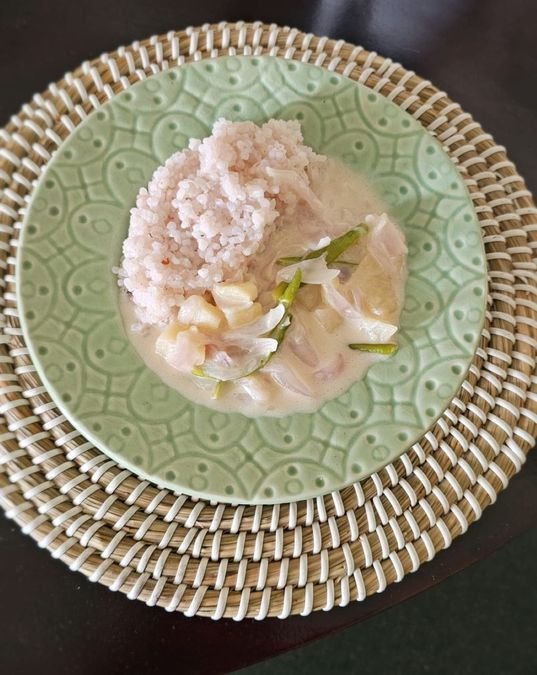
Every bite of Ema Datshi tells a story of resilience, simplicity and harmony with nature
COLONEL SATISH SINGH LALOTRA
Some journeys refuse to end when we return home. They linger in our memories through landscapes, conversations, prayers, fragrances and perhaps most vividly, through food. My wife and I recently returned from a memorable journey across the Himalayan kingdom of Bhutan, along with fellow travellers from diverse professions and age groups. While Bhutan’s monasteries, mountain passes, fluttering prayer flags, and smiling people captivated our hearts, there was one discovery that accompanied us back to India in a most delightful way–’ Ema Datshi’, Bhutan’s national dish.
Embarking on the national carrier ‘Air India Express’, landing at Bagdogra airport and subsequently getting into the Himalayan monarchy of Bhutan via Phuntsoling was a blur that I shall reserve for some other day to recount in my subsequent articles on Bhutan. Since gastronomical delights can’t wait to be recounted, hence this effort before the Indian palate overtakes my Bhutanese experience of indulging in exotic tastes. Yesterday our home was filled with the unmistakable aroma of chillies and cheese as my better half recreated the Bhutanese culinary experience to her best.
With the first bite of the ‘Ema Datshi’ prepared in our kitchen, we both were instantly transported back to the peaceful valleys of the ‘Land of Druk’. I was astounded by the simple fact that how our gastronomical tastes rule our very being. Evoking the memories of monasteries perched on cliffs, winding mountain roads and the warm hospitality of the Bhutanese people all came tumbling in torrents.
That experience reminded us that food is much more than nourishment. It is history, geography, culture and identity served together on a plate. Among the world’s national dishes, few are as closely associated with a country’s identity as ‘Ema Datshi’ is with Bhutan. In most parts of the world, chillies are regarded as spices used sparingly to flavour food. In Bhutan, however, chillies are vegetables. They are eaten generously and proudly, making them the centrepiece rather than a supporting ingredient.
The word ‘Ema’ means chilli, while ‘Datshi’ means cheese. Together they create a dish that is deceptively simple yet incredibly satisfying. Green or red chillies are cooked gently with onions, butter and local cheese until they form a creamy, spicy delicacy. Different regions of Bhutan prepare it in slightly different ways, but its essence reminds us of the same Bhutanese love for chillies and cheese.
The beauty of Ema Datshi lies in its simplicity. It does not depend on elaborate spices or complicated cooking techniques. Instead, it celebrates the quality of its ingredients. Fresh mountain chillies, locally produced cheese and pure butter combine to produce a flavour that is both comforting and bold. Bhutan’s cold climate is ideal for cultivating chillies. Travelling through the countryside, we noticed strings of brilliant red chillies hanging from rooftops and balconies, drying under the mountain sun. Bhutanese decorate their homes almost like festival ornaments while serving an important personality, irrespective of his or her social status. These dried up chillies ensure that families enjoy their favourite dish all year round.
Now, coming to the cheese part of this Bhutanese national dish. Traditionally made from the milk of yaks or cows grazing on pristine Himalayan pastures, Bhutanese cheese possesses a unique texture and flavour. It would not be out of context over here to quote that it took my wife a full round of the local market of Paro, including the vegetable market, to scout around for the Yak cheese. Whereas our co-tourists were busy scouting for much more attractive items at Paro, my wife and I were more at ease in scouting for the Yak cheese and the traditional red rice. Yak cheese melts differently from processed cheese commonly available elsewhere, lending Ema Datshi its distinctive creamy consistency.
As visitors, we encountered Ema Datshi repeatedly during our journey. Whether in family-run guesthouses, roadside eateries or hotel dining rooms, the dish occupied a place of honour. Every cook we spoke to in Bhutan had a different recipe, and every meal offered a new interpretation of the same national favourite. Initially, Indian travellers to this Himalayan kingdom hesitate because of the abundance of chillies in Ema Datshi, but once taken to the palate, whatever little reservation one has is dropped post haste. The appearance alone suggests a fiery experience cloaked in the dull yellowish-white gravy of Ema Dashi, only to be overwhelmed by one’s sensory nerves when partaking of this recipe.
Moreover, after the first few mouthfuls, the richness of the cheese balances the heat generated by the chillies. Soon, one begins to understand why Bhutanese people never seem to tire of this humble preparation. The popularity of Ema Datshi goes far beyond its taste. It reflects Bhutan’s philosophy of living simply and remaining close to nature. It is not for nothing that Bhutan has earned the much-coveted moniker of leading and prioritising GNH( Gross National Happiness) over mere economic indicators.
This philosophy is evident not only in governance but also in daily life, where modesty, sustainability and contentment are deeply valued. Their eating habits, mired in such cuisines, mirror such ideals. Meals are generally uncomplicated, relying on locally grown vegetables, dairy products and whole grains. Excess is avoided, and freshness is treasured. Food is prepared with patience rather than in haste.
As we criss-crossed the length and breadth of central and western Bhutan, ranging from Phuntsoling to Thimpu to Paro and HAA to Punakha, we found families gathered together, conversations flowed gently, and hospitality was extended with genuine warmth. Ema Datshi often occupied the centre of these meals, symbolising comfort and togetherness.
Interestingly, for the readers of Rising Kashmir, there are several delightful variations of this national dish of Bhutan. ‘Kewa Dashi’ substitutes potatoes for chillies. ‘Shamu Datshi’ features mushrooms, while ‘Kewa Ema Datshi’ combines potatoes and chillies, while other versions include spinach, beans or ferns, depending upon local availability. Yet the classic Ema Datshi remains the undisputed favourite. For visitors from other countries, like us from India, many familiar elements in the Bhutanese cuisine include the staple red rice, for which my wife and I both scouted the local market of Paro and were successful in getting a kilo or so for our consumption, since weight and space constraints in the aircraft for our return journey only allowed so much.
Preparing Ema Datshi at home after our return to India became far more than a cooking exercise. It was an attempt to preserve the memories of our recent Bhutan visit, as mentioned in my previous paragraphs. As my wife carefully skimmed the chillies with cheese, our kitchen became a bridge between two Himalayan neighbours. Every stir of the pan seemed to revive images of ancient monasteries, colourful prayer flags fluttering in the breeze and smiling faces greeting strangers as friends. Travel often changes us in more ways than one, and that too in unexpected ways.
Sometimes we return with souvenirs that eventually gather dust in our elaborately decorated drawing rooms. At other times, we bring home photographs that remain stored on our phones. But recipes have a different destiny. They become living memories recreated repeatedly and shared generously with family and friends. Food possesses an extraordinary power to connect people and cultures, transcending the barriers of language, religion and nationality.
One does not require a proficiency in ‘Dzongkha ‘ to appreciate Ema Datshi. One only needs curiosity and an open mind. Today, as globalisation introduces fast food into even the remotest of corners of our planet, traditional cuisines face increasingly stiffer challenges. Bhutan has largely succeeded in preserving its culinary heritage without rejecting modernity altogether. Restaurants continue to serve authentic dishes prepared according to local traditions, ensuring that younger generations remain connected to their roots.
This commitment of Bhutan deserves admiration to no end in this venture. Culinary traditions are repositories of collective memory that tell stories about agriculture, history, and community as such. For Indian travellers planning to visit this Himalayan kingdom nestled in the forbidden heights, Ema Datshi should be considered as essential as visiting the country’s monasteries, or even the Dochula pass, not to forget the daunting Chele La pass. It offers insight that no museum or book on anthropology could offer.
Every bite of Ema Datshi tells a story of resilience, simplicity and harmony with nature. Yesterday’s lunch at our home became much more than a meal. It became a celebration of travel & friendship topped up with a dash of ‘Raven Vodka’, again a speciality of Bhutan. Long after our passports faded into memory, the taste of Ema Datshi continues to remind us of a small Himalayan Kingdom where happiness is measured not by prosperity but born out of the simplest ingredients —a handful of chillies, a little cheese, a warm kitchen and hearts willing to embrace another culture.
Our journey to Bhutan may have concluded, but every time Ema Datshi is prepared in our home, the Himalayas return to our dining room table. In that humble bowl of chillies and cheese lives the enduring spirit of Bhutan–a nation that welcomes visitors not only with breathtaking scenery but also with a cuisine that speaks directly to the soul.
(The writer is a retired army officer and a regular scribe of the Rising Kashmir paper. He can be contacted at his email: [email protected])


