



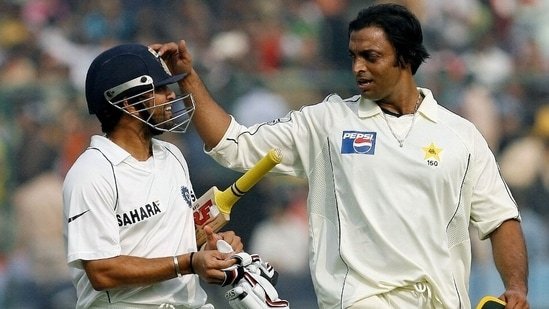
Pakistan’s former pacer Shoaib Akhtar has offered a vivid window into the sheer intensity of 1990s India-Pakistan cricket, recalling how a private wager with Saqlain Mushtaq over Sachin Tendulkar’s wicket played out alongside knee trouble, injections and constant pressure to stay on the field. The anecdote lands as more than nostalgia because it combines three things that defined that era: the premium on Sachin’s wicket, the internal competitiveness within Pakistan’s attack, and the physical price elite bowlers were paying just to get through a series.
Akhtar’s recollection comes from Pakistan’s 1998-99 tour of India, a two-Test series that remains one of the most remembered India-Pak contests of that period. Saqlain Mushtaq was a defining figure in that tour, and the Chennai Test in particular has endured as a classic — not just for Sachin’s fourth-innings 136, but for the dramatic finish and Pakistan’s narrow win. In that context, Akhtar’s story about a bet over who would dismiss Sachin does not sound like dressing-room folklore alone. It sounds like the kind of internal challenge that naturally grew inside a high-quality attack in a series of such emotional and tactical intensity.
Shoaib Akhtar’s Sachin wager with Saqlain reveals the pain behind the rivalry
Shoaib sets up the moment by pointing to Saqlain’s repeated success against Sachin, and how that itself became the trigger for a contest between them.
“When Saqlain had already got so many wickets — in Chennai and here in Delhi too — Saqlain and I made a bet. He said, I have to get Sachin out, that’s what I’ve been doing. I said, No, I’ll do it this time, it’s my turn,” said Akhtar.
That line captures the central hook. Sachin’s wicket was not just a tactical breakthrough; it was the ultimate currency of pride in that era. For bowlers sharing the same attack, getting him out was also a personal claim — a way of saying you had delivered where it mattered most.
Akhtar then moves from bravado to the physical reality, and the quote becomes even more striking. “ Fluid was being drained from my knee, and I was getting injections, just so I could play the match.”
The force of that line lies in how matter-of-factly it is delivered. Akhtar is not framing it as drama. He is describing what it took to simply remain available. It also adds an important layer to the anecdote: the competition with Saqlain was unfolding even as bodies began to give way.
He then widens the frame to include Saqlain Mushtaq’s condition too, turning the story into one of shared suffering as much as rivalry. “His knees had gone in 1996, and mine gave way in 1997 in front of him. And now both of us were secretly taking pills and injections, just to be able to play the match.”
This is where the anecdote grows beyond a Sachin-centred memory clip. It becomes a portrait of two elite bowlers trying to outdo each other while also enduring pain. The image Akhtar paints is not of comfort or bravado alone, but of compromise, recovery and survival in the middle of one of cricket’s most emotionally loaded rivalries.
He closes by describing the pressure that surrounded fitness and selection, especially when one injury could alter the balance of a series. “If one of us went out of the series, then Saqi would be out too, and I was already under the gun anyway — like, don’t let this one go.”
The idiom “under the gun” is best understood here as being under intense pressure, and it rounds off the quote by reinforcing what runs through the entire recollection: in that period, against India, performance, fitness and reputation were inseparable. A wicket, an injury, a spell, a missed chance — each carried consequences beyond the scoreboard.
That is what makes Shoaib Akhtar’s recollection so compelling. On the surface, it is a story about a bet with Saqlain to dismiss Sachin Tendulkar. In substance, it is a reminder of how, at its peak, India-Pakistan cricket could turn even an internal team rivalry into a test of ego, endurance and survival.


