



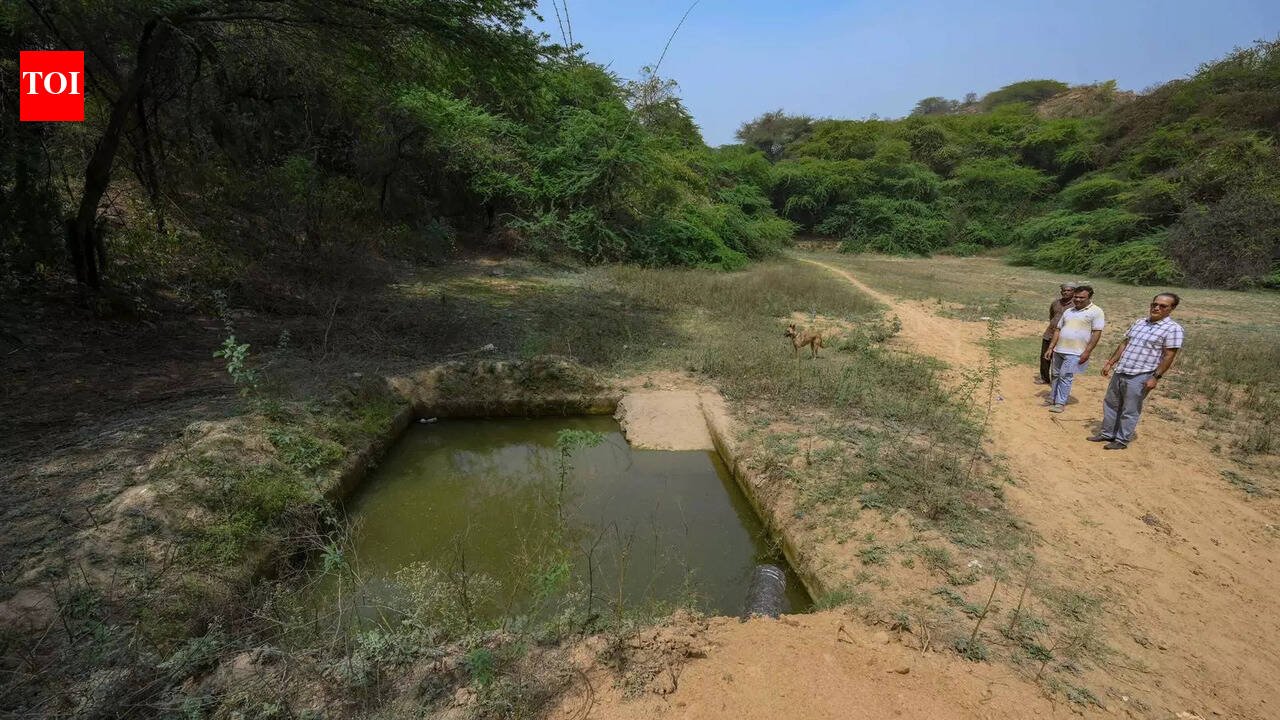
Gurgaon: The Haryana forest department has issued a damage report to MCG over a pipeline laid by the civic body that was found terminating near a forest waterbody inside the Aravali plantation area in a village.The site is located barely 10 minutes from Golf Course Extension Road. The pipeline is connected to the MCG‑operated STP in Baliyawas and is intended to channel treated wastewater towards the forest area.Following complaints from residents, forest department officials inspected the site recently and prepared a damage report. “We issued a damage report on March 17. We will issue a notice to MCG seeking an explanation for this violation. If MCG fails to respond satisfactorily, we will move the environment court,” a forest official said, adding that non‑forest activity and dumping of wastewater are not permissible in Aravali plantation areas.The action comes days after TOI reported that a pipeline had been recently laid through the plantation area without permission. The pipeline runs from a sewage treatment plant (STP) in Baliyawas village to a waterbody within the forest patch, prompting strong objections from local residents who allege that treated wastewater is being diverted into a structure meant for groundwater recharge and wildlife use.A visit by TOI found the pipeline cutting through the notified plantation area and ending close to a small check dam inside the forest. Residents said the pipeline was laid just a few days ago and — at the time of inspection — wastewater had not yet begun flowing through it.Mapping records and GIS data reviewed by TOI show that the land where the pipeline terminates is classified as Aravali Plantation, spread over around 95 hectares. Locals pointed out that the water structure near the pipeline outlet was created by the forest department as part of conservation work in the Aravali hills.In a complaint submitted to the divisional forest officer (territorial), residents warned that discharge of even treated STP water could contaminate water meant for animals and degrade the surrounding ecosystem.The letter says that the waterhole already exists within an ecologically sensitive Aravali corridor connected to the Asola Bhatti Wildlife Sanctuary and is regularly filled with safe drinking water for wildlife.The complaint by residents also flagged risks posed by residual pollutants in treated wastewater, including pathogens, chemical contaminants, heavy metals and microplastics.Residents argued that if such water percolates through soil via check dams, it could gradually contaminate groundwater aquifers relied upon by nearby villages.The Aravali plantation project, launched in the 1990s, aimed to restore degraded hills across southern Haryana and covered nearly 33,000 hectares across six districts.These areas were later notified under the Forest (Conservation) Act, 1980, following a Supreme Court ruling in 2004. The Act restricts non‑forest activities, including construction and infrastructure work, without prior approval from the Centre.Experts said the proposed discharge could also attract scrutiny under the Water (Prevention and Control of Pollution) Act, 1974, which requires prior consent from the pollution control board before sewage or effluent is released into any waterbody.


