



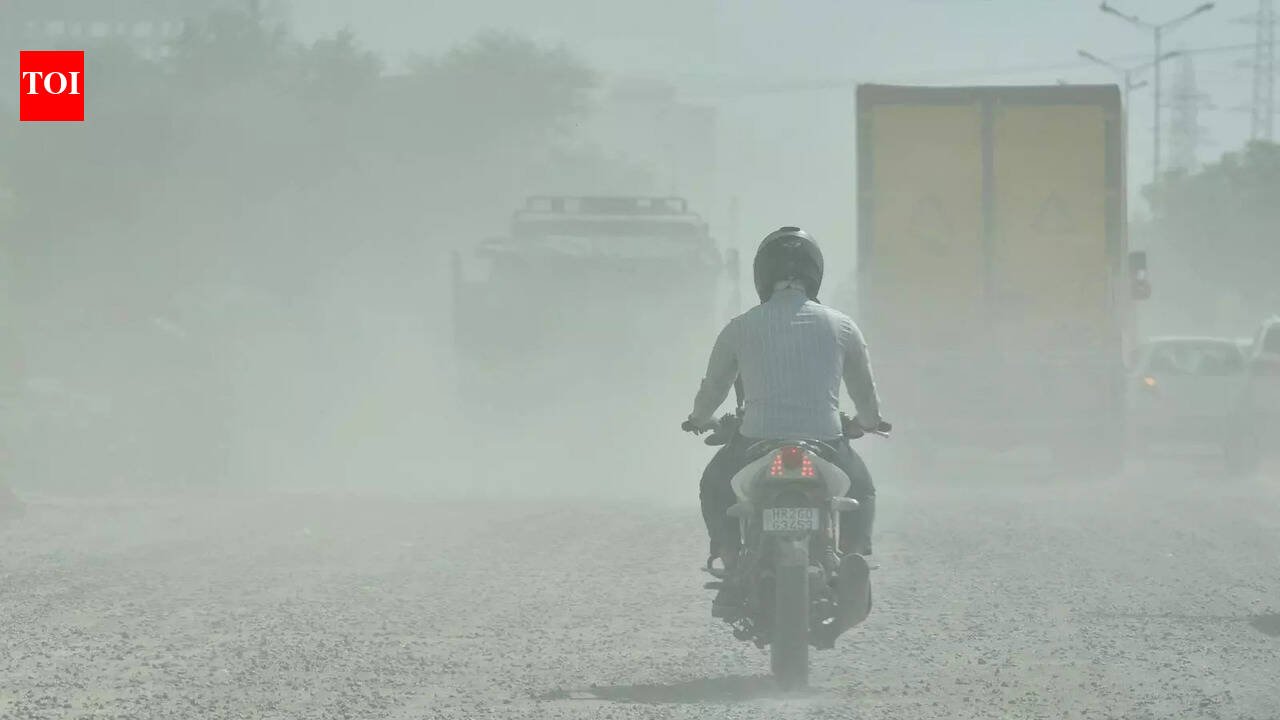
Gurgaon: Road dust remains one of the most persistent contributors to air pollution in the region. Now, GMDA will identify 15 key roads across the city for redevelopment.Making them dust-free and sustainable corridors is part of an effort to curb air pollution in line with directions issued by the Commission for Air Quality Management (CAQM).Once shortlisted, these stretches will be redesigned by the School of Planning and Architecture (SPA) and CSIR-Central Road Research Institute (CSIR-CRRI).The redesign will focus on scientific road engineering practices, including better paving, improved drainage systems, and roadside greening.This comes after the memorandum of understanding (MoU) signed last month between NCR states, SPA, and CSIR-CRRI.The agreement lays down a standardised framework for urban road development, covering aspects such as road cross-sections, right-of-way (RoW) utilisation, plantation strategies, and long-term maintenance protocols. The objective is to bring uniformity in how roads are designed and maintained across the NCR, with a clear focus on dust mitigation.“Under the CAQM directions, all road-owning agencies have been asked to identify 15 roads each for redevelopment as dust-free corridors. After shortlisting these stretches, we will share them with SPA and CSIR-CRRI, which will prepare scientific redesign plans,” a senior GMDA official said.A key component of the plan is the rollout of a web-based road asset management system (RAMS), which will enable preventive and predictive maintenance of road infrastructure. By using GIS-based monitoring, civic agencies will move away from reactive repairs towards a more structured upkeep mechanism, ensuring roads remain dust-free over longer periods.In Dec last year, CAQM carried out an inspection across the city and flagged gaps in road maintenance. Of the 125 road stretches inspected, only four were found to be completely free of visible dust. As many as 34 stretches showed high levels of dust, 58 had moderate dust, and 29 recorded low dust intensity — highlighting the scale of the problem and the urgent need for systemic intervention.The new framework seeks to address these gaps through a combination of design improvements and technology-driven maintenance. This includes standardising road geometry and cross-sections to ensure optimal use of available space, integrating greening measures within the RoW to act as dust barriers, and adopting advanced construction techniques that improve durability while reducing loose dust.“The focus will be on reducing road dust, which is a major contributor to air pollution, and improving overall road design through better paving, drainage, and greening. GMDA has already worked with SPA earlier on a right-of-way management study, and we are working on those recommendations. With CSIR-CRRI also involved now, we expect more inputs on new technologies and materials that can further strengthen road construction and maintenance,” the official added.


