



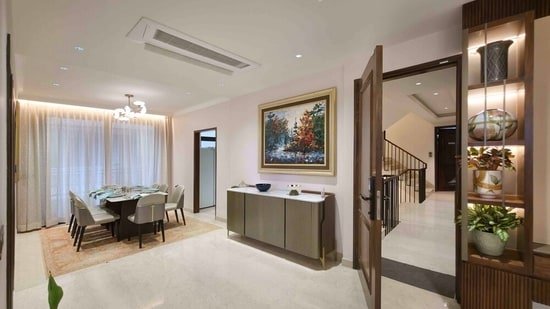
Samsung is betting on a combination of cooling, air purification, and connected home technology as urban India deals with rising temperatures and growing concerns around indoor air quality. The company has announced a new range of residential climate solutions that bring together WindFree cooling, PM1.0 air purification, SmartThings connectivity and AI-powered VRF systems for housing projects across the country.
The latest deployment is aimed at modern residential developments where homebuyers are increasingly looking for solutions that go beyond cooling. Samsung says its integrated ecosystem focuses on indoor comfort, air quality management, energy use and smart home control through a single platform.
Cooling Without Direct Airflow
A key part of the offering is Samsung’s WindFree cooling technology. Traditional air conditioners often continue to blow cold air directly even after the desired temperature is reached, which can lead to discomfort during extended use. WindFree technology is designed to solve this issue by distributing cool air through nearly 10,000 micro holes. Instead of a direct airflow, the system creates what Samsung describes as a “still air” environment, allowing rooms to remain cool without a constant cold draft. The feature is expected to benefit users during overnight operation and in households where air conditioners run for long periods.
The company has also addressed concerns around indoor air pollution through its PM1.0 purification system. Samsung’s WindFree 1 Way Cassette AC units can be fitted with an optional PM1.0 purification panel that uses a two-stage filtration process. The pre-filter captures larger dust particles and fibres, while the PM1.0 filter is designed to trap particles as small as 0.3 microns. According to Samsung, the system can also sterilise up to 99 per cent of bacteria collected in the filter through electrostatic precipitator technology tested by Intertek.
On the smart home front, Samsung has integrated the solution with its SmartThings platform. Users can monitor and control air conditioning systems remotely through smartphones, access voice commands through Bixby and supported assistants, automate cooling settings using geo-fencing and track energy consumption patterns. The platform also connects with other compatible smart home devices.
AI-Powered Climate Management
The ecosystem is powered by Samsung’s DVM S2 VRF outdoor units, which use AI-driven optimisation tools. Features such as Active AI Pressure Control analyse environmental conditions, usage behaviour and system configuration to adjust refrigerant pressure and improve efficiency. Samsung claims the technology can lower energy consumption by up to 15 per cent. Another feature, Active AI Refrigerant Analysis, continuously monitors refrigerant levels and can notify technicians if irregularities are detected.
The technology has already been deployed at The Orchard, part of Central Park Flower Valley in Gurugram. The project covers 284 residences with an installed capacity of 4,864 HP and combines WindFree indoor units, PM1.0 purification panels, SmartThings connectivity and AI-enabled VRF systems.


