



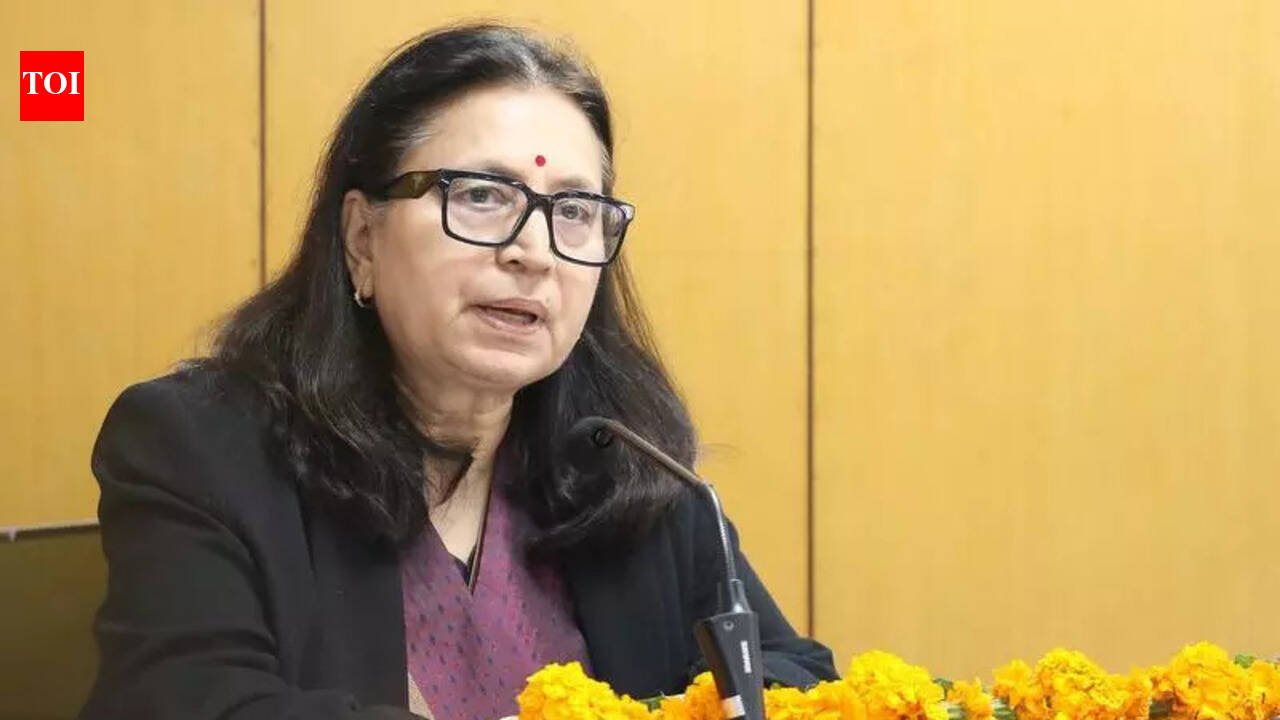
With her tenure set to end on March 28, PU Vice-Chancellor Renu Vig has sought an extension, citing unfinished reforms and long-pending structural issues. In a conversation with TOI, Vig defends key decisions, flags funding gaps and concedes how the controversial ABVP star night went ahead despite her announcing its cancellation, backed by an all-party push and the artist landing on campus, laying bare both outsider influence and the limits of administrative control. Q. There is no clarity yet on your tenure as of now. Have you sought an extension?A. Yes, I have already formally put in my request to the government. It is upto them to decide.Q. So you would want to continue?A. Yes, because a lot of work is still in progress. NEP implementation itself will run till 2027. Recruitment of non-teaching staff has just started after years. Then there is the issue of nearly 800 Class C and D employees who have been working for 15–20 years on temporary basis. We are preparing a policy to regularise them. The draft is almost ready. These are long-term structural issues, you cannot just leave them halfway.Q. How do you see your tenure looking back?A. It was a big responsibility, especially stepping in at a time when key decisions had been pending for years. The first major step was implementing the 7th Pay Commission. There was hesitation due to the financial condition of the university, but we still went ahead. We managed to enhance the grant to over Rs 100 crore, support from both Centre and Punjab, and cleared arrears. Beyond that, NAAC A++ accreditation, NEP implementation, hostel funding, and completion of the multipurpose auditorium are important milestones. But at the same time, many deeper structural issues remain.Q. Do you think Centre and Punjab govt support has been adequate?A. The shortcoming is very clear and it has existed for years. Both govts are primarily giving salary grants. There is no dedicated maintenance grant. We are maintaining a 70-year-old campus on our own. Buildings, housing, wiring systems—all need major upgrades. Even then, we are paying property tax. So the financial model itself is not sustainable if we want real transformation.Q. Outsider entry continues to be a major issue on campus. How can it be addressed?A. It is not a straightforward issue. PU is spread across two sectors, with residential areas, markets, and public movement. You cannot completely seal it. Even measures like vehicle stickers have limited success because students themselves are not fully cooperative. Strict checking leads to traffic congestion. So unless all stakeholders, especially students participate, it cannot be solved effectively.Q. Looking back, could incidents of violence, like the shooting on campus a few days ago, stabbing of a student last year, or protests have been avoided?A. In most cases, the people involved were outsiders. Even in last incident, the person who was the target and the shooters, were outsiders. That is the key concern. The campus becomes a convenient space for such activities. Our security is not designed to handle full-scale law-and-order situations. That requires a larger administrative approach.Q. SOPs were framed after last year’s killing of a student during a fest, yet not followed. Why?A. Because they were never implemented. By the time SOPs were finalised, a new student council had come in and they did not agree, especially with restrictions like banning star nights. That is the reality, policy on paper and implementation on ground are very different.Q. How did ABVP organise star night despite you claiming a day before that all events have been put on hold and the star night stands cancelled?A. The permission had already been given by the DSW office. Later, due to security concerns, it was made clear that the event should not proceed without final approval. I was very clear on that. But by then, the situation had already moved forward, organisers were in touch with the artist, preparations had begun. All party delegation of 10-15 members, including PUCSC joint secretary Mohit Manderna, SATH, NSUI all had requested on that afternoon that star night should be allowed. Q. But the event still went ahead?A. Yes. We had allowed stage setup but had said that it will happen only if administration agreed. Sartaj’s manager had agreed that they will come only if permission given. But the artist arrived on campus, thinking it is his right to perform here where he studied and taught. There was already a crowd, there were multiple stakeholders involved, and decisions taken earlier were overtaken by real-time developments. Ideally, it should not have happened without approval, but such situations are not always fully controllable once momentum builds.Q. What was the toughest phase of your tenure?A. The Senate issue. It escalated into a major law-and-order situation. A large number of outsiders entered campus, tensions rose, and safety became a serious concern. Managing that situation without escalation was extremely challenging.Q. Do you think Senate reforms are needed?A. Yes, definitely. The current model has its issues. If it was ideal, other universities established after PU would have adopted it. Reforms are needed, but they require consensus and careful handling.


