






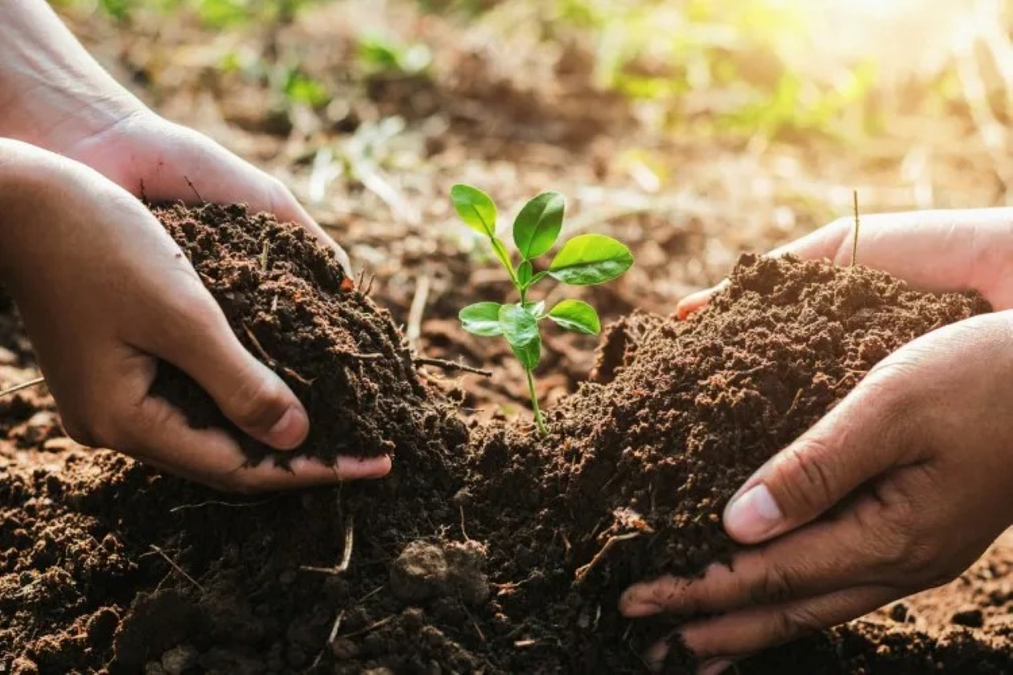
Soil is often treated as if it were endless, a quiet layer beneath our feet that will always be there, no matter how carelessly we use it. But that assumption is one of the most dangerous habits of modern life. Soil is not just dirt. It is the foundation of agriculture, the storehouse of nutrients, the sponge that holds water, and the living system that sustains forests, farms, and human settlements alike. Yet across the world, and increasingly in our own region, soil is being eroded, exhausted, and degraded at a pace that should alarm every policymaker, farmer, and citizen.
In a place like Jammu and Kashmir, where agriculture remains central to livelihoods and where the natural landscape is both beautiful and fragile, soil conservation is not a technical issue to be left to experts alone. It is a matter of survival. Mountain slopes, riverbanks, orchards, and farmlands are all vulnerable to erosion, landslides, unplanned construction, deforestation, and climate-linked rainfall extremes. When the soil goes, it takes with it productivity, ecological balance, and economic security. What remains is often a cycle of lower yields, higher dependence on chemical inputs, and greater vulnerability to floods and droughts.
The tragedy is that soil loss is usually invisible until the damage becomes severe. A patch of land may appear fertile one year and exhausted the next. A hillside may hold firm until a single spell of heavy rain washes away the topsoil that took nature centuries to build. This is why soil conservation must be understood as a long-term investment, not a seasonal concern. Topsoil, the uppermost layer rich in organic matter and microorganisms, is incredibly precious. Once lost, it is not easily replaced. Farmers may compensate temporarily with fertilisers, but fertilizers cannot fully restore the biological health and structure of soil that has been stripped of its natural richness.
There is also a deeper policy failure at work. Development has often been pursued without sufficient regard for ecological limits. Roads are carved into unstable slopes, riverbeds are disturbed, trees are removed, and catchment areas are weakened, all in the name of progress. But progress that destroys the very ground on which prosperity depends is a false bargain. Soil conservation requires a different mindset — one that sees land not as a commodity to be consumed quickly, but as a living resource to be managed carefully and passed on responsibly.
The good news is that soil conservation is neither mysterious nor impossible. Simple and proven measures can make a major difference. Terracing, contour ploughing, afforestation, mulching, crop rotation, check dams, retaining vegetation cover, and regulated grazing all help reduce erosion and improve soil health. Farmers can adopt organic and mixed farming practices that build soil fertility over time rather than deplete it. Local administrations can integrate soil protection into land-use planning, mining permissions, road construction, and flood management. Schools and communities can be made part of awareness campaigns so that conservation becomes a shared civic habit, not just an agricultural slogan.
Technology too has a role, but it must be used wisely. Satellite mapping, soil testing, and climate forecasting can help identify vulnerable zones and guide intervention. Yet no technology can substitute for political will and public responsibility. A society that neglects soil will eventually pay for it in imported food, damaged watersheds, and environmental instability. Conversely, a society that protects soil is investing in food security, clean water, biodiversity, and resilience against climate shocks.
Soil conservation should therefore be placed at the heart of environmental and agricultural policy. It deserves the same seriousness as road building, power generation, and urban planning. In fact, without soil conservation, all of these efforts rest on shaky ground. The issue is not only about farms or forests; it is about the continuity of life itself. Every grain of soil lost to erosion is a quiet loss of future productivity, future stability, and future hope.
If we are serious about sustainable development, we must begin with the ground beneath us. Protecting soil is not an abstract environmental ideal. It is a practical necessity, a moral obligation, and a civilizational duty. The health of the land will decide the health of the people. And if we fail to conserve the soil today, we may discover too late that we have eroded the very future we hoped to build.
(The author is a research scholar and freelancer)


