



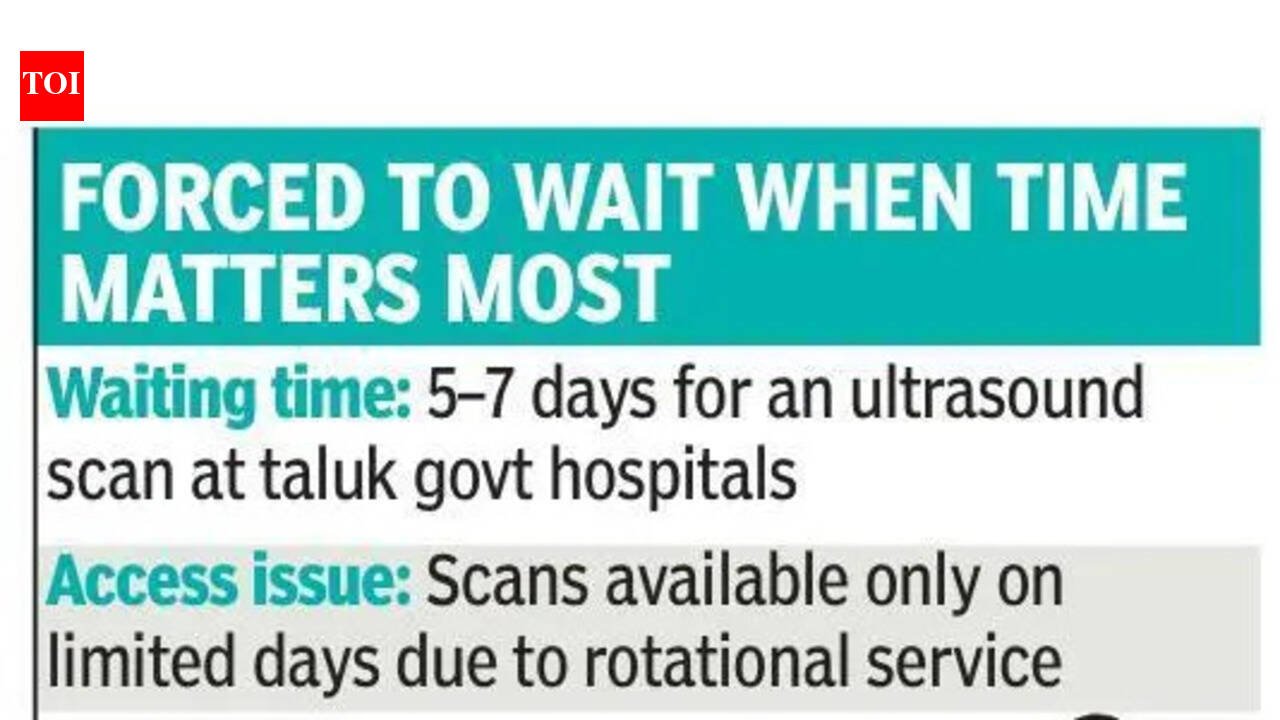
Mandya: Pregnant women in Mandya district are waiting up to a week for ultrasound scans at taluk govt hospitals as a shortage of radiologists forces services to run on a rotational basis.The district has only three radiologists to serve six taluk hospitals, resulting in limited scanning schedules and delays for patients. Although the govt had supplied ultrasound machines to all taluk hospitals a few years ago, radiologists were not appointed at the time, leaving doctors unable to offer the service. Three radiologists were appointed two months ago, but the shortage continues to affect service delivery.Pregnant women typically require at least two scans during the ninth month. Due to the restricted availability of specialists at govt facilities, many pregnant women are being compelled to approach private diagnostic centres, increasing their financial burden.At KR Pet Public Hospital, an ultrasound machine installed in 2016 remains non-functional as no radiologist has been posted there. Similarly, machines supplied in 2017 to hospitals in Maddur, Nagamangala and Pandavapura were never made operational for the same reason. New machines were provided to Malavalli Public Hospital in 2022 and to Srirangapatna Govt Hospital on April 10 this year, but staffing shortages have continued to limit their utilisation. While all six taluks have ultrasound machines, inadequate personnel has prevented their effective use.Currently, radiologists posted at Nagamangala, Srirangapatna and Malavalli taluk hospitals serve multiple locations on rotation. The Srirangapatna radiologist visits Pandavapura twice a week, the Malavalli radiologist travels to Maddur, and the Nagamangala radiologist visits KR Pet, where the ultrasound machine is yet to become functional. Due to heavy patient load and limited availability, women report waiting five to seven days to get a scan.District health officer Dr Mohan told TOI that ultrasound facilities are operational in five taluks, except KR Pet. “Three radiologists are providing services across the district on a rotational basis,” he said.


