Google has for years rented access to tensor processing units (tpus), specialised ai chips, through its cloud. Now it is selling tpu systems to other firms. Amazon puts the annualised revenue of its custom-chip business, much of which is tied to ai, at $25bn. Andy Jassy, the company’s boss, reckons that makes it one of the world’s three biggest data-centre chip businesses. Microsoft and Meta have also developed their own chips. Anthropic and Openai, two big ai labs, plan to do the same.
Hyperscalers have good reasons to design their own silicon. Chips account for much of the cost of an ai data centre. Bernstein, a broker, estimates that in a server rack running Nvidia’s H100 chips, priced at $25,000 apiece, spending on those chips makes up three-quarters of the total cost. Custom silicon is a fifth to a third as expensive, though less powerful. The cloud giants argue that they nevertheless get more computing power per dollar. Custom chips are also better suited to particular jobs: Google’s tpus for calculations underpinning its ai models, for example, and Meta’s processors for recommendation algorithms.
Some hyperscalers believe custom silicon will become a big business in its own right. In May Google teamed up with Blackstone, a private-equity giant, to establish an ai cloud firm that will rent out computing power built on Google’s chips. Amazon plans a similar venture. Anthropic intends to use up to 4m of Amazon’s Trainium processors. Openai says it will use the firm’s chips, too.
Such moves could turn custom silicon into a formidable competitor to Nvidia’s chips. Bloomberg Intelligence, a research firm, estimates that ai-chip shipments will grow from around 15m units this year to 28m by 2030. Custom chips will grow from 38% of the total to 49% by 2030, with Nvidia responsible for 40%. Nvidia will probably remain dominant by revenue—but the lower cost of custom silicon will put pressure on its fat margins.
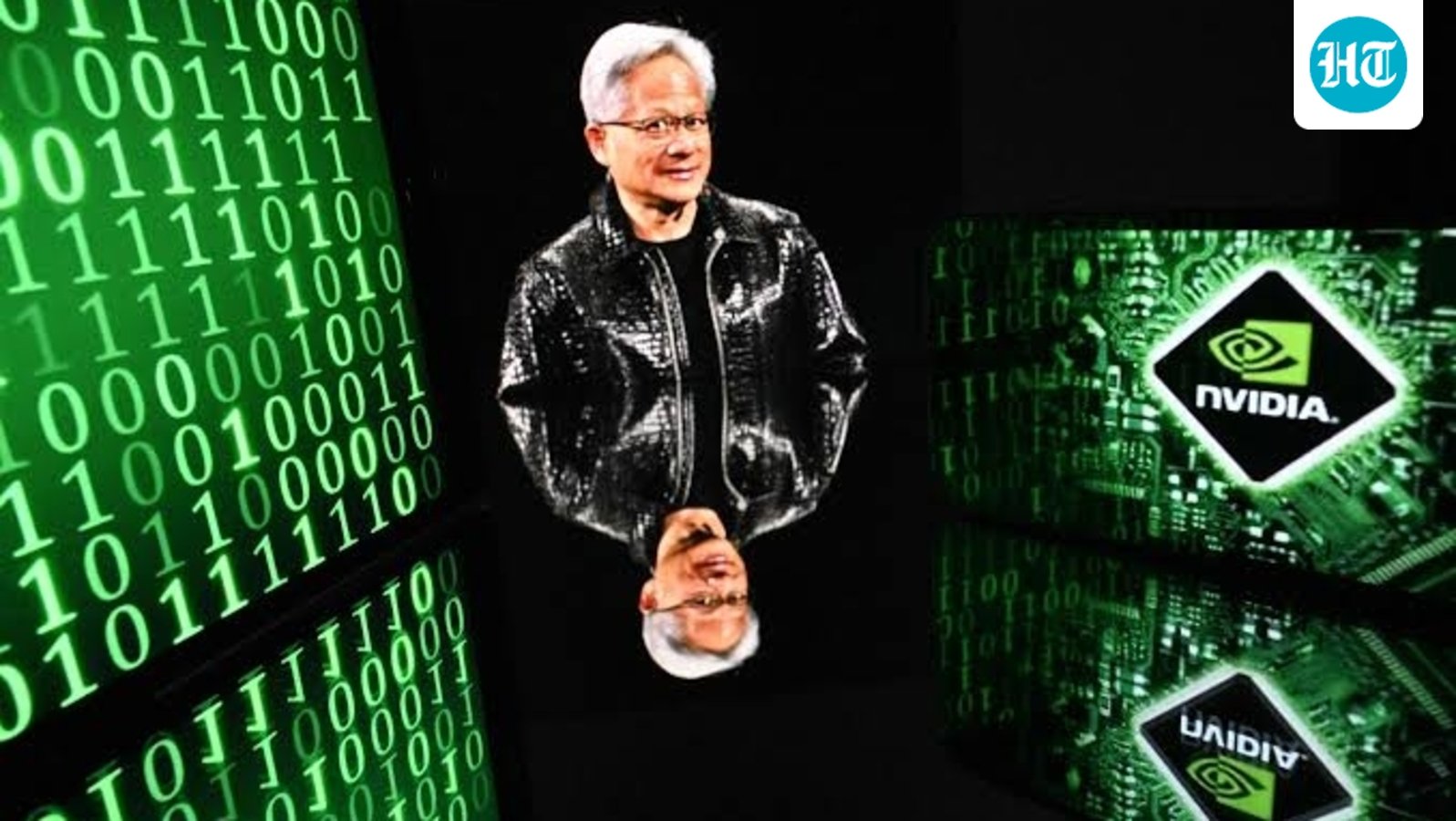
Nvidia sees things differently, however. Jensen Huang, its boss, argues that custom silicon’s greatest strength—specialisation—is also its weakness: it is good for known workloads, not new ones. Nvidia’s gpus, by contrast, can handle almost any ai task. As ai spreads beyond large language models into robotics, autonomous vehicles and industrial applications, that versatility could matter more.
Keeping up with Nvidia may also prove expensive and difficult. It now releases breakthrough chips once a year, up from once every two. Designing a frontier ai chip typically costs other firms $1bn-3bn, a sum Nvidia, which spent over $6bn on r&d last quarter alone, can easily multiply. It also takes two to three years. Few firms have the capital and engineering talent to sustain such an effort.
Nvidia’s business model offers another defence. Firms that turn designs into finished chips, such as tsmc, the Taiwanese chipmaker, have limited capacity. Cloud companies, says Vivek Arya of Bank of America, have to decide whether to use that “precious allocation” for their own needs or those of customers. Nvidia, which makes its own chips, faces no conflict.
As well as defending its position against hyperscalers, Nvidia also hopes to drum up new business. It wants to sell to governments trying to build domestic ai infrastructure, companies building their own ai infrastructure and “neocloud” firms that rent out ai computing power. Nvidia expects sales to these customers to grow faster than to hyperscalers.
The new partnership with Wall Street is part of a broader strategy to help customers finance ai investments. In July Nvidia launched a programme to rent unused computing capacity from neoclouds in exchange for a share of future revenues to make it easier for them to borrow and expand. It is also reportedly discussing a $350bn scheme to help Openai lease a data centre in Ohio and buy gpus.
For now, though, scarcity still blurs the line between customer and competitor. In June Google signed a $30bn deal to lease ai computing capacity from SpaceX, which runs on Nvidia chips. Amazon’s custom chips account for less than a tenth of its capital spending; much of the rest still goes to Nvidia. Everyone is buying computing power wherever they can find it. Nvidia still supplies the bulk.