



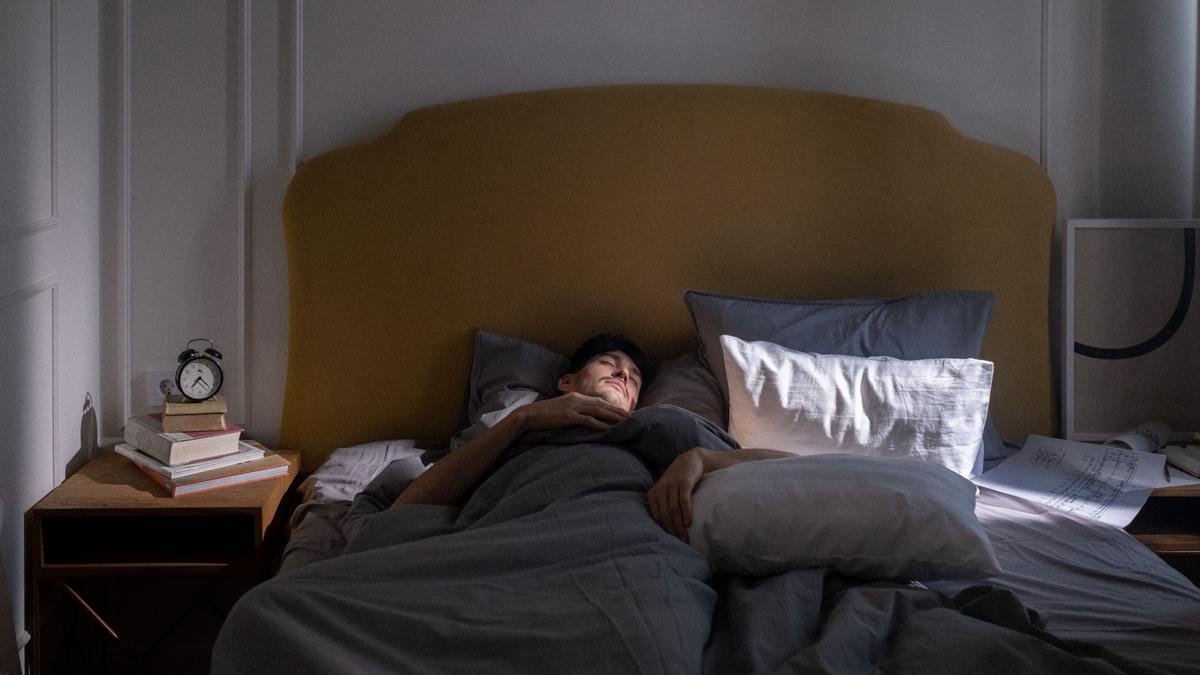
When daytime photons, which are rich in blue light, enter the retina, they ‘activate’ cells containing melanopsin.
| Photo Credit: Ron Lach/Pexels
— Sahitya Agrawal, Raxaul
A: The brain’s biological clock is a network of genes and proteins whose concentrations rise and fall in a roughly daily cycle.
There is a cluster of neurons in the hypothalamus called the suprachiasmatic nucleus (SCN). Inside SCN neurons, certain genes are switched on to produce certain proteins. At one point, these proteins accumulate enough to suppress the same genes. Later, as the proteins are broken down, the genes become active again, beginning the next cycle.
This cycle takes more or less 24 hours, and takes the help of outside cues to adapt day to day. In particular, light-sensitive cells in the retina have a pigment called melanopsin that is sensitive to daylight and sends information directly to the SCN. So when you ‘experience’ daylight, the brain knows it’s daytime and adjusts the timing of the SCN clock.
Specifically, when daytime photons, which are rich in blue light, enter the retina, they ‘activate’ the cells containing melanopsin, which signal the SCN, which renders molecular changes in its clock machinery. And repeated exposure to the natural light-dark cycle synchronises the body’s clock to the earth’s 24-hour rotation.
Have a question you’d like answered? Please write to science@thehindu.co.in with ‘Question Corner’ as the subject.
Published – August 12, 2026 08:30 am IST


