





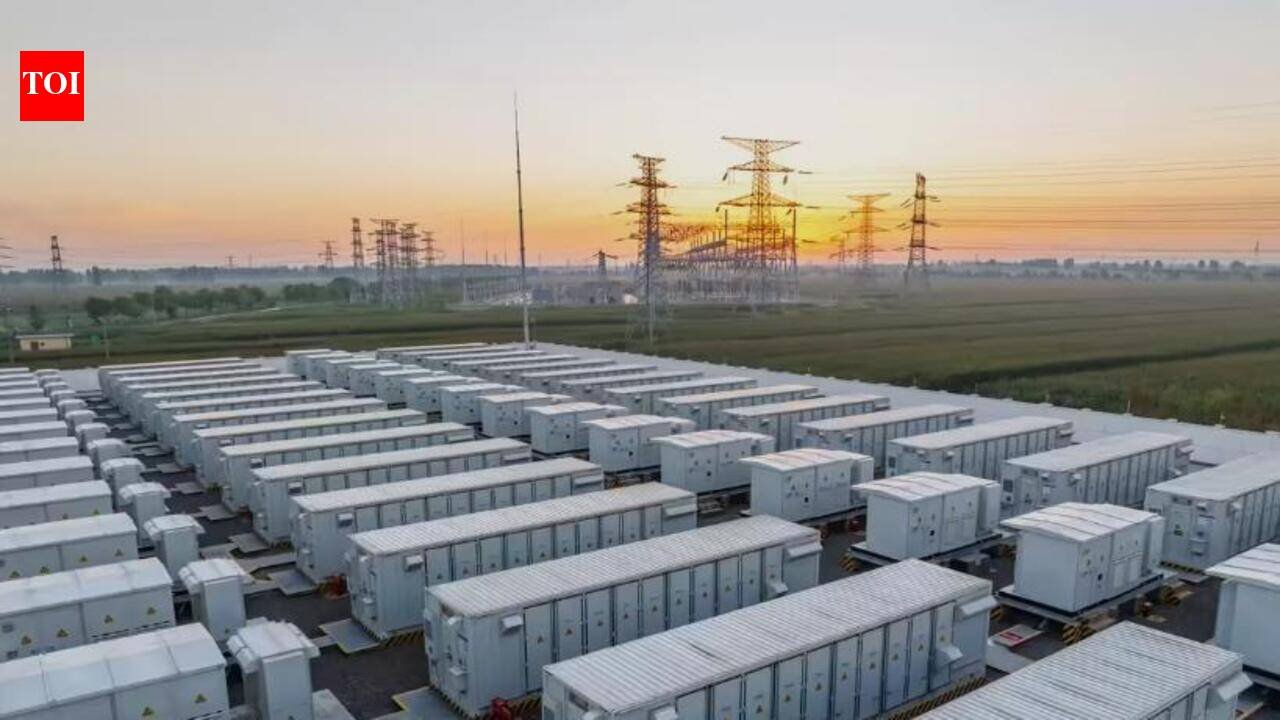
Gandhinagar: Surplus solar power generated during the day could be stored in batteries and supplied to Gujarat’s grid after sunset under a dedicated Battery Energy Storage System (BESS) policy being drafted by the state govt. The proposed framework seeks to encourage battery storage across the power supply chain to make renewable electricity more dependable, strengthen grid stability and flexibility, and support Gujarat’s plan to build more than 100GW of renewable energy (RE) capacity by 2030.Energy department officials said renewable power is sometimes not scheduled or absorbed during peak generation hours because supply exceeds demand. This is particularly common during the day, when solar generation is at its highest.“Renewable energy that cannot be absorbed by the grid when it is generated can be stored in batteries and supplied later,” an official involved in preparing the policy said. “This will allow surplus daytime generation to be used when demand is higher, including during non-solar hours.”
The framework will cover technical, safety, cybersecurity, and environmental standards while encouraging storage-based business models and investment in battery manufacturing and related industries
Battery storage can turn variable RE into power that utilities can schedule according to demand.The draft will be finalised after consultations with govt departments, power utilities, industry associations, project developers, battery manufacturers, financial institutions, and technical experts. Officials said the consultations would help align the policy with the power sector’s changing operational and investment requirements.The framework will cover technical, safety, cybersecurity, and environmental standards while encouraging storage-based business models and investment in battery manufacturing and related industries, said an official.With the highest installed RE capacity in the country, Gujarat ranks first in wind power generation and rooftop solar installations, and is home to the world’s largest RE park at Khavda in Kutch. Officials expect electricity requirements to increase as industries expand and new demand emerges from green hydrogen projects, electric mobility, and data centres. Large-scale battery storage will be central to making this growing capacity available on demand beyond generation hours.


