



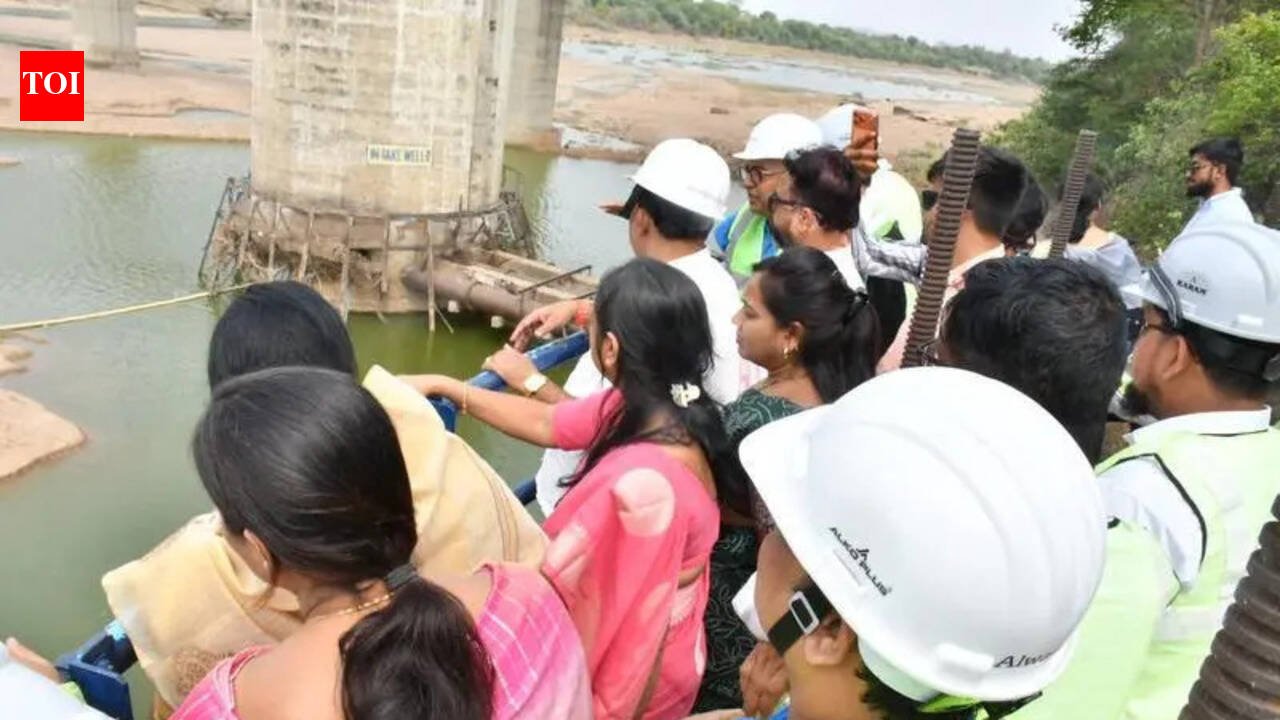
Nagpur: What was meant to be a routine inspection of the city’s water infrastructure has once again exposed a critical weak link in Nagpur’s supply chain — the mounting challenges in pumping raw water from the Kanhan River, a source that feeds a significant portion of the city’s daily needs but is increasingly turning unreliable.During the visit organised by Nagpur Municipal Corporation along with Orange City Water, officials acknowledged that lifting water from Kanhan has become a daily struggle. Fluctuating river levels, heavy silt deposition and high pollution loads are severely impacting intake efficiency. Pumps often operate under stress, leading to frequent breakdowns and reduced discharge. The Kanhan-based system primarily supplies Satranjipura, Lakadganj, Ashi Nagar, Gandhibagh and parts of Nehru Nagar zones, making these areas the first to feel the impact of any disruption.The Kanhan water treatment plant currently handles 240MLD, but officials admit actual output often fluctuates due to pumping constraints and raw water quality issues. “The installed capacity is not the problem — sustaining consistent pumping is,” a senior official noted while explaining the process to elected corporators, including mayor Neeta Thakre, ruling party leader Narendra Borkar, leader of opposition Sanjay Mahakalkar, Pradip Pohane, water works panel chairperson Divya Dhurde and vice chairman Vijay Zalke across party lines.The biggest concern remains erratic power supply. Pumping stations at Kanhan are heavily dependent on uninterrupted electricity, and even brief outages disrupt the entire cycle — from raw water lifting to treatment and distribution. Backup systems exist but are not robust enough to handle prolonged interruptions, particularly during peak summer demand when consumption spikes sharply.Pollution has compounded the crisis. Industrial effluents, untreated sewage and agricultural runoff have degraded raw water quality at the source, forcing treatment plants to work harder and longer. This not only slows down processing but also raises operational costs and increases the risk of supply shortfalls.In contrast, the Godhani water treatment complex, which draws from Pench, remains relatively stable. The facility houses four plants — Pench I (136 MLD), Pench II (175 MLD), Pench III (120 MLD) and Pench IV (115 MLD) — collectively treating 546 MLD. With comparatively better raw water quality and fewer pumping disruptions, Godhani shoulders the bulk of the city’s supply.This imbalance is raising concerns. Overdependence on Pench-based system, while Kanhan struggles, leaves the city vulnerable to any disruption in either source. Ageing infrastructure, transmission losses and rising demand further tighten the margins.Despite years of reliance on Kanhan, long-term investments in modernising intake systems, ensuring dedicated power supply and controlling pollution remain inadequate. The inspection, attended by top civic and political functionaries, was intended to showcase preparedness — but instead highlighted systemic inefficiencies that continue to threaten Nagpur’s water security.With summer intensifying and demand peaking, the message is clear: Unless pumping issues at Kanhan are urgently addressed, the city’s water supply will remain at the mercy of an overburdened and failing system.INFOBOX | NAGPUR WATER TREATMENT PLANTS (AS PER OCW NOTE)Source of Raw Water:Pench (Khairi Dam)Kanhan RiverWater Treatment Plants & Capacities:Pench I: 136 MLDPench II: 175 MLDPench III: 120 MLDPench IV: 115 MLDKanhan: 240 MLDTotal Treatment Capacity: 786 MLDTreatment Process Flow:Raw Water → Aeration & Pre-chlorination → Coagulation (chemical mixing) → Flocculation → Sedimentation → Filtration → Post-chlorination → Distribution


