





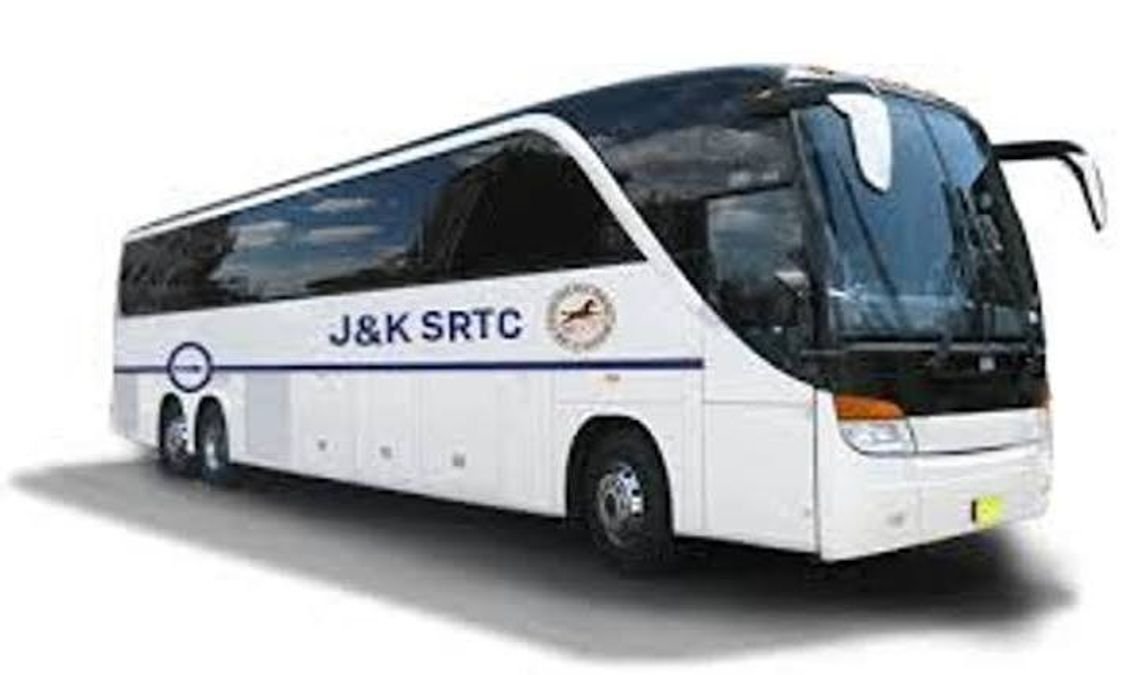
Srinagar, Aug 14: Despite successive governments promising to strengthen public transport and ease the burden on commuters, the shrinking fleet of the Jammu and Kashmir Road Transport Corporation (JKRTC) has raised serious questions over the government’s ability to provide affordable and reliable passenger services across the Union Territory.
Government data shows that the number of JKRTC passenger buses has declined by 59 per cent over the past 36 years, highlighting the steady erosion of the public transport network and raising concerns over the availability, accessibility and quality of government-run bus services.
The situation has left commuters in several parts of J&K increasingly dependent on private transport, often at higher fares and with limited alternatives.
Transport Department officials have repeatedly indicated that new electric buses would be inducted into the JKRTC fleet. However, commuters say the promised expansion is yet to make a visible difference on the ground, with several routes continuing to face an acute shortage of buses.
Many existing JKRTC buses are also in poor condition, with commuters complaining about inadequate maintenance and frequent breakdowns. On several routes, the absence of replacement buses means that once a vehicle becomes defunct, passengers are left without a government alternative.
The situation is particularly evident in border areas such as Uri, where residents say the direct JKRTC bus service between Uri and Srinagar has remained suspended for more than two months.
“We used to have a direct bus service from Uri to Srinagar and back, but it has remained suspended for over two months. The department says the bus has become defunct, but there is no replacement. Commuters are being made to suffer,” locals told Rising Kashmir.
Residents said the absence of the service has forced people to depend on private vehicles and other modes of transport, placing an additional financial burden on students, employees, patients and other regular commuters.
Similar complaints are emerging from different parts of the valley, where residents say the shortage of government buses has weakened an important affordable mode of transportation.
The introduction of 100 smart buses in Srinagar has provided some relief to commuters within the city and adjoining areas. However, residents living on the outskirts of Srinagar and in other districts say the benefits of the improved public transport network remain largely confined to urban areas.
They have demanded the extension of smart bus services to peripheral areas and major routes connecting Srinagar with other districts.
“People living outside the main city cannot be expected to remain dependent on private transport forever. There is a need for a reliable government-run bus network connecting the outskirts and districts with Srinagar,” residents in Baramulla said.
JKRTC officials, meanwhile, said the corporation is expecting the induction of 200 new smart buses for Jammu and Srinagar, which they said would help strengthen the public transport network.
However, commuters maintain that merely announcing new buses will not be enough unless the government ensures regular services, adequate maintenance and replacement vehicles on routes where existing buses have become defunct.
The widening gap between demand and the availability of government transport has raised a larger question: as the JKRTC fleet continues to shrink, is the government gradually leaving commuters with no option but to depend on the private sector?


