



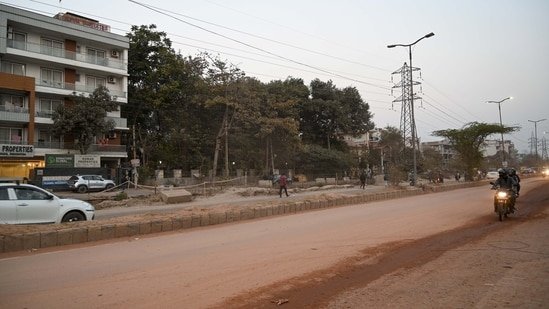
New Delhi: India’s highway construction and the road building sector is set to slow down in 2026-27 as the ongoing West Asia conflict disrupts supplies of key inputs and drives up costs, according to industry experts.


The pace of national highway construction has already declined to 23.74 km per day in 2025-26 (till the third week of March), down from 29.21 km/day in 2024-25 and 33.83 km/day in 2023-24, according to ratings agency CareEdge. The report, released on Monday, forecast execution to slow further to 21–22 km per day this fiscal.
The slowdown is being driven by a shortage of bitumen, a key petroleum product used in road surfacing, with contractors reporting a sharp mismatch between demand and supply.
A spokesperson for the National Highway Builders Federation (NHBF) said contractors are receiving barely a quarter of their requirements. “If they need 10 trucks, they are able to get only two,” he said, adding that the crunch has intensified during the peak construction season ahead of the monsoon. Maintenance contracts are being hit the hardest, with bitumen prices rising 20–30% amid disrupted supply chains, the spokesperson added.
According to the Industry experts, the supply shock is compounding existing structural constraints.
Rahul Garg, CEO of Moglix, said domestic bitumen production has stagnated at around 5 million tonnes even as consumption has risen to 8.74 million tonnes, creating a persistent deficit. Refineries, he noted, prioritise higher-margin fuels such as petrol, diesel and jet fuel over bitumen.
“Between 2010 and 2018, refining capacity rose 21%, but bitumen imports surged 823%, with Gulf supplies bridging the gap. That model is now under stress. Asphalt prices, which were about ₹40,000 per tonne before the conflict, are now approaching ₹65,000,” Garg said, adding that overall input costs—including fuel, steel and electricals—have risen 15–25%.
“The aggregate impact on highway project economics is estimated at up to 8%, and mid-sized contractors on fixed-price state contracts are absorbing most of it,” he added.
Zafar Khan, executive director at Vertis Infrastructure Trust, said supply chain disruptions and rising logistics and material costs will weigh on execution in the near term. “Availability could remain uncertain if the geopolitical situation persists,” he said.
The cost pressures are also expected to hit profitability. CareEdge estimates that PBILDT (Profit Before Interest, Lease, Depreciation & Tax) margins for road developers could decline by 100–150 basis points in FY27 due to the surge in bitumen prices.
The ministry of road transport and highways (MoRTH) is yet to come up with its yearly target. An official aware of the matter said this would be done in a month’s time. “By then, we will get a clearer picture about the war and understand its impact better,” the official added.
Meanwhile, MoRTH on Wednesday introduced an emergency cost escalation compensation mechanism following industry representations. An official, privy to the information, said the move allows contractors to receive monthly payments, easing liquidity pressures. The price adjustment cycle has also been shortened from three months to one month to better reflect volatile input costs such as fuel, bitumen and steel.


