



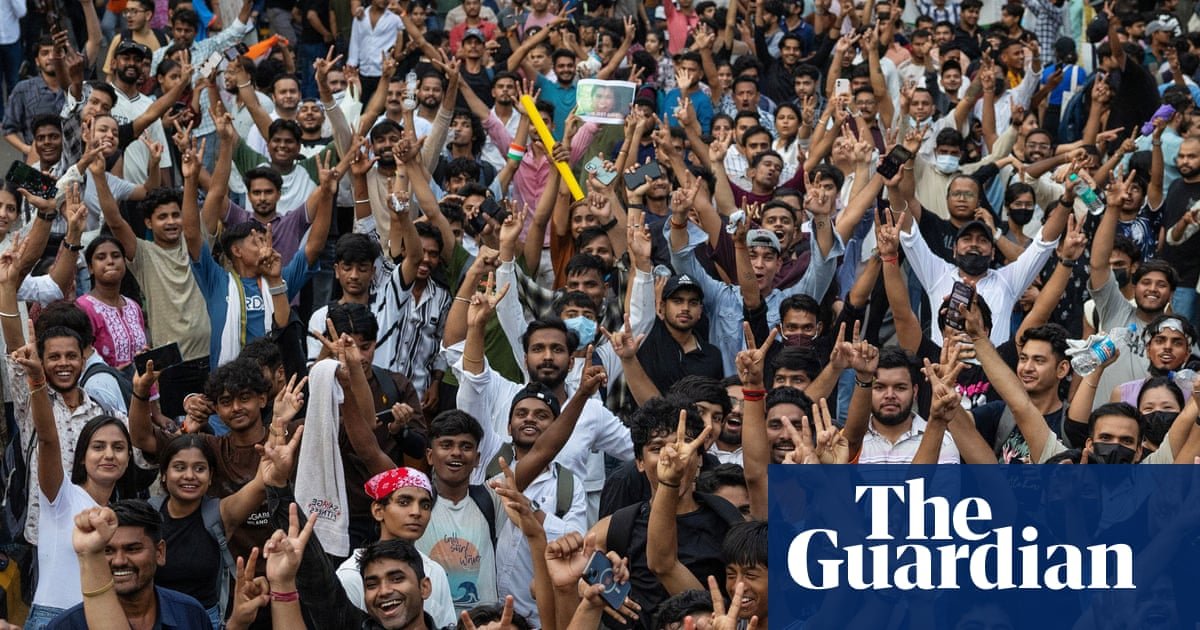
A crucial point that your editorial on India’s gen Z protests (28 July) missed out was that the protests the Cockroach Janta party (CJP) launched in Delhi, hunger strikes and all, were not just supported by young, restless or unemployed people. It was wholeheartedly supported by their parents and grandparents, the old and the middle-aged, even well-off young adults with good jobs and little children. And this was not just in Delhi, but across the country in the huge metropolises of Mumbai, Kolkata, Chennai and Bengaluru, as well as smaller towns. And it was all peaceful, for which credit goes to the ethos of the protests and the CJP.
All of this was suppressed in the mainstream media, print and TV, and even distorted to suggest that it was violent in parts. This reflects not just the overwhelming angst and fear of young graduates facing poor prospects, but the significant grievances of a people who are seeing and experiencing their democracy fading away.
Bhaskar Mani
Bengaluru, India
Your editorial captures an important truth: movements that begin with a single grievance often evolve into broader demands for justice, accountability and democratic reform. India’s gen Z protests are not simply about leaked exam papers; they reflect a generation’s frustration with institutions that have failed to protect merit and opportunity.
I could not help thinking about Pakistan. Here, too, students, jobseekers and marginalised communities have long expressed concerns about governance and access to justice. Yet these struggles rarely transform into sustained, nationwide civic movements. Local protests often remain isolated and receive limited attention or fail to generate the solidarity required for lasting institutional reform.
Whether in India or Pakistan, young people deserve institutions they can trust, exams they can believe in and public systems that reward merit rather than connections. The significance of India’s movement lies not only in political consequences but in the emergence of a generation that has discovered the power of peaceful collective action. Its long-term impact will depend on whether that energy strengthens democratic institutions rather than deepening divisions.
Nand Lal Rathore
Chachro, Sindh province, Pakistan


