



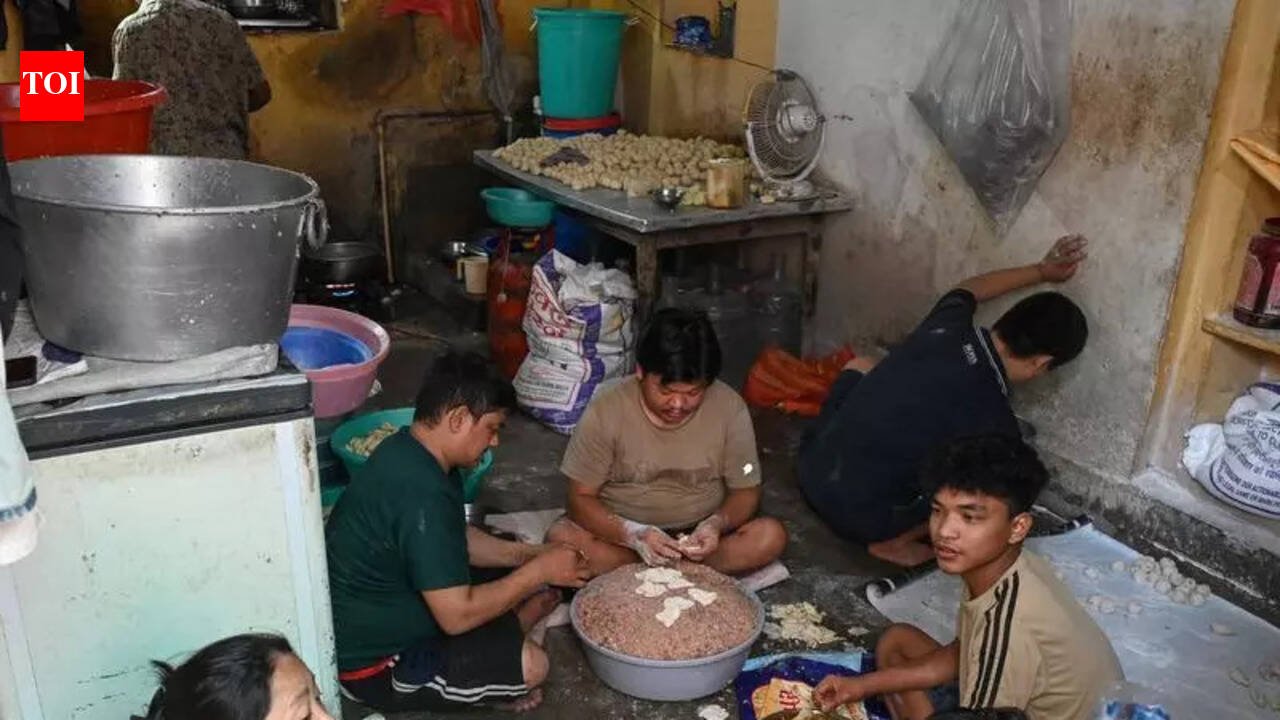
New Delhi: In a narrow lane in Chirag Dilli, a steel steamer rattles on a gas stove inside a one-room kitchen-shop called Chen Fast Food. Khemraj is busy chopping chicken while Nishan Thapa is carefully rolling the dough, cutting out thin circles and folding momos one after another.For years, this has been a common sight in Chirag Dilli, a neighbourhood many vendors call Delhi’s “momo capital”. Several migrant families from Darjeeling and Nepal spend hours folding dumplings inside small rooms during the day. By evening, the momos begin their journey across the city, reaching stalls in South Extension, Jangpura, Hauz Khas, Vasant Kunj, Kalkaji and Govindpuri, carried in plastic tubs on scooters or bags on the metro.“Here you will find momos at every second or third house,” Nishan says, without looking up from the dough.These days, the conversation in these kitchens keeps returning to gas cylinders.Like thousands of small food businesses across the city, these momo makers depend entirely on LPG to cook, steam and prepare their food. As global tensions push up energy prices, the cost of keeping their stoves running has begun to climb sharply. What appears to be a distant geopolitical crisis has quickly travelled through global energy markets. For workers in the informal economy, those shifts show up directly in the price of a cylinder.For instance, Khemraj and Nishan say they felt the change almost immediately. Khemraj moved from Darjeeling years ago and sold momos from a small shop in Savitri Nagar for about 16 years. Nishan joined him about six years ago. Most months, they managed to save about Rs 10,000 after paying for rent, ingredients and gas.Asked about their savings now, both laugh softly. “Ab kya? Ab kuch nahi,” Nishan says. “LPG is very expensive. We increased the price by Rs 10, but that is not helping.”They usually arrange cylinders through people in the neighbourhood. Recently, a 14 kg cylinder cost them close to Rs 4,500 in the open market, they say. Some sellers quote about Rs 350 per kg. “We use five or six cylinders in a month,” Nishan says. “If gas costs this much, how will we save?”A few lanes away, Vimla and her brother’s family sit around a large metal bowl, mixing chicken, cabbage and spices. Four families from Nepal share the same routine. Their day starts around 8am with a trip to the nearby mandi for vegetables. By afternoon, they usually prepare 400 to 600 momos, depending on the orders. In the evening, they carry them to markets such as GK to sell.The last gas cylinder stands in a corner of the room. “We knew there was a shortage coming,” Vimla says. “Since we are all relatives, we brought some cylinders from home.” She points to the metal cylinder. “This is the last one.” When they tried booking another, she says they were told the wait could stretch to nearly 25 days. “If we don’t get gas, we will close the business for some time,” she says quietly.Nearby, Ramu, who started selling momos in 2002, has already switched to a different routine. The steamers in his shop sit unused; instead, a wok sizzles over a small flame as he tosses noodles in quick circles. “To save gas, I stopped making momos,” he says. “Now, only chowmein.”By evening, customers across Delhi line up at the momo stalls without thinking much about where the food came from. However, inside these small kitchens, every tray of dumplings now comes with a quiet calculation: how long the gas will last, and how many more days the steamers can keep running.


