



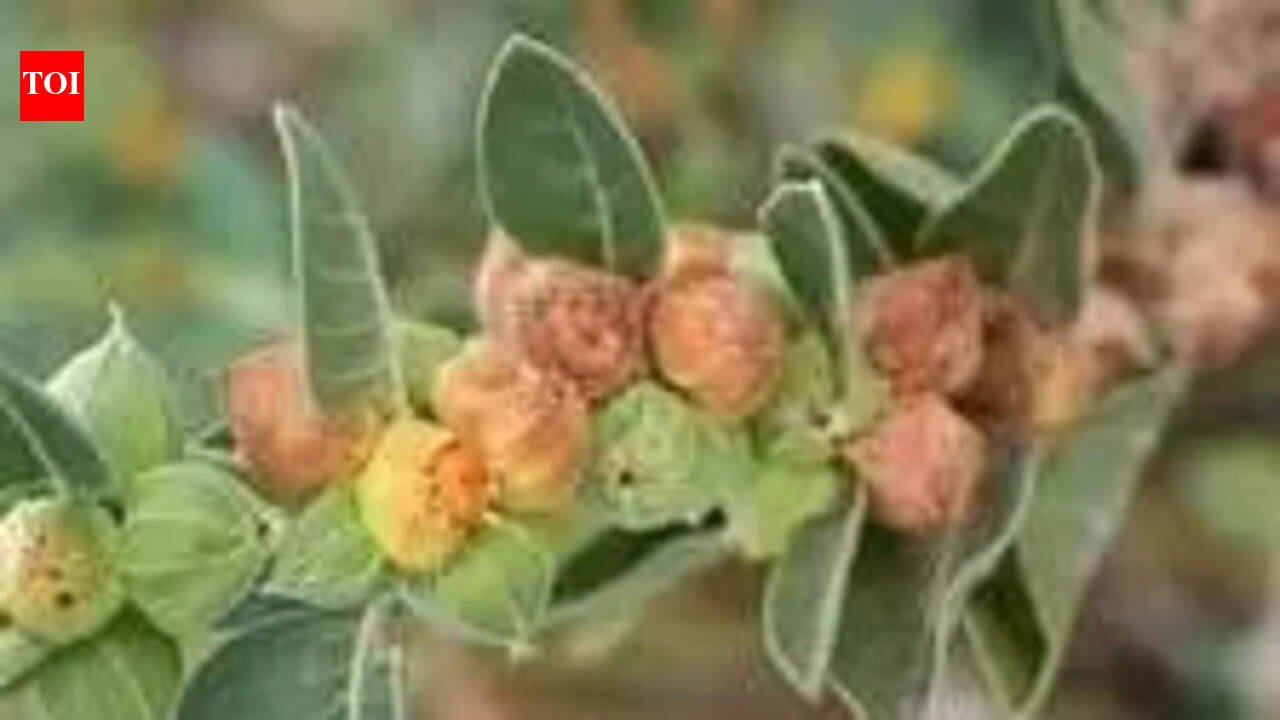
Amritsar: Punjab has initiated a crucial scientific intervention to save Withania Coagulans, a highly valued medicinal plant that is rapidly disappearing from its natural habitat due to indiscriminate extraction and lack of organised cultivation. Recognising the urgent need to conserve the species before it slips into complete extinction, the state govt entrusted Guru Nanak Dev University (GNDU) with a specialised research project aimed at developing sustainable conservation strategies for the endangered plant so that its medicinal benefits remain available for future generations.The project, titled “Development of conservation strategies for Withania Coagulans: An important endangered medicinal plant,” was awarded by the Punjab Biodiversity Board to Pratap Kumar Pati, professor and head of the department of biotechnology, GNDU. The species also drew national attention, with the ministry of environment, forest and climate change of the Govt of India notifying Withania Coagulans “on the verge of extinction”. Stating that the plant belongs to the Solanaceae family, Pati said the plant is locally known in Punjab as Rishyagandha, Paneer Doda, etc, and is commonly known as Khamjaria in Punjab.“For centuries it occupied a prominent place in traditional systems of medicine because of its remarkable therapeutic properties. The entire plant is used in indigenous remedies to treat ailments such as dyspepsia, flatulent colic, intestinal infections, toothache, insomnia, etc. Its flowers are widely used in the management of diabetes, the fruit for asthma liver disorders, etc,” he said. Stating that modern studies also confirmed several pharmacological properties of the plant, including anti-microbial, anti-oxidant and anti-cancer activities, professor Rajiv Sood, SLN Ayurvedic College, said its growing commercial and medicinal value led to large-scale, unregulated harvesting from natural habitats. “Combined with the absence of systematic cultivation practices, this overexploitation severely reduced its population in the wild, leading to its classification as a threatened and endangered species in several parts of India, including Punjab,” Sood added.Tissue-culture tonic to revive speciesUnder the project, GNDU scientists will develop a comprehensive conservation strategy involving advanced tissue culture techniques to multiply the plant under controlled laboratory conditions, followed by field propagation to reintroduce the species into suitable habitats. Pati further said that besides scientific work, the project will also focus on spreading awareness among farmers and the public about the ecological and medicinal importance of the wonder plant. Researchers believe that combining conservation science with community participation will be essential to ensure the long-term survival of this valuable medicinal resource.MSID:: 129397689 413 |


