



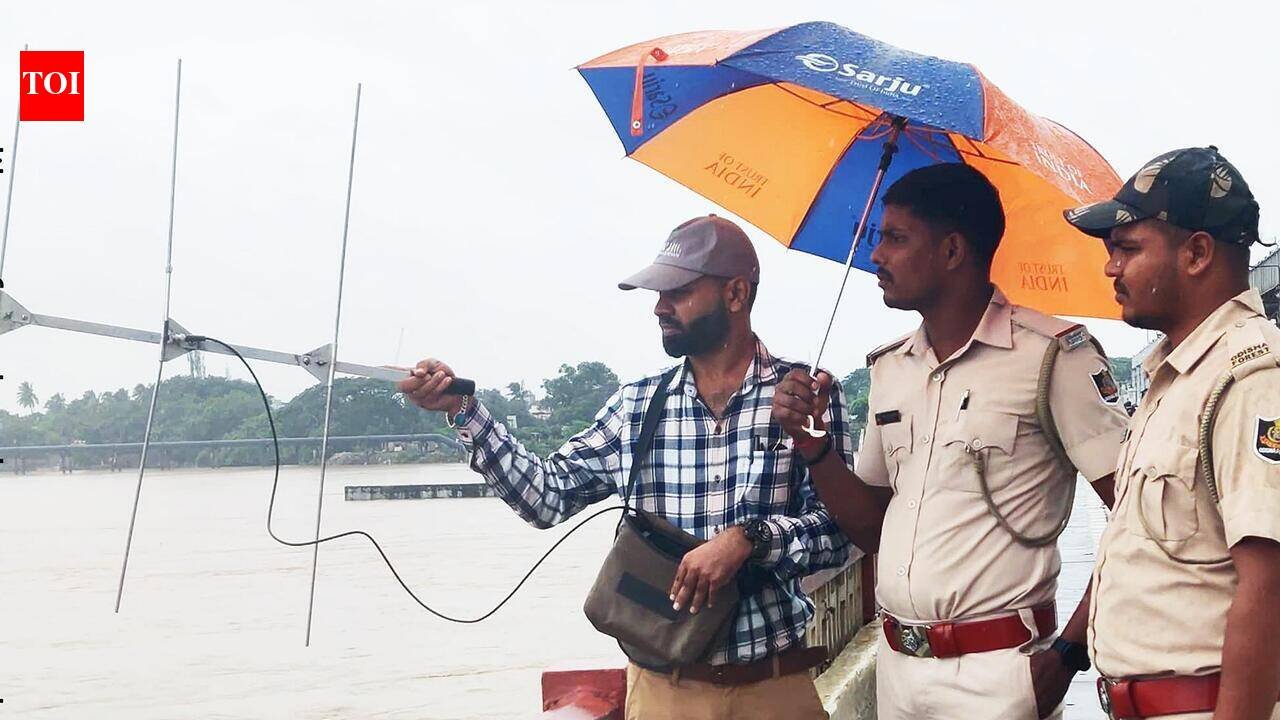
Bhubaneswar: The city forest division has launched a marathon tracking operation to save endangered gharials swept downstream by the swelling Mahanadi river. Officials fear that the aquatic reptiles could become entangled in fishing nets or get killed by locals who might mistake them for dangerous predators such as muggers or crocodiles.Forest authorities said that the gharials, released in the Mahanadi gorge within Satkosia Tiger Reserve under a species recovery programme by Nandankanan zoo in March, were displaced by strong currents during the ongoing floods.So far, two have been tracked to the Daya river and Jobra, both under the jurisdiction of the city forest division. “We receive satellite inputs about their movement. Two have been located far from the release point and are safe now,” said Amaresh Pradhan, divisional forest officer (city division).The release programme had been executed jointly by Nandankanan zoo, Satkosia and Mahanadi wildlife divisions. Each of the 12 gharials released was fitted with a transmitter to monitor survival and dispersal.Officials have sounded alerts across three divisions, with tracking operations extending from Sambalpur to Paradip. The effort underscores the challenges of conserving a species whose survival rate in the wild remains alarmingly low.Forest officials said currently, three postgraduate researchers are engaged in monitoring the reptiles’ movements.Pradhan added that the total gharial population in Satkosia has risen to 27, with 15 carrying transmitters and the rest being naturally bred in the gorge.Last year, the wildlife wing discovered 29 hatchlings on a sandbar in the Mahanadi gorge — marking the fifth consecutive year of natural breeding at the same nesting site. However, experts caution that the survival rate of gharial hatchlings is just 0.1%, comparable to that of Olive Ridley turtles.Satkosia remains the only site in Odisha where gharials breed in the wild and it also houses a dedicated research and conservation unit. The Nandankanan zoo continues to play a pivotal role in the gharial recovery programme, which has been extended for another four years (2023–2026) following its initial phase from 2019–2022.The ongoing rescue and tracking mission is aimed at ensuring the reptile’s survival in the face of natural challenges and human threats, forest officials said.


