



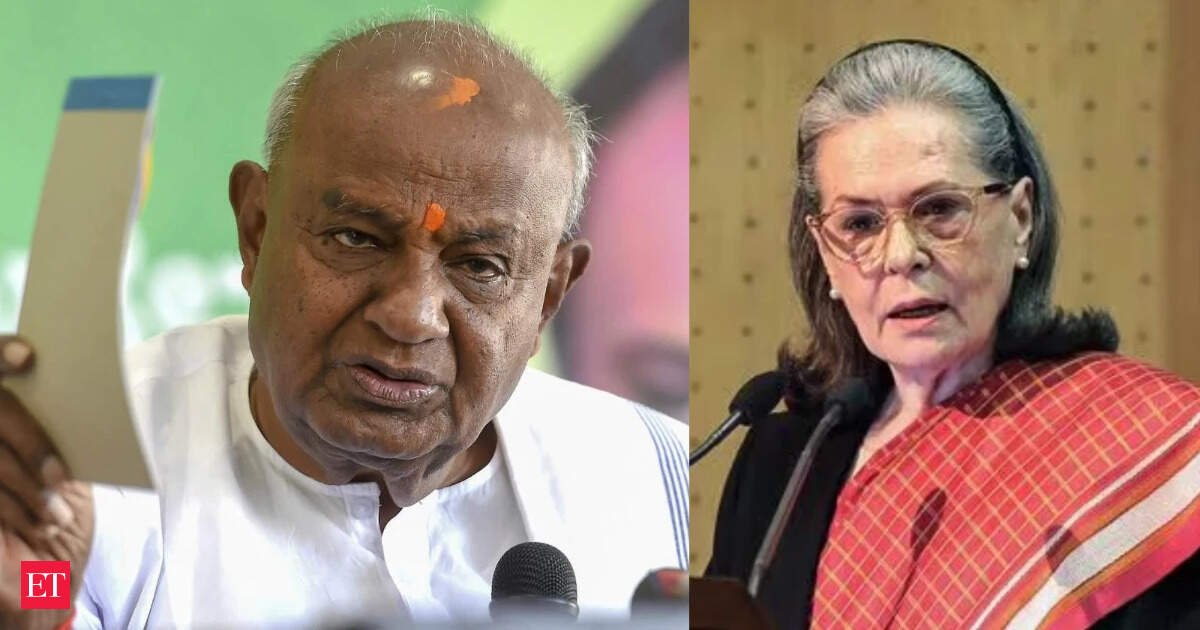
In his letter, the veteran Janata Dal (Secular) leader flagged what he described as excessive disorderly conduct by opposition members, particularly Congress MPs. He said proceedings have frequently been disrupted by slogan-shouting, display of placards, protests inside and outside the House, and repeated adjournments.
Such actions, he cautioned, undermined the dignity of Parliament and weakened the foundations of India’s parliamentary democracy.
Reflecting on his 65-year political career, Gowda said nearly 90% of his public life had been spent in the opposition and that Gandhi too had spent a significant part of her political career in a similar role.
While opposition parties have every right to express dissent, he said such protests must remain within the established rules, traditions and dignity of Parliament.
“I have spent nearly ninety percent of my political life in the opposition. Even then, I always made conscious efforts to uphold parliamentary traditions and maintain the dignity of the institution,” he said.
The former PM said he had expected opposition members, particularly those from the Congress, to correct their conduct. However, he noted that some members continued to engage in provocative behaviour both inside the House and within the Parliament complex, which prompted him to write to Gandhi.Recalling the legacy of India’s parliamentary democracy, the former prime minister said the country’s democratic traditions were shaped by leaders such as Jawaharlal Nehru, Sardar Vallabhbhai Patel, B R Ambedkar and Maulana Abul Kalam Azad. Drawing from his long parliamentary experience, he said he had not witnessed such levels of disorder in the past.
Gowda also noted that during his own parliamentary career he had never entered the well of the House or raised slogans in protest, adding that earlier generations of leaders had emphasised a culture of restraint and respect for institutions.
The responsibilities of opposition leaders were significant as they must constantly bring people’s concerns to the attention of the government. However, even when protests are necessary, they should be conducted in a manner that respects parliamentary norms and the authority of the Chair, the senior Rajya Sabha member said.
He also criticised demonstrations on the steps of Parliament, saying such acts amounted to excessive forms of protest and were not appropriate conduct.


