






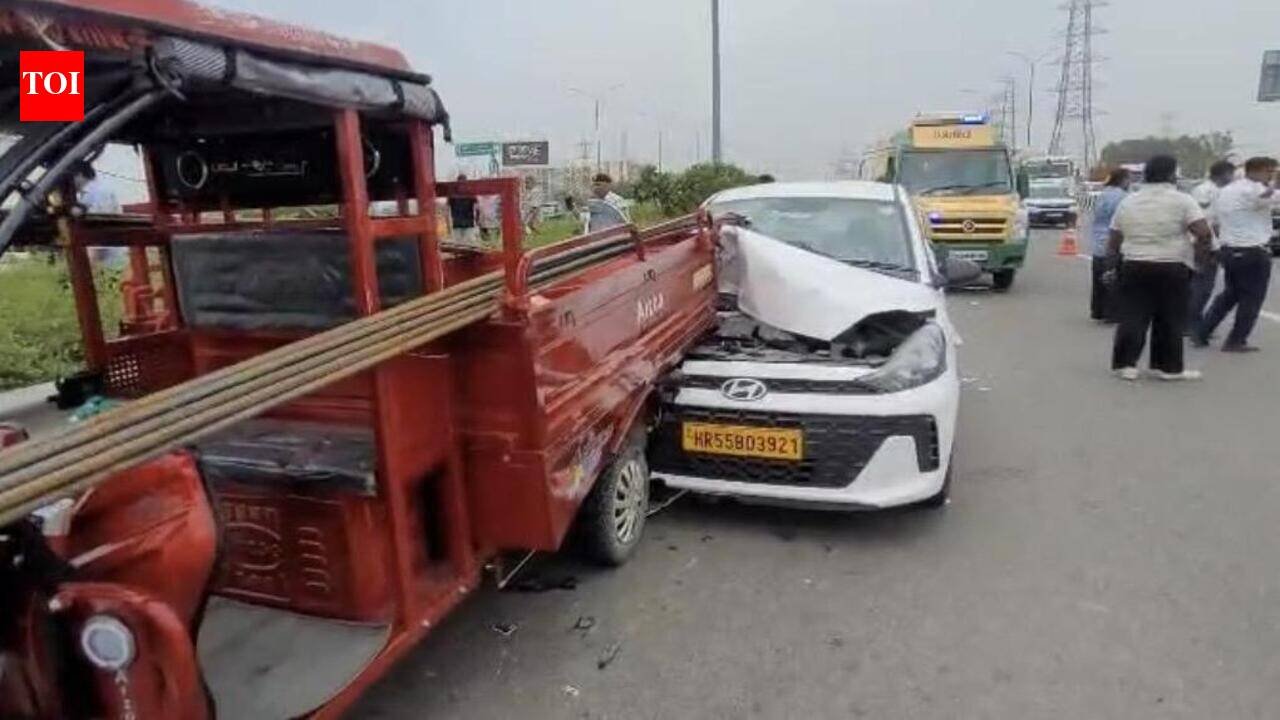
Gurgaon: Thirty-four-year-old Akanksha survived only by luck. But her mother says the near-fatal crash that killed her cab driver could have been avoided if authorities had kept banned slow-moving vehicles off Dwarka Expressway in the first place.“Even after my daughter’s accident, we still see e-rickshaws and slow-moving vehicles on the expressway every day. Mere challans cannot save lives. A family lost its 22-year-old son and my daughter was fortunate enough to survive. Why can’t these vehicles be stopped from entering the expressway?” said Hridayesh Kumari, questioning how e-rickshaws carrying protruding iron rods continue to ply a high-speed corridor despite the ban.A week after the July 17 crash that killed 22-year-old cab driver Shivendra Kumar and left Akanksha seriously injured, her family says the tragedy exposed enforcement failures that authorities are yet to fix.The accident has renewed scrutiny of prohibited slow-moving vehicles on high-speed corridors. A week on, police are yet to arrest the e-rickshaw driver, who fled the scene after the crash. Police found that the e-rickshaw travelled nearly 3km on the expressway, much of it in the fast lane, before the collision.Akanksha, who works at a paper mill in Gurgaon, was returning home to Dwarka Mor after an office meeting when her app-based cab developed a mechanical snag midway. The driver, expecting repairs to take nearly two hours, arranged a second cab so she wouldn’t be delayed. She called her mother to say she had switched vehicles and would be home soon. The next call the family got was to say she had been seriously injured.The Hyundai Aura she was travelling in rammed into a slow-moving e-rickshaw carrying protruding TMT bars near Sector 36A. The rods pierced the windscreen and fatally struck driver Shivendra Kumar in the neck. Akanksha, seated on the rear left, survived with multiple injuries after the airbags deployed. Hridayesh said the cab was travelling at normal speed and that the e-rickshaw braked suddenly, leaving the driver little chance to avoid the impact.Passers-by pulled Akanksha from the cab, tied a cloth around her bleeding head, and got her to hospital by ambulance.Akanksha also suffered injuries to her face and eye that required stitches, and was admitted for nearly 72 hours. She has since been discharged but is still in pain and recovering at home, unsure whether her injuries came from the iron rods or from hitting the car’s ceiling.“My daughter is still trying to recover from the shock of seeing the driver lose his life,” Hridayesh said, even as she called for accountability.The crash has devastated Shivendra’s family too. “He worked hard to earn his livelihood. The whole family is in shock and wants the accused behind bars,” said his elder brother, Surya Singh.Traffic police data shows more than 63,000 challans were issued for no-entry violations on the corridor between Jan and July 15 this year alone and yet e-rickshaws, autos and other banned vehicles continue to use it. A police officer said NHAI cameras are being used to step up challaning against slow-moving vehicles on the stretch.The prohibited categories include motorcycles, scooters, tractors, e-rickshaws, auto-rickshaws/three-wheelers, e-carts, quadricycles, multi-axle hydraulic trailers and other slow-moving or non-motorised vehicles.


