



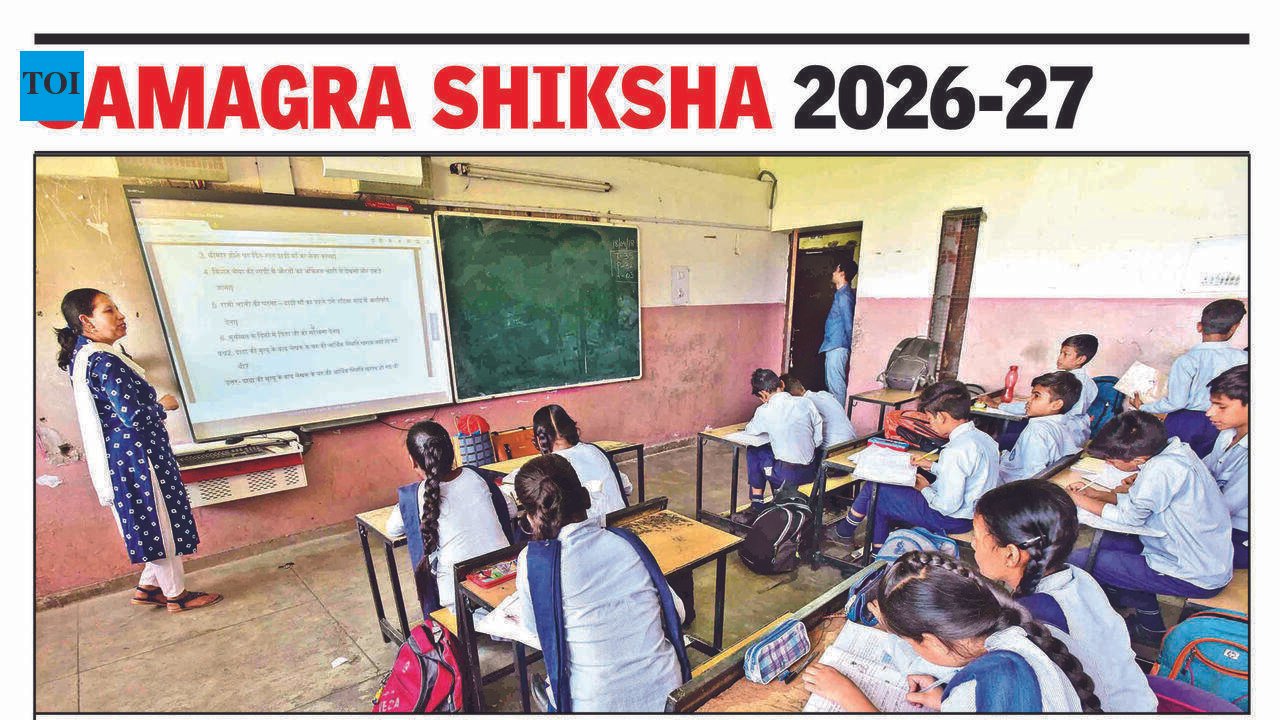
Chandigarh: The Union ministry of education has approved Rs 144.72 crore for Chandigarh’s school education sector under the Samagra Shiksha scheme for 2026-27, even as projects worth Rs 4.45 crore sanctioned in previous years remain incomplete, raising concerns over execution delays.The sanction, cleared by the Project Approval Board (PAB), is marginally higher than last year’s allocation of Rs 144.2 crore. However, Chandigarh received significantly less than the Rs 170.1 crore it had sought in its annual work plan and budget.PAB records show that the UT has carried forward an actual spillover of Rs 4.45 crore under non-recurring activities into the current financial year. Overall, projects worth Rs 6.2 crore had been sanctioned earlier, but financial completion has been reported for only Rs 1.1 crore, leaving a sizeable portion unfinished.The bulk of the pending works falls under the secondary education component, which accounts for more than Rs 4.1 crore of the spillover. Smaller pending liabilities relate to elementary and teacher education projects.Several of the delayed works involve ICT and digital infrastructure, Vidya Samiksha Kendra initiatives, early childhood education facilities, teacher resource packages and SCERT-related activities.The issue of delays had also figured in last year’s review, when the ministry flagged Chandigarh’s failure to complete 32 ICT laboratories sanctioned in 2024 and advised the UT to expedite implementation. Latest financial documents indicate that against approvals of Rs 4.3 crore under ICT and digital initiatives in 2025-26, expenditure stood at only about Rs 0.7 crore at the time of review.For 2026-27, the approved outlay includes Rs 130.9 crore for elementary education, Rs 13.07 crore for secondary education and Rs 0.5 crore for teacher education. The funds will support teachers’ salaries, foundational literacy and numeracy programmes, inclusive and vocational education, school grants, teacher training and quality-improvement initiatives.The ministry has directed states and UTs to complete pending non-recurring works in a time-bound manner, regularly update progress on the PRABANDH portal and either finish long-delayed projects or surrender them with revised proposals.


