



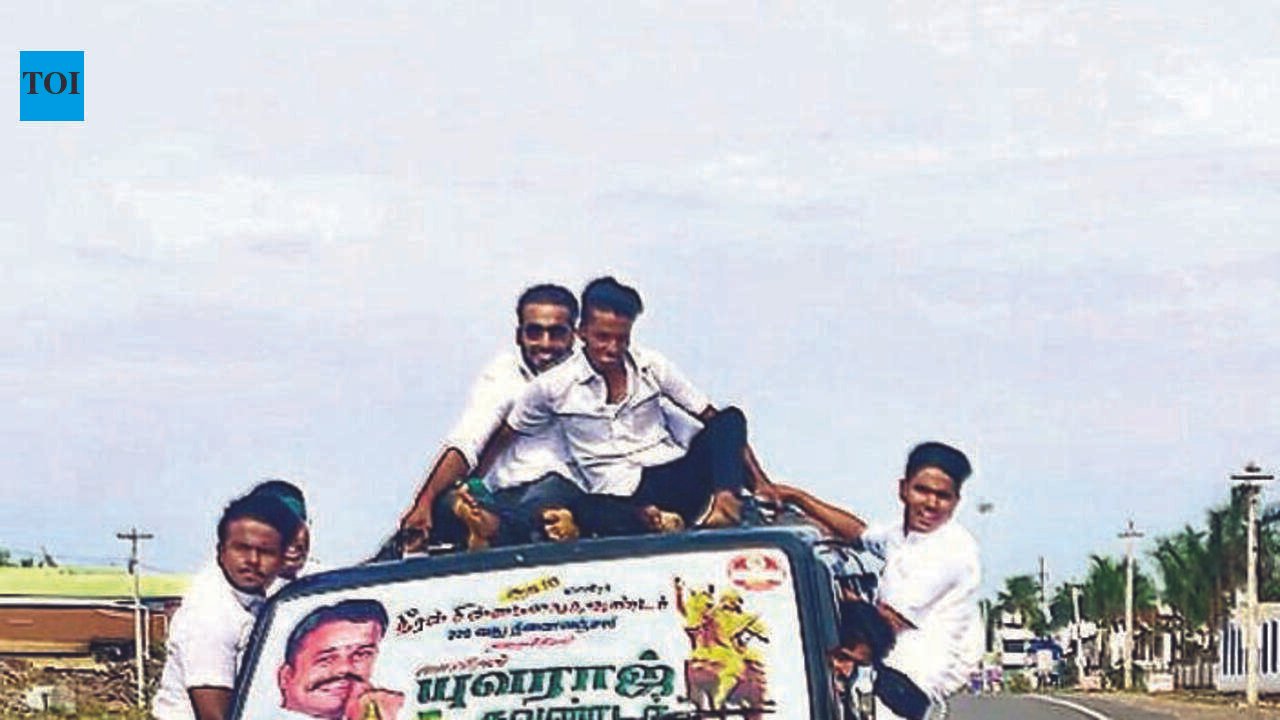
On June 1, about 100 people gathered in Kayathar, Tuticorin, demanding the release of S Krishnakumari, the suspended police officer and mother of the prime accused in the Kavin Selvaganesh murder case. Kavin, a scheduled caste software engineer, was killed in 2025 over his relationship with a woman from a dominant-caste family.A similar protest was held in Tenkasi a week later.The gatherings went unnoticed outside the region. But on Instagram, they found a much larger audience. Hyper-local caste pages pushed videos of the protests, each getting 12,000 to 14,000 views.Police say it is not the only case of caste-related posts getting traction online. Across 10 southern districts, cases booked for caste-based social media content more than tripled, from 33 in 2024 to 119 in 2025. This year, the number is already nearing the three-digit mark, with police officers saying the Kavin case has triggered a fresh wave of caste-pride posts, counter-posts and threats.Police say they are no longer treating provocative caste posts as mere online “noise”. Tension that once built around banners, posters, memorial meetings and street processions now often begins online, travels through hashtags and spills into campuses, villages and streets.A survey by the criminology department of the Tirunelveli-based Manonmaniam Sundaranar University found that more than 50% of 620 college students aged 17 to 22 in Tirunelveli, Tuticorin, Tenkasi and Virudhunagar said they displayed caste identity on social media. More than 57% said they regularly posted about their caste. More worrying, say researchers, was that 41% admitted to degrading other caste people online “at least sometimes”. The study also found strong links between social media influence, caste feelings and caste perpetration.Police say some posts were flagged and removed, but then resurfaced online. A senior officer says police reach out to platform nodal officers to have provocative content taken down. “These groups are used to plan meetings, assert caste pride and glorify criminals. But cases against members of one community often draw objections from its representatives. We have to be cautious and clear on what amounts to provocation,” says the officer.Reels on Surjith, for instance, resurfaced as “caste and honour” edits, several set to the poignant ‘Potri paadi penne’ track from the 1992 film ‘Thevar Magan’, celebrating community honour. The reels project him as the protector of women, using his sports medals as a badge of honour, and drew nearly 1.2 million views and 40,000 likes. Some posts used blood-splattered Tirunelveli name-board visuals and Tamil movie dialogues to justify violence over inter-caste relationships.“In most such posts, the accused issue caste-based threats, glorify their caste identity and, in some cases, pose with weapons. If a banned weapon under the Arms Act is displayed, we are legally bound to book a case,” says Viswesh Balasubramaniam Shastri, superintendent of police, Tirunelveli.Surjith wasn’t the only one turned into an online hero. Reels praising S Yuvaraj, convicted for the 2015 honour killing of dalit engineering graduate V Gokulraj after he was seen with a woman from a dominant caste, circulate among students. Set to Tamil songs, many garner 1 lakh to 2 lakh views.Several youngsters say they don’t see these posts as hate speech. A 24-year-old college student, who follows and shares caste-pride reels, says they are more about pride than provocation. “Most of what we post is about our pride, customs, leaders and history. It does not harm anyone.” He adds that when he sees content mocking Surjith as ‘milagai podi veeran’ (chilli powder brave heart), referring to media reports that chilli powder was used before the killing, people from his side feel they have no choice but to respond. “We see our posts are fitting replies to what others put out,” he says.For anti-caste activists, that defence is exactly how the online cycle sustains itself. “Earlier, caste pride needed a meeting, a banner, a memorial day or a street procession. Now, it begins with a 30-second reel,” says S Karuppiah, an anti-caste activist. “Instagram has become a battleground for college students and youngsters from different communities, with caste associations exploiting their anger and loyalty. Each post creates a counter-post. The problem worsens when peer pressure, alcohol and caste pride mix. Some youngsters boast about drinking as part of group pride. That’s when online fights move to the real world.”A Sai Krishna, a researcher in MSU’s criminology department, recommends regulating media content that promotes caste-based divisions and stereotypes.Advocate R Sreenivasan says the state should act against caste hate, but caste mobilisation per se is not a crime. “Vague controls can silence criticism, journalism and anti-caste speech itself,” he says. “Platforms also have a role to play because algorithms can steer users who engage with one caste-related reel towards many more like it.”Activists say policing alone cannot break the cycle. “Colleges need regular debates, documentary screenings, book readings and student ambassadors to promote caste harmony,” says Karuppiah.


