



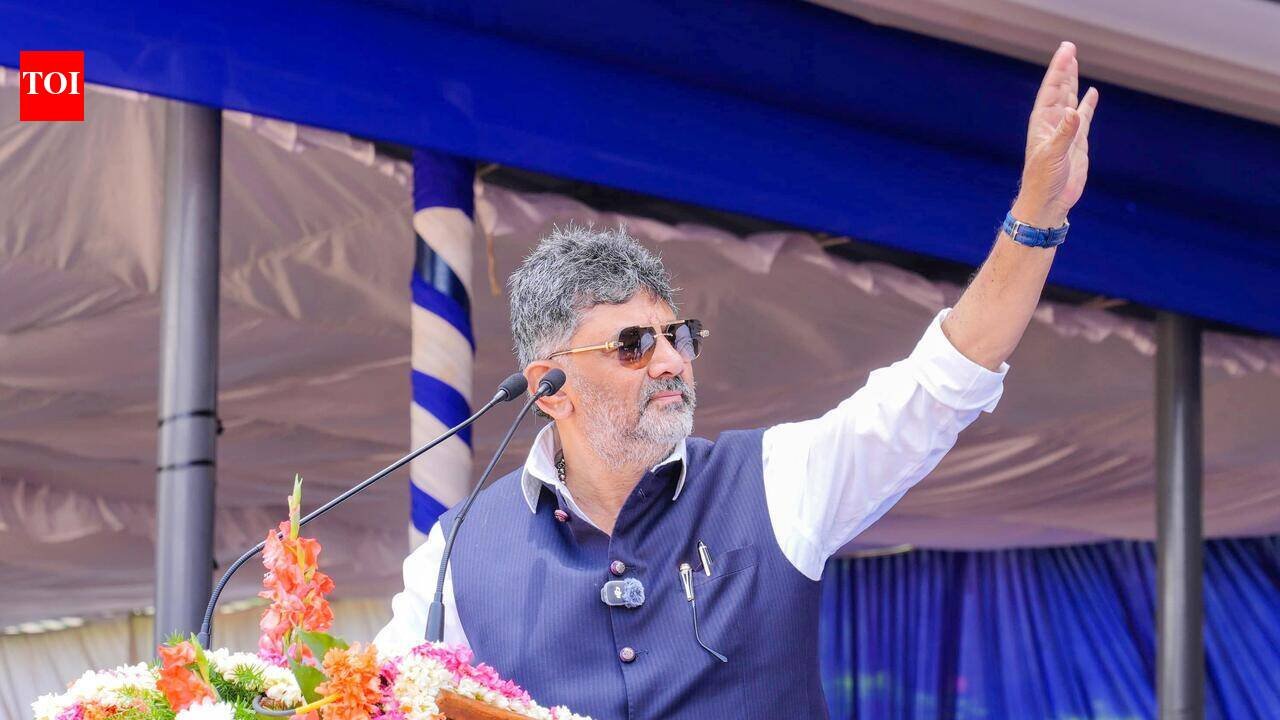
Bengaluru: For middle and lower-middle-class families, the annual school-fee notice is just as dreaded as a medical emergency or a steep EMI. Every academic year brings tuition hikes, transport charges, compulsory uniforms, vendor-tied books and a growing list of activity and development charges. For families sending children into engineering, medical or dental courses, costs can run into lakhs and, in some cases, crores.Chief minister DK Shivakumar’s decision to set up a cabinet sub-committee, headed by health minister UT Khader, to examine private-school fees and wider education reforms could prove significant, political observers say, provided it produces action rather than another shelved report.The scale is massive. Karnataka has some 17,000 private schools — about 4,000 in Bengaluru alone. Many charge Rs 35,000-50,000 annually, but many more charge Rs 2 lakh or more.Private-school associations had sought a 12-15% fee hike for 2026-27, citing inflation and operational costs. Some Bengaluru schools reportedly raised fees by 20-40%. Education economists say a 10% annual rise compounds fast: A parent paying Rs 1 lakh today could pay close to Rs 1.6 lakh within five years.Professional education increases the financial burden. Under the CET system for 2026-27, many unaided engineering colleges charged Rs 1.2-1.3 lakh annually against far lower govt-college fees, pushing a four-year private degree past Rs 5 lakh in tuition alone. Medical education is higher still: Govt colleges charge Rs 64,350 annually, but govt-quota seats in private colleges cost about Rs 1.6 lakh, the private-fee category around Rs 12 lakh, and management-quota seats Rs 25-45 lakh.Political observers say the payoff for Shivakumar’s move could be substantial ahead of the 2028 assembly polls if parents see transparent fee structures and a curb on add-on charges. Middle-class voters, they say, may forget many cabinet decisions — but they will remember who helped control what it costs to educate their children.But MN Patil, political commentator, points to an uncomfortable reality the reform must confront: Several politicians, across parties, own or have links to educational trusts and colleges. Congress politicians are historically prominent in the sector.“If the sub-committee targets only a few high-profile schools while sparing politically connected institutions, it will quickly lose credibility,” Patil said.Vishwas Shetty, policy analyst, cautioned against a blunt fee cap, warning it could trigger litigation or hurt budget schools in smaller towns that cannot be equated with elite Bengaluru institutions. The panel’s task, he said, is to build a transparent system distinguishing legitimate expenditure from profiteering, not merely announce a hike ceiling.Political strategist MB Maramkal argues that a uniform framework with audited accounts, disclosure of fee components, parent representation, an independent grievance mechanism and equal rules regardless of ownership — could become one of Shivakumar’s most significant achievements.He cites Delhi’s experience under the previous Arvind Kejriwal govt, where school accounts faced scrutiny and legislation later mandated transparency and parent participation in fee fixation. He said while Karnataka need not replicate Delhi, it could adapt its principles.


