



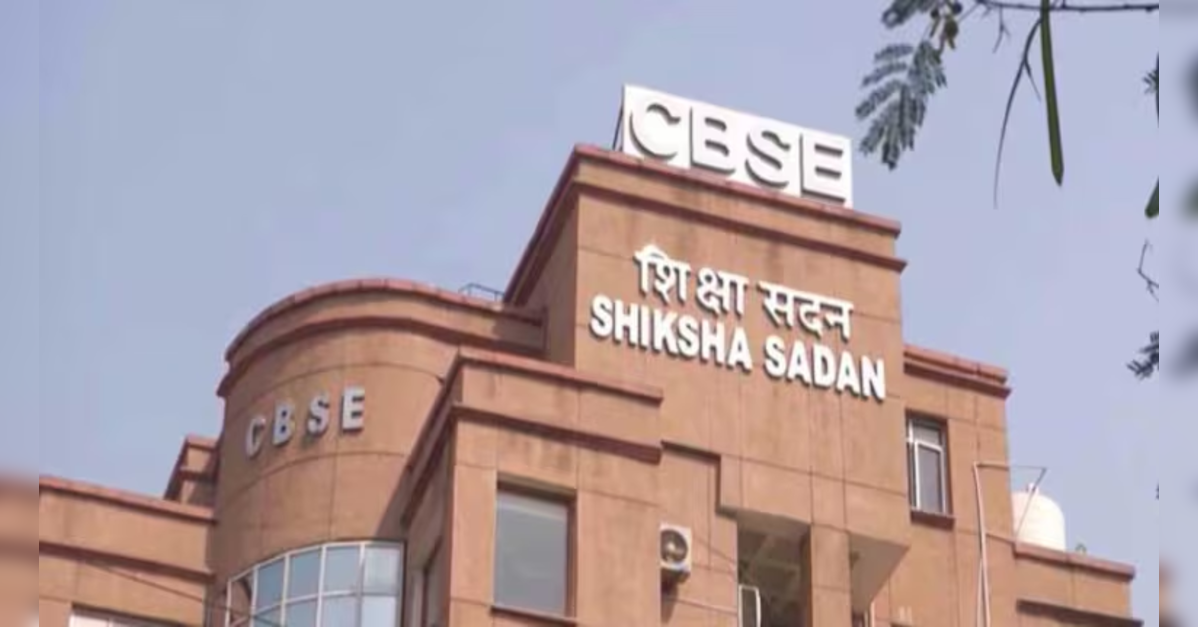
The Central Board of Secondary Education (CBSE) has issued an advisory urging students, parents, educators, and media platforms to refrain from sharing unverified claims related to QR codes printed papers. The clarification by the CBSE comes at a time when the Board is expected to release Class 10 and 12 results anytime soon. The CBSE has dismissed viral claims linking QR codes on Class 12 board exam question papers to internpersonality Orry and singer Rick Astley, calling such interpretations “misleading” and factually incorrect.
The clarification comes after QR codes printed on recent CBSE question papers-particularly the Class 12 History exam held on March 30-sparked widespread online buzz. Students claimed that scanning the codes led to search results linked to influencer Orry. Earlier, a similar controversy had surfaced during the March 9 Mathematics exam, when students reported being redirected to Never Gonna Give You Up by Rick Astley-a classic internet prank known as a “rickroll.”Orry himself reacted to the incident, posting a video in which he scanned the QR code and saw his own search page appear. “It felt like a dream to be featured on a CBSE exam paper,” he said, expressing surprise at the unexpected attention.
CBSE’s advisory on QR codes
In its advisory, the Central Board of Secondary Education clarified that QR codes printed on question papers are not meant to function as web links. Instead, they are part of internal systems used for authentication, tracking, and maintaining exam integrity. The Board explained that while scanning these codes may display encoded text, they do not directly open external websites or multimedia content.Clarifying the role of QR codes in question papers, the CBSE stated, “The QR codes printed on CBSE question papers are not intended to function as direct internet hyperlinks. These codes are part of internal systems for authentication, tracking, and examination integrity, and do not open as web links when scanned. Rather, they show the intended text. However, if the user opts to use Google search on the text, Google search suggests certain other words. This doesn’t occur if standard browsers such as Chrome are used.”
‘No connection with exam process’
The CBSE further emphasised that any unrelated web results are algorithm-driven outputs and have no connection with CBSE or its examination processes. In its advisory, the board noted that some individuals are deliberately misrepresenting such search results to spread misinformation. It warned, “The linking of QR codes to unrelated individuals or content is factually incorrect and misleading.”CBSE has urged all stakeholders to exercise caution and follow these guidelines:
Refrain from sharing unverified claims or speculative interpretations.
Verify facts through official CBSE communications before sharing.
Avoid amplifying content that could harm the credibility of the institution.
The advisory urged people to refrain from sharing unverified claims and to rely only on official communication channels for information. “Exercise caution against amplifying content that may distort institutional credibility.”


