



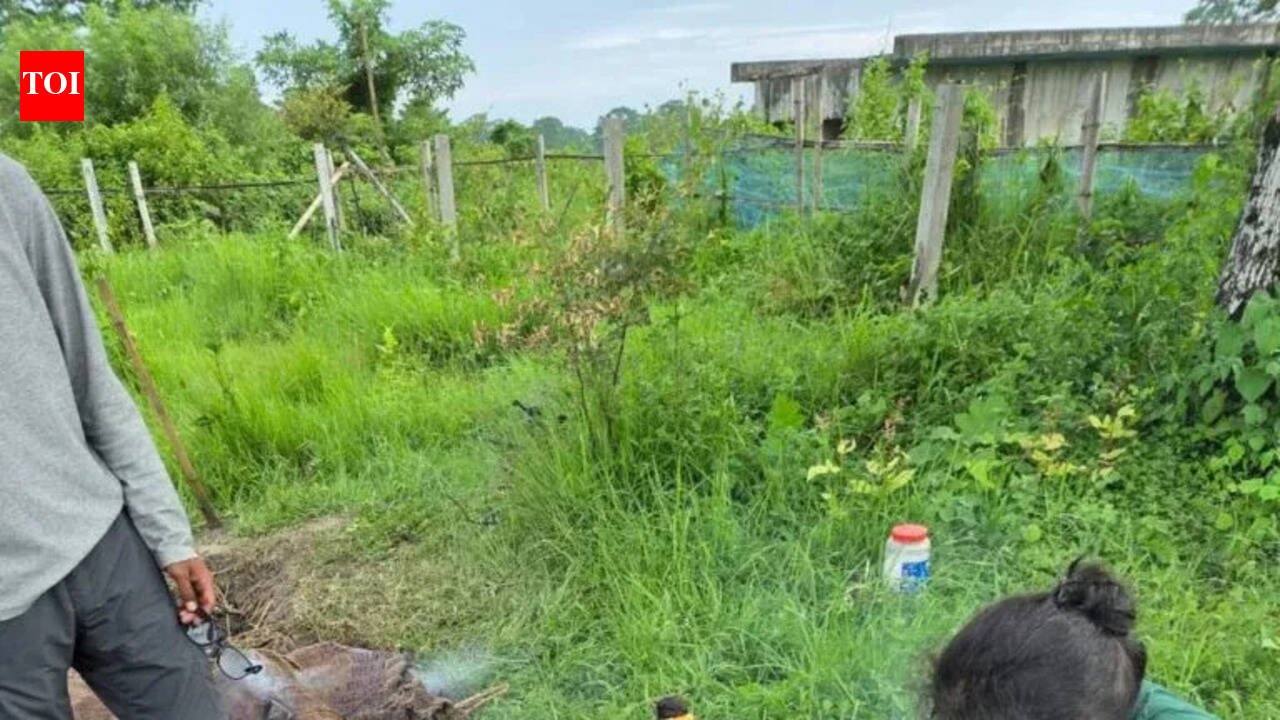
Guwahati: A new Assam project could restore elephant habitat, improve farm soils and create village livelihoods all at once by turning invasive plants into biochar.At a two-hectare demonstration site in Khalingduar Reserve Forest under the Dhansiri Forest Division in Udalguri, conservation organisation Aaranyak, with support from the International Elephant Foundation, is removing invasive vegetation.The project targets Lantana camara, Chromolaena odorata and Mikania micrantha, which spread rapidly and suppress native grasses, herbs, shrubs and trees essential to healthy ecosystems.“Instead of discarding the cleared vegetation, the biomass is being converted into biochar through controlled heating under low-oxygen conditions. The carbon-rich material can potentially improve soil moisture and nutrient retention and may be used in restoration areas and agricultural systems,” Aaranyak said.The initiative also includes natural regeneration and seed-ball-assisted restoration. The site will be monitored to prevent invasive species from returning and assess habitat recovery.By combining invasive species management, habitat restoration and biomass utilisation, the initiative seeks to create healthier landscapes for elephants and local communities while turning an ecological threat into a potential resource.Aaranyak secretary general Bibhab Kr Talukdar said biochar could help address dry soil and limited water availability in Udalguri.“During periods of low rainfall, farmers may leave their agricultural land uncultivated because the soil cannot retain enough moisture to support crops. At the same time, these unused agricultural fields may become areas where wild elephants enter in search of food. Biochar can contribute to addressing both challenges,” he added.Agricultural waste and invasive plants can be converted into biochar, while suitable native species are introduced. Talukdar said simple training and locally available materials could enable villagers to produce it, creating livelihood opportunities.“Biochar also has the potential to support farmers’ livelihoods. Since it can be made from agricultural waste and other organic materials often discarded or openly burned, production costs can be relatively low. With simple training and locally available materials, community members can learn to produce biochar within their own villages,” he added.Forest department data show that at least 669 people have died in Assam in human-elephant conflict since 2020, while 419 elephants have died between 2021 and 2025. The conflict has intensified amid habitat degradation, encroachment, depleted food sources and development along elephant routes. This initiative could be a potential way forward in tackling the conflict.


