



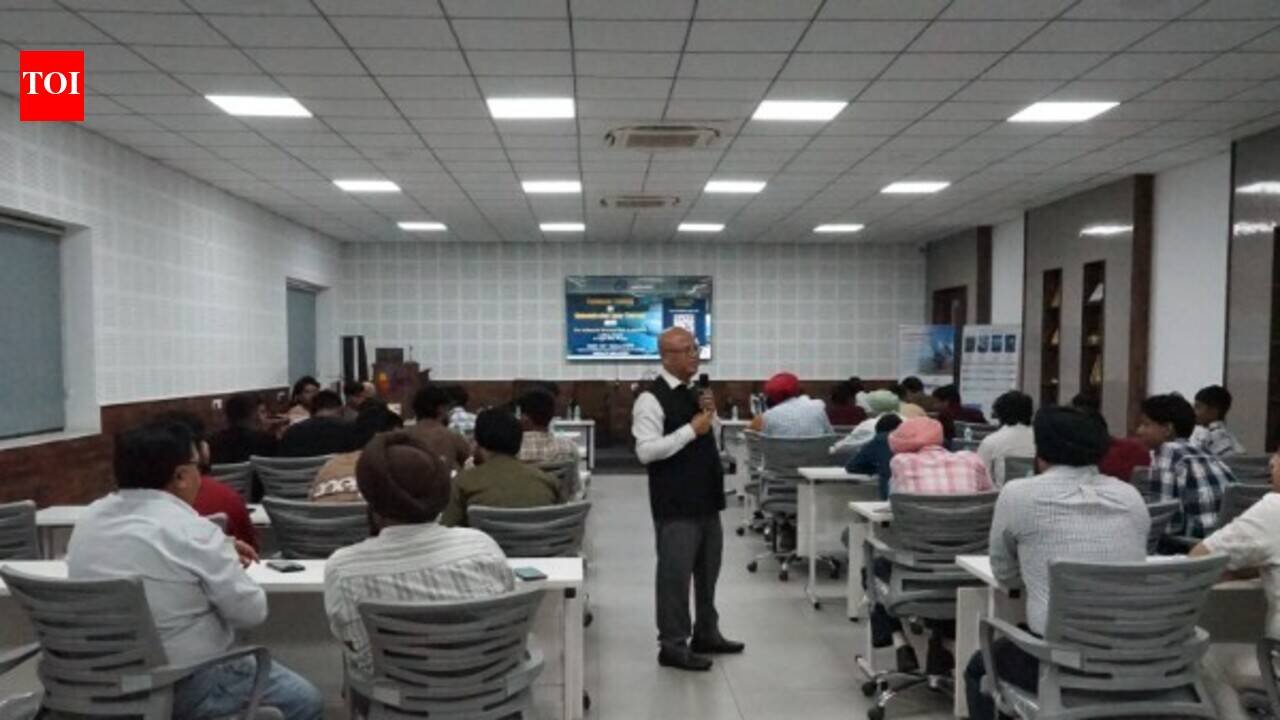
Ludhiana: For decades, the furnaces, boilers and production lines powering Ludhiana’s industrial economy have largely run on conventional fuels such as coal, furnace oil, diesel and LPG. But with energy costs climbing and sustainability becoming an increasingly important business consideration, industry is beginning to explore cleaner alternatives, including harnessing the sun for industrial heat.This emerging transition was the focus of a technical training programme on Concentrated Solar Thermal (CST) technology organised by the Chamber of Industrial & Commercial Undertakings (Cicu) for micro, small and medium enterprises (MSMEs).The programme sought to familiarise industrial stakeholders with solar thermal solutions that can generate heat for manufacturing processes such as hot water generation, steam production, drying and washing, reducing dependence on conventional fuels without requiring a complete overhaul of existing systems.The training formed part of a national capacity-building initiative being implemented by the United Nations Industrial Development Organization (UNIDO) in partnership with the ministry of micro, small and medium enterprises.Experts explained that unlike solar photovoltaic panels, which generate electricity, CST technology uses mirrors and solar collectors to capture and concentrate sunlight, producing thermal energy that can be directly used in industrial processes. The technology can also be integrated with existing heating infrastructure, allowing industries to gradually lower fuel consumption and emissions.For Ludhiana’s energy-intensive MSME sector, the potential attraction lies not only in cleaner production but also in long-term savings on fuel costs. Participants were briefed on technology selection, project feasibility, economic assessments, funding options, business models and practical industrial applications.The workshop drew MSME owners, engineers, industry associations, govt officials and representatives of academic institutions, reflecting growing interest in technologies that combine economic and environmental benefits.Cicu officials said decarbonisation should be viewed not merely as a compliance requirement but as an opportunity to improve competitiveness, resource efficiency and cost management. As sustainability standards gain importance in domestic and global markets, cleaner energy solutions are increasingly finding a place in business planning and investment decisions.The programme also enabled industries to evaluate how solar thermal systems could fit into existing manufacturing operations and assess their viability from both commercial and sustainability perspectives.


