



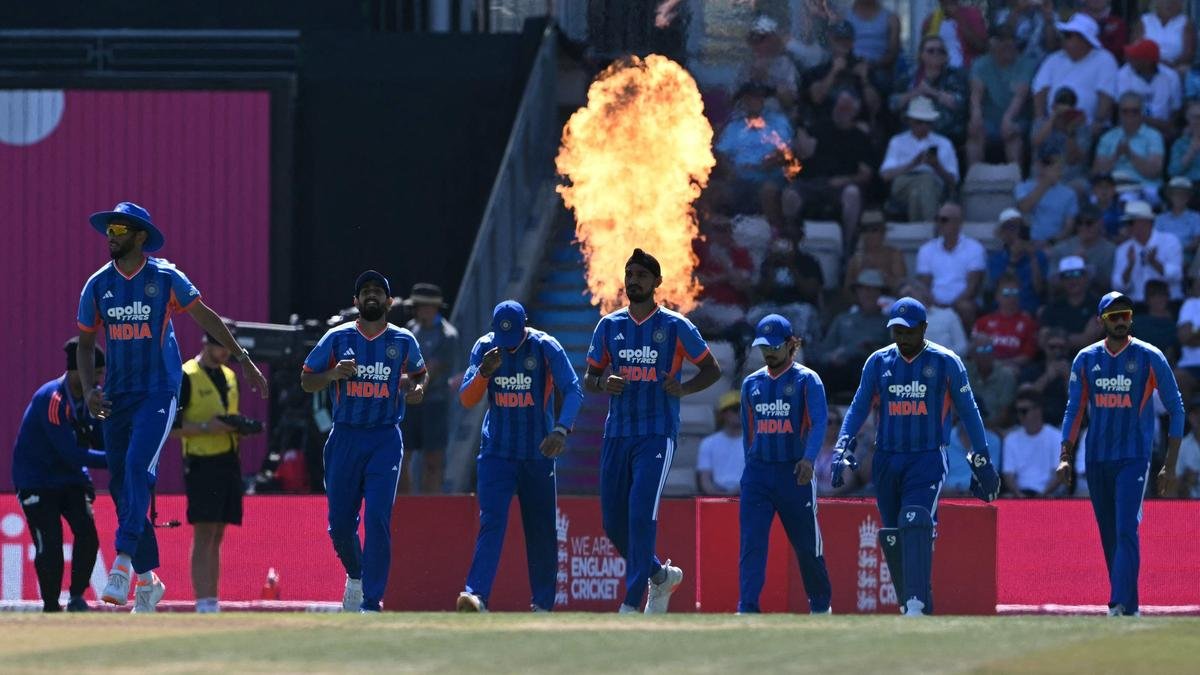
As far as reigns go, this will be hard to match. Impossible, one is tempted to say, given that the said reign was in the most unpredictable of formats. For 1,605 days, from 20 February 2022 to 11 July 2026, India ruled the Twenty20 International landscape with an iron fist, occupying the top perch in the ICC rankings, stacking up an enviable record that encompassed two T20 World Cup crowns (with a solitary defeat the sole, easily delible blot) and an unquestioned dominance that stemmed from fearlessness and the foresight to stack their sides with the personnel that would translate the mantra of intrepidness to glorious reality.
All good things in life must come to an end, however. Nothing is permanent, most certainly not ruling the roost in any of the three cricketing formats. That’s the brutal truth, but the manner in which India abdicated the throne left a sour taste in the mouth. England, imperious England – would have said this even a decade back in white-ball internationals? – not just grabbed the throne from India, they positively brushed them aside, reducing them to a blubbering wreck that seemed to be weighed down by the pressure of their own expectations and by the heavy burden that one unchecked defeat after another is certain to impose.
Who would have imagined this scenario a fortnight back? Who would have indeed? Ireland first, for two matches that were supposed to be glorified practice sessions. Then England, over a five-game showdown largely predicted to be tight, tall-scoring contests with the visitors holding the edge because of their breathtaking batting riches, on full view during IPL 2026.
There were tall scores alright, but all of them came from the blazing bats of the opposition. Phil Salt, out of form? No matter. Jos Buttler, struggling for rhythm? Hey, we are here. Harry Brook, already in red-hot touch? Help yourself to more, skipper. India were supposed to be the main act, instead they served as the obliging support cast on which first Ireland and then England gorged, consigning the (then) No. 1 side in the world to six defeats in seven matches. Perhaps only because the one that didn’t end in a loss was abandoned midway through.
India have harped on transition, on a new but not yet exciting phase in this format. Admittedly, they do have a new skipper – Shreyas Iyer wouldn’t have imagined in his wildest nightmares that his stint at the top would begin this disastrously – and were without a couple of influential performers in Jasprit Bumrah and Hardik Pandya. But how often in the past have they not made light of these situations? How often have they not eked out extraordinary efforts from the not-so-celebrated stars-in-the-making? To say that they lost 0-2 to Ireland and were routed 4-0 by England just because Bumrah and Pandya weren’t around will be disrespecting the skills and the mettle of those who were in the mix. India were outplayed; they were lame and timid and limp and almost fearful, the antithesis of the philosophy they have espoused for so long.
Doom-and-gloom time? For now, definitely, no matter that India will bounce back strongly because that’s what they do. That’s what they have done. But they find themselves in uncharted territory so far as the 20-over game is concerned, and it will be interesting to see how they rouse themselves, how they respond to the scent of battle next time around.
England were fabulous, that can’t be denied. Where Ireland hoped to contest on even terms, England knew they were on an equal footing, at the very least. True, their familiarity with conditions helped, as did their knowledge of the Indian players with whom several in the English set-up interacted for more than two months just a little while back in the IPL, either from the same dressing or on opposite sides of the fence. But by the same token, the Indians knew what to expect from a Buttler or a Jofra Archer, and have had plenty of experience of playing both in England and against the likes of Brook and Sam Curran.
Once they succumbed unexpectedly to Ireland, India became diffident, almost second-guessing themselves. They didn’t play the conditions well enough, they left their smarts behind at home and tried to adopt the same approach while wildly hoping for different results. England were clinical and ruthless, India traversed the other end of this spectrum and therefore it was no surprise that they were comprehensively put in their place. The negatives are piling up in the Gautam Gambhir-Ajit Agarkar coach-chief selector era, and while there is unlikely to be any earth-shattering decision when a review meeting is held by the Board of Control for Cricket in India at the conclusion of the three-match ODI series on July 19, a demand – a strident, relentless demand – for accountability will not be out of place.
Meaningful runs
Shreyas made up for a poor start with the bat in Ireland by stacking up meaningful runs in England, extending his IPL form to the world stage despite coming in cold to the T20I ecosystem. The first of two matches in Ireland was the Mumbaikar’s first 20-over international in more than two and a half years, during which time India played upwards of 60 games. Just to be reintegrated with the setup after such a long gap would have been demanding; to compound matters, he was entrusted with the leadership of a world-beating outfit for the first time ever. Shreyas has termed the captaincy a privilege, which it certainly is, though very quickly, he has realised from bitter experience that it is a double-edged sword and that privilege can rapidly start to assume proportions of a millstone.
India made their task more difficult with several strange selection calls, not least the recall of leg-spinner Ravi Bishnoi. The little man had a tour to forget like many of his colleagues; his unforgivable foot-faults that gifted England with numerous free hits perfectly summed up India’s woes. Bishnoi wasn’t the lone culprit in that regard, with debutant Prince Yadav and Prasidh Krishna too guilty of overstepping and doling out freebies.
No impactful returns
Poor execution of bowling plans and tardiness in the field which resulted in dropped catches and runs squandered were, however, pushed a little into the background by the lack of impactful returns from the batters. India lost wickets in a bunch in the PowerPlay time and again, leaving the middle order with too much to do against an English pace-orientated attack that made optimum use of height, and therefore bounce and pace. Short deliveries became the go-to weapon for Archer and Josh Tongue with the new ball, while Curran, the master of deception, was excellent in the middle stages and extraordinary at the death.
By going too hard too soon without sizing up the conditions, India paid a heavy price. Shreyas stood tall with 218 runs, second across teams and only behind his English counterpart whose 229 runs came at a breathtaking strike-rate of 214.01. Of the rest, Abhishek Sharma shone in patches while making 131 runs, and Ishan Kishan and Tilak Varma had a half-century apiece but didn’t do much otherwise to write home about. India’s pronounced left-handedness — they had just one right-hander, Shreyas, in the top eight in the fourth fixture – hurt them badly, like it briefly threatened to during the T20 World Cup. But where they found a solution at home by dropping Rinku Singh and bringing Sanju Samson into the picture once they had played themselves into a corner after their defeat to South Africa in Ahmedabad, they were slow to respond (did they even respond?) in England and were therefore comprehensively overpowered.
Samson was the big disappointment of the tour, failing to build on his three wondrous efforts in the last three games of the World Cup when he answered the team’s call with a rare streak of electric consistency. In Ireland and England, Samson went out of favour after just six runs in his first three outings as India unleashed the 15-year-old phenom, Vaibhav Sooryavanshi. The teen sensation showed no more than glimpses of his destructive abilities and not too much should be read into returns of 42 runs at an average of 14. Samson averaged the exact same number in England and a disappointing 8.25 across the tour. Much has been made of Samson making way for Sooryavanshi for the second, third and fourth T20Is, and of being left out of the tour of Zimbabwe later this month when V.V.S. Laxman will travel as the head coach. In his heart of hearts, the well-backed right-hander from Keralam will acknowledge that he was a long way short of his best and that he has plenty of work ahead of him even if his heroics at the World Cup guarantee a longer than usual rope.
Truth to tell, India need not press the panic button for so many reasons, not least because the next World Cup is a long way away. These matches are good for the experience they provide – of what it takes to play well overseas, on pitches that have some assistance for the faster bowlers as opposed to on tracks that reduce the entire bowling fraternity to mere serfs — but the pathetic waving of the white flag without so much as a second thought can’t be wished away. Most of the blame will, and should, fall on the players, but inconsistencies in selection and the unwillingness to allow players to settle into their roles cannot be overlooked.
New vice-captain Tilak is the classic example of being a victim of his own versatility, like K.L. Rahul has been in the two longer formats. In his last nine innings starting from the semifinal of the T20 World Cup, he has batted at No. 7 (once), No. 6 (four times) and No. 5. There is a great emphasis on ‘entry points’ in T20s, but sometimes, it helps having role clarity and one isn’t certain that’s the case with Tilak or even Washington Sundar, for that matter.
The England spanking is an eye-opener but also a blessing in disguise in that it has come so quickly after the last World Cup and with so much time to go to the next one. Lessons in humility, among other things, must be imbibed quickly if a one-off (as it stands) isn’t to spiral into something much more alarmingly debilitating.


