






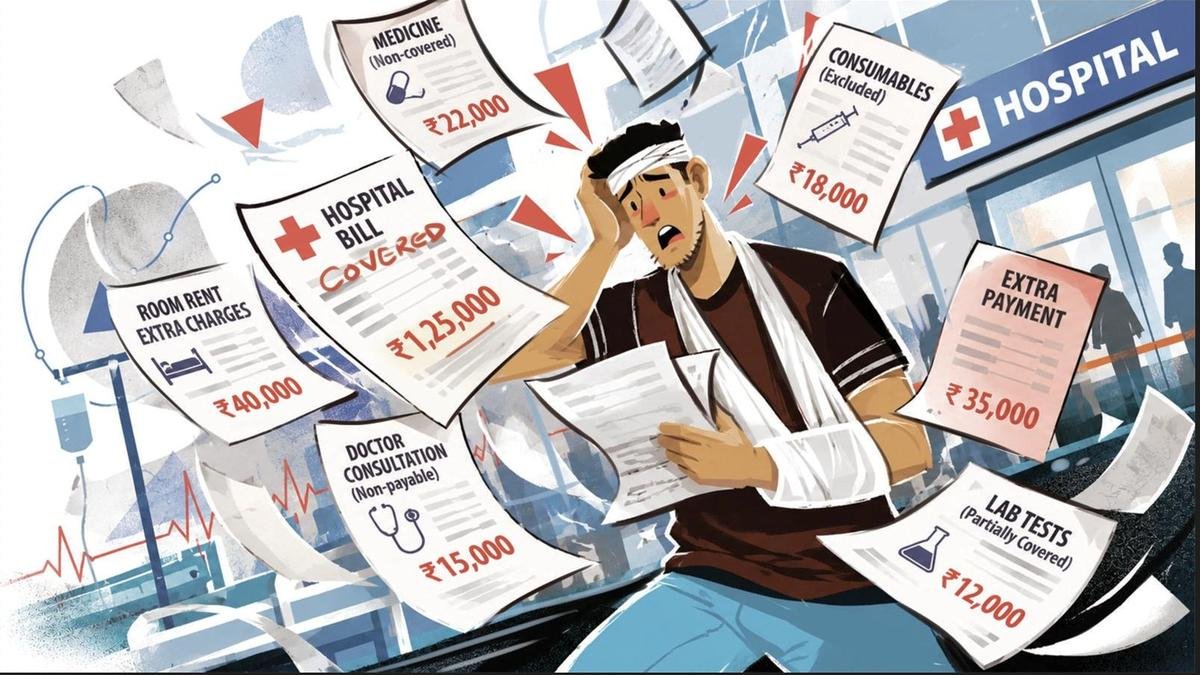
Cashless. The word conjures up scenes of walking out of a hospital with a light step and a lighter heart. No bulky files, no submitting a claim and no chasing reimbursements. And certainly, no waiting anxiously. Yes?
Yes and no. Cashless is one of those words in insurance that have come to mean more than they mean or were ever meant to mean. Much more.
Introduced in the early 2000s, the cashless facility made use of growing technology to simplify and speed up hospitalisation claims. Documents could move electronically and, more crucially, the insurer could settle an admissible claim directly with the hospital instead of making the insured pay first and seek reimbursement later.
Alongside this grew an entire support industry: the Third-Party Administrator (Health Services), or TPAs. Insurers could and in the initial years were mandated to tie up with TPAs and outsource claim processing to them. This included receiving claim information, scrutinising documents and coordinating with hospitals, the insured and the insurer.
The decision on whether a claim was admissible and how much was payable was in the hands of the insurer, governed by the contract and the insurer’s claims process. Once decided, the insurer paid the hospital via TPA. In other words, cashless to insured.
But this is only the portion payable under the policy and this is the part those insured do not fully get, maybe partly due to the marketing cachet of the word ‘cashless’. Add to that the insured person’s belief that everything-under-the-sun-is-covered, and it easily became everything under the-sun is cashlessly-covered.
Every word matters
Every word in an insurance policy means something specific. Here, cashless only describes the mechanism for settling an admissible claim. Inadmissible claims or expense items in a hospital bill remain, well, inadmissible.
In a policy there is an annexure running into many pages listing expense items that are not covered. These could range from gloves to charges for medical records. If the hospital bills for these and your policy does not cover them, you have to pay.
Then there are the exclusions. Some expenses or treatments are excluded under the policy; others may not be covered during a specified waiting period.
Also not payable are portions of the claim that you have agreed to bear yourself, such as co-payments and deductibles.
If your policy has a room-rent limit, only the eligible room rent is admissible. If the hospital follows differential pricing based on room category, then choosing a higher room category may also lead to proportionate deductions from related expenses. And, any claim amount beyond the available sum insured is not payable.
Pre-authorisation
When you are admitted to a hospital, the hospital’s insurance or cashless desk will seek a pre-authorisation from the insurer or TPA. In an emergency or an accident, the timelines and process may work somewhat differently.
Say the hospital initially estimates the cost at ₹2 lakh and seeks authorisation for that amount. The insurer may pre-authorise ₹1.5 lakh. As treatment progresses, the hospital bill itself may rise beyond ₹2 lakh and further authorisation may be sought.
But what matters is the amount admissible under the policy viz. the amount that will be settled directly to the hospital. The balance is billed to you.
Not understanding this is why tempers fly high at the time of discharge. You thought you were walking away and the hospital wants you to pay ₹45,000.
Once you start questioning the bill, everybody becomes tight-faced. Front-office smoothness and deference rarely extends to the billing counter. Most often, patients and their families are too tired and low on morale after the health setback to argue. They pay up, or frantically try to arrange the money, simply so they can leave.
Some hospitals try to protect themselves against uncertainty over cashless settlement by asking patients for a sizeable deposit at admission, sometimes to cover what the policy will not pay but sometimes even the estimated treatment cost with the promise that whatever the insurer eventually settles will be returned to them.
That, my friends, is not cashless. In fact, it is the very opposite of it.
So, remember: cashless only removes the need for you to fund the insurer’s share of the bill. Your share of the bill is still very much yours.
(The writer is a business journalist specialising in insurance & corporate history.)
Published – October 19, 2026 06:06 am IST


