



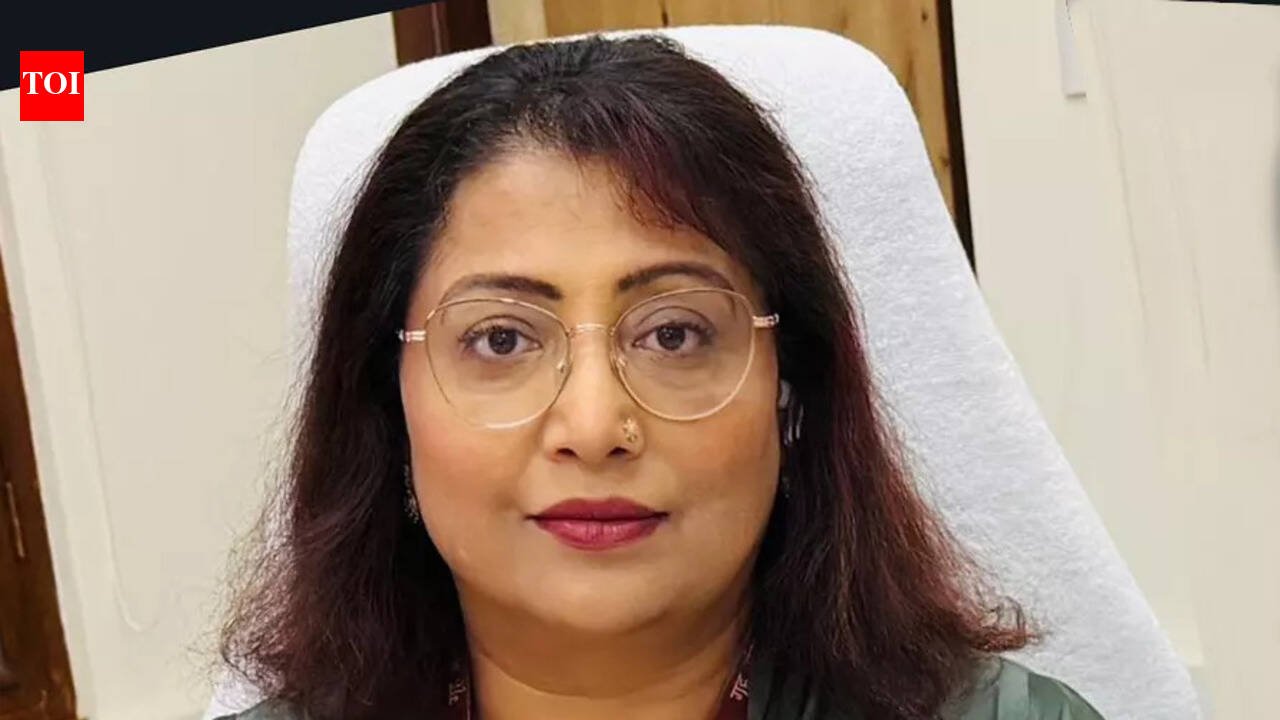
On International Women’s Day, women and child development (WCD) secretary Mrinalini Darswal speaks to Ashok Pradhan on Odisha’s efforts to reduce maternal and infant mortality, improve child nutrition and safety, and expand opportunities for girls and women through technology and community-driven initiatives.What steps Odisha are taking to reduce maternal mortality, infant mortality, and child nutrition gaps?
Odisha faces high anaemia at around 40%, rising above 60% in districts like Nabarangpur and Nuapada, along with significant tribal-area gaps; maternal mortality above the national average, and weak early childhood feeding and growth tracking. The state is adopting a multi-sectoral, tech-driven approach — strengthening the POSHAN tracker for real-time monitoring, tele-monitoring ICDS services, and community-based management of acute malnutrition. Reforms in take-home ration, promotion of nutri-gardens, and intensified iron and folic acid supplementation and deworming remain key priorities. Initial improvements are expected in 1-2 years, with measurable reductions in malnutrition and anaemia in 3-5 years.Tell us about the new technology-driven or community-based strategies Odisha has been adopting to combat malnutrition and anaemia among kids and mothers…We are using a tech-enabled, community-focused approach to address malnutrition and anaemia. Anganwadi and ASHA workers jointly identify cases, with ANMs assessing children and referring them to health facilities. Supervised feeding at anganwadi centres ensures children consume eggs, millets, vegetables and fresh local meals. Behaviour-change efforts include regular infant and young child feeding counselling and cooking demonstrations. A 14-day monitoring cycle tracks growth and identifies root causes. Caregivers submit weight and height through WhatsApp or SMS, enabling AI-based alerts for early action. Anaemia-reduction efforts emphasise iron and folic acid spot consumption, Vitamin C-rich diets, the use of iron utensils and digital reminders.What measurable outcomes did Subhadra deliver in financial inclusion, mobility, access to services or reduced vulnerabilities?Launched on Sept 17, 2024, Subhadra provides Rs 50,000 over 5 years to more than 1 crore women. Early surveys show nearly 80% of funds are being used productively — 34% for livelihoods, 22% for education and skilling, and 22% for savings or loan repayment. Around 65% of beneficiaries report greater financial autonomy, while 98% say the scheme improved their financial confidence and preparedness.How effectively are Odisha’s departments integrating gender-responsive planning?Odisha moved from reporting-focused gender budgeting to a structured system emphasising gender-responsive planning, implementation, and monitoring. All major departments now map schemes benefiting women and girls in the annual gender budget. Departments such as health, education, rural development, ST & SC development, social security, and panchayati raj increasingly integrate gender concerns at the planning stage.The WCD department guides them in designing gender-responsive schemes, defining gender-specific outputs, and tracking outcomes, shifting the focus from fund earmarking to addressing barriers in access, safety, economic participation, and decision-making. A proposal is being considered to strengthen gender-budgeting capacities.How is Odisha expanding women’s workforce participation?The WCD department is implementing focused initiatives to enhance women’s entry and retention in the workforce, especially among adolescent girls. Under the ADVIKA scheme, girls receive life-skills training, vocational exposure, and linkage to govt skilling programmes. Visits to the World Skill Centre and district skill facilities help them understand career options and build employable abilities.What are Odisha’s priority actions to strengthen protection, safety and social empowerment, especially for adolescent girls?The WCD department is focused on strengthening protection systems for women, children and adolescents. Priority areas include preventing trafficking, improving district and block-level child protection mechanisms, and ensuring stronger coordination among law-enforcement agencies and community institutions. Under Mission Vatsalya, the govt is reinforcing institutional and family-based care to ensure early identification, rescue and rehabilitation of vulnerable or trafficked children. Survivor support expanded through One Stop Centres, alongside intensified community awareness to promote timely reporting of violence and exploitation.


