



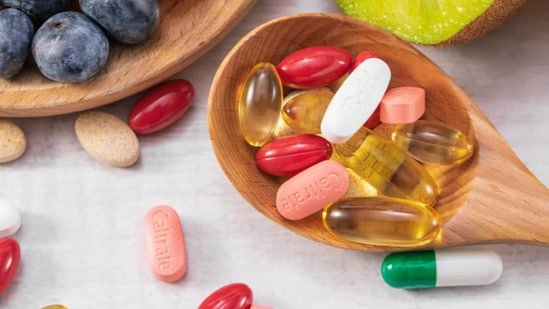
Every morning, across India, a lot of people over 50 reach for a bottle of supplements, swallow a tablet or two, and believe they have done something meaningful for their health. In many cases, they have not. Then there is another cohort that eats well, sleeps adequately, stays active, and is convinced they don’t need supplements at all. Both groups, in their own way, may be getting it wrong.
India is ageing fast. By 2030, one in five Indians will be over 50. Yet our supplement industry has not caught up with what science now tells us about how the ageing body absorbs and utilises nutrition.
After 50, the body’s ability to absorb and use nutrients, from both food and supplements, changes in ways that are measurable and well-documented. Gastric acid secretion declines, slowing how tablets dissolve. Digestion slows down, reducing the time nutrients have to be absorbed. The liver, which converts many vitamins into their active forms, becomes less efficient.
This is not conjecture. It is established physiology, supported by data from India’s Longitudinal Ageing Study (LASI), ICMR nutritional research, and international geriatric science. National studies show widespread deficiencies in Vitamin D, B12, and other micronutrients among older Indians, even among those eating reasonably well.
The problem is often not what seniors eat. It is what their bodies can no longer efficiently use.
Post-Covid, India saw a surge in supplement consumption: Multivitamins, B-complex, herbal blends, and immunity boosters. The intent was right. The products, however, were largely designed for a younger adult. Standard compressed tablets, basic powders, off-the-shelf capsules. These delivery mechanisms assume an absorption efficiency that most people over 50 no longer have.
Research consistently shows that standard supplements are absorbed far less effectively in older bodies. A nutrient that a 30-year-old absorbs well may barely register in a 60-year-old with reduced gastric acidity and slower gut function. In plain terms: Many Indians over 50 are paying for supplements their bodies are not actually using.
Over the past decade, researchers have turned increasing attention to how supplements are formulated, not just what they contain. One area gaining traction is phospholipid-based delivery, where nutrients are bound to phospholipids. These are the same molecules that form human cell membranes. Because this structure closely mirrors the body’s own biology, it can pass through the gut wall more efficiently and resist breakdown during digestion.
This is not a marketing claim. It reflects a growing scientific consensus that for anyone over 50, how a supplement is delivered may matter as much as what it contains.
The path forward is straightforward:
- Test first. Get Vitamin D, B12, and liver markers checked before buying anything. Supplementing without a baseline is expensive guesswork.
- Go targeted. A 60-year-old’s needs differ from a 30-year-old’s. Generic ‘adult wellness’ products are not built for people over 50.
- Ask how it’s delivered. The most ignored question in supplement buying is: how does this actually reach my bloodstream? Look for phospholipid-based or liposomal formulations, not just a standard tablet.
- Less is more. Fewer, better-absorbed supplements will always outperform a large stack of poorly absorbed ones.
The supplement industry has an opportunity, and arguably a responsibility, to serve this population with the rigour and honesty it deserves. That means going beyond ingredient marketing to address the harder science of formulation and delivery. It means developing, validating, and clearly communicating products that are built around how older bodies actually function.
In nutritional science, the question is never just what you take or how much. It is what your body can actually use. For India’s seniors, getting that answer right is not a wellness luxury. It is a health imperative.
This article is authored by Mihir Karkare, co-founder & CEO, Meru Life.


