



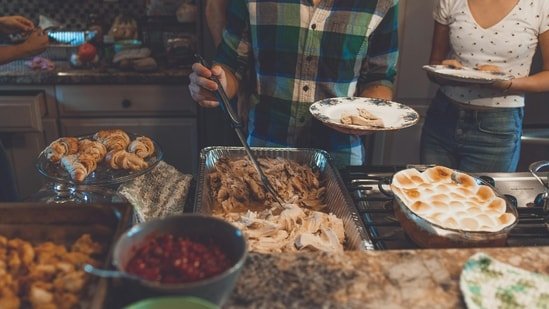
Everyone loves a great buffet, but many of us struggle with the ‘food coma’ that hits afterwards.
According to the Cleveland Clinic website, the scientific term for the phenomenon is postprandial somnolence. It refers to a short-term increase in sleepiness and sluggishness that comes after eating a meal.
Also Read | Heart surgeon with 25 years of experience explains how training leg muscles can prevent heart attacks
Taking to Instagram on March 4, American board-certified gastroenterologist Dr Palaniappan Manickam explained that it is not necessary to completely avoid dinner plans if one wishes to avoid a food coma.
By simply tweaking how one goes about their meal, it is possible to maintain steady energy levels after eating, as well as reduce cravings throughout the day and keep the metabolism working well.
His five “metabolic-friendly habits” to feel lighter after eating out are presented as follows.
1. The fibre defence
According to Dr Manickam, one should always start their meals with fibre-rich foods, such as a side salad or sautéed vegetables. This creates a “fibre net” in the gut, which significantly slows the absorption of sugar by the blood.
As a result, blood glucose stays stable, there is no crash afterwards, and therefore no food coma.
2. The order of operations
When it comes to healthy eating, one often focuses on counting calories. However, Dr Manickam stated that the sequence in which we eat our food matters just as much.
To lower the risk of food coma, the gastroenterologist suggests following the F-P-C rule.
“Eat your fibre first, then your proteins and fats, and save the carbs for the very end,” he explained. “This prevents a massive insulin spike and helps you feel full faster.”
3. The lemon pre-game
Dr Manickam shared one healthy practice to follow at the start of every meal.
“Add a splash of apple cider vinegar to water or squeeze fresh lemon over your appetisers,” he stated. “Acidic compounds, particularly the acetic acid in vinegar, have been shown to slow down starch digestion and improve insulin sensitivity.”
The practice gives the metabolism “a crucial head start before the main meal arrives.”
4. Don’t drink your calories
While mocktails, sodas, and sweetened juices at feasts appear very appetising, it is better to skip them altogether. This is because such liquid sugars instantly hit the bloodstream without any buffering, explained Dr Manickam, which causes massive sugar spikes.
It is therefore better to stick to sparkling water and lime, which saves the appetite for the actual food while also keeping the liver healthy, he shared.
5. The 10-minute glucose walk
A short 10-minute stroll after finishing a meal allows the muscles to use up the glucose that one has just consumed. “It’s the easiest way to manage your blood sugar in real-time,” noted the gastroenterologist.
Note to readers: This article is for informational purposes only and not a substitute for professional medical advice. Always seek the advice of your doctor with any questions about a medical condition.
This report is based on user-generated content from social media. HT.com has not independently verified the claims and does not endorse them.


