



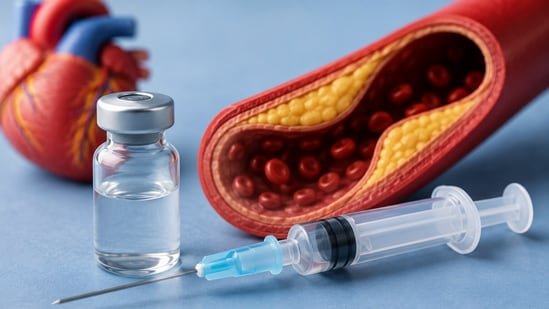
High cholesterol is one of the biggest risk factors for heart disease, and while statins remain the standard treatment, they don’t work for everyone. Some people experience side effects, while others fail to achieve their target LDL (“bad”) cholesterol levels despite taking medication regularly.
In his October 12, 2025 Instagram post, Dr Naveen Bhamri, a Delhi-based cardiologist, explained that injectable cholesterol-lowering therapies can be a safe and effective option for select patients. He discussed who is eligible for these injections, the different types available, and how they help reduce the risk of heart attacks when tablets alone aren’t enough. (Also read: 46-year-old fitness coach lost 25 kg in 24 weeks without crash diets or starving; shares 3 simple rules he followed )
Who should consider cholesterol injections
According to Dr Bhamri, injectable therapies are reserved for specific groups of patients rather than being a replacement for cholesterol tablets.
“Yes, injections are available, but they are mainly for people who cannot tolerate statins, those who don’t reach their target LDL levels despite taking statins, patients with high-risk heart disease and recurrent heart attacks, or those with familial hypercholesterolemia. In these four categories, we can use injectable therapy,” he says.
Familial hypercholesterolemia is an inherited condition that causes very high cholesterol levels from an early age, putting people at a significantly higher risk of cardiovascular disease if left untreated.
Two types of cholesterol-lowering injections
Dr Bhamri explains that there are currently two injectable therapies available, both of which target the PCSK-9 pathway to lower LDL cholesterol.
“One is a PCSK-9 inhibitor, which blocks the PCSK-9 protein and helps reduce LDL cholesterol. It is given as a subcutaneous injection, and one dose is typically needed every two to three weeks,” he says.
The second option offers a more convenient dosing schedule. “The second injection is Inclisiran, which also inhibits PCSK-9, although its mechanism is slightly different. It is long-acting, and only two or three injections are needed in a year,” Dr Bhamri explains.
He concludes by stressing that these injections should be used under medical supervision and only after proper evaluation. “If you’re not able to control your cholesterol with tablets, injectable therapy can be a game-changer. It is safe, effective, and helps reduce the risk of heart attack,” says Dr Bhamri.
Note to readers: This article is for informational purposes only and not a substitute for professional medical advice. Always seek the advice of your doctor with any questions about a medical condition.
This report is based on user-generated content from social media. HT.com has not independently verified the claims and does not endorse them.


