





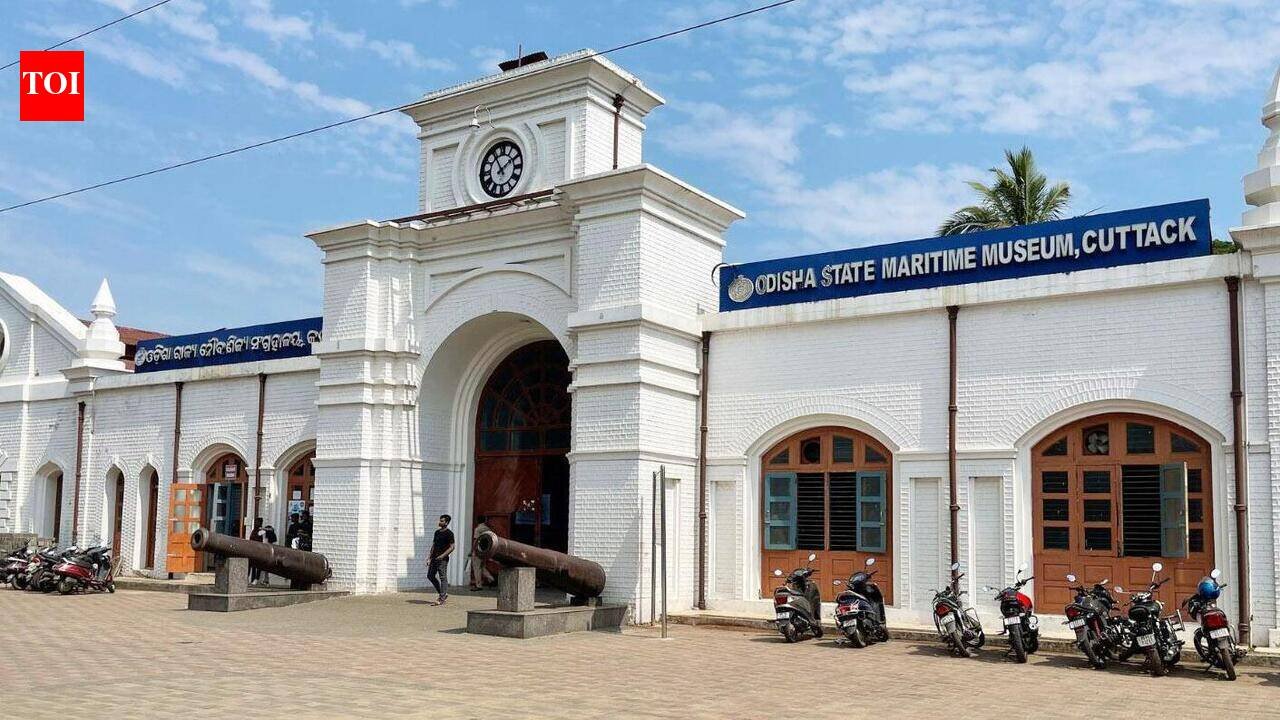
Opposite the blue waters of the Mahanadi in Cuttack, where the river widens near Jobra and the evening breeze carries echoes of an ancient Odisha stands the State Maritime Museum. But it is far more than a museum of relics.In a state where the tourism narrative is often dominated by temples and festivals, the museum preserves a chapter of Odisha’s history that frequently goes unnoticed. It occupies the colonial-era Jobra Workshop, a maritime engineering facility established by the British.An iron plaque inside the museum states that George H Faulkner, a Scottish engineer, had laid the foundation stone of the workshop on Jan 1, 1869. During that period, waterways served as the most important transport route in eastern India.Orissa, as the state was then known, was under the Bengal Presidency and John Beams served as commissioner of Orissa province. According to the department of water resources, which now manages the museum, the workshop was planned after the devastating ‘Great Orissa Famine’ of 1866, also known as Na Anka Durbikhya, during which nearly a million people perished within a year.Following the famine, the British govt, through its public works department, established the workshop to strengthen irrigation infrastructure and improve water transport through the Mahanadi system to prevent similar disasters in future.Under the leadership of the then engineer-in-chief Faulkner, the workshop emerged as the only facility of its kind in the region, catering to the shipbuilding and repair needs of Bihar, Bengal and Orissa under the Bengal Presidency.Records preserved in the museum show that the workshop was used for building different kinds of boats, fabricating sluice gates and manufacturing machines and tools used in irrigation canals, surface water transport and anicuts.
Exhibits at the museum
The workshop flourished until the advent of railways, after which the importance of river transport gradually dipped. As neglect began to affect the historic structure, the Odisha govt decided in 2007 to convert it into a maritime museum that would narrate the story of the state’s maritime identity, from the era of the Sadhabas to the British river transport system. The museum was finally inaugurated in 2013.Today, the red-brick structures, iron machinery and sprawling sheds still retain the industrial character of the colonial period. Amid these ageing walls, however, the museum breathes life into Odisha’s forgotten maritime glory.Wooden boat replicas, navigation instruments, ancient anchors, maritime maps and models of traditional vessels transport visitors to an era when Odia traders sailed across Southeast Asia to Bali, Java and Sumatra.Spread across 14 galleries, the museum documents how the people of coastal Odisha mastered shipbuilding and maritime trade centuries ago. It also houses exhibition halls and aquariums.One of the most striking sections is the gallery dedicated to the original Jobra Workshop. It displays 33 machines and tools including drillers, cutters and lathes, dating from the 18th to the 20th century and procured from both India and England. “What makes this display unique is that all these machines remain embedded in the floor in their original positions, exactly as they were placed under Faulkner’s guidance,” said a museum official. The gallery also preserves old pulley systems once used to operate the machines and cranes that helped move heavy iron plates and bars within the workshop.The Mahanadi itself becomes part of the museum experience. Flowing silently beside the complex, the river serves as a living backdrop to the maritime narrative. Standing along the embankment near sunset, with fishing boats moving in the distance and the Jobra barrage visible nearby, visitors often feel that the museum extends beyond its galleries into the surrounding landscape.“It is one of the most beautiful and well-maintained museums in the state. But the need of the hour is to appoint trained guides to help visitors understand the history behind the museum and its exhibits,” said Dipak Samantarai, heritage activist and convener of Cuttack Heritage Walks.“Since the museum is managed by the irrigation wing of the DoWR, there are no trained guides and department officials manage visitor interactions. The department can also introduce audio guides in the galleries,” he added.


