



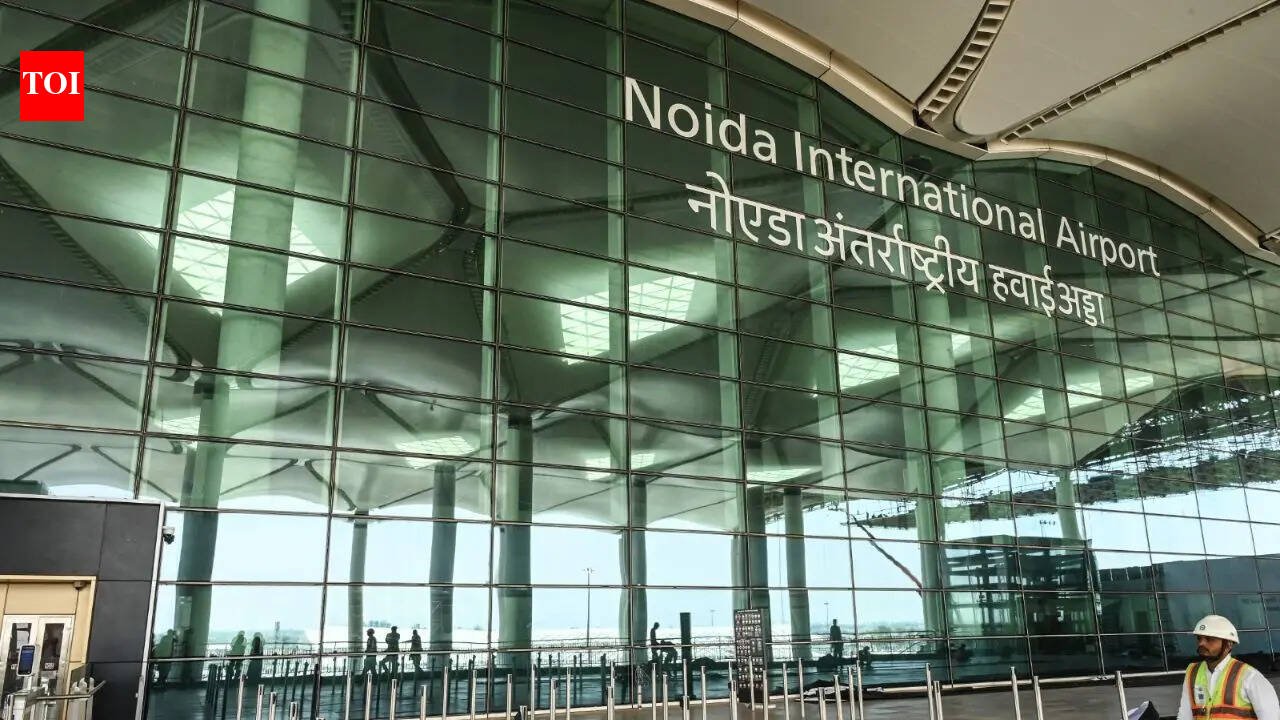
NOIDA: The mood in Jewar is celebratory with Noida International Airport formally inaugurated and poised to open. But many local youths who worked for contractors engaged with the airport project, fear the good days are coming to an end for them as work on the first phase of the airport begins to wrap up.What next? It’s a question that has many of them worried as they look to align their own futures with that of the airport. The project, they are certain, will bring many job opportunities to Jewar, but how and when that will take shape is anyone’s guess. Should they bide their time or move on? Roughly 1,000 workers employed across roles ranging from housekeeping and plumbing to welding and machine operation say no permanent positions have been offered, no medical cover extended, and no clarity given on whether their contracts will survive the shift from construction site to operational airport.Mahendra Ambedkar, a BSc graduate with diplomas in computer science, IT, and civil engineering, once earned Rs 25,000 a month as a lab assistant at a Delhi hospital. Today, he earns Rs 14,000 a month as a contractual worker doing any odd jobs assigned at the airport site, a role he has held for the past 10 months, since losing his hospital job during the Covid-19 pandemic. His family gave up 10 bigha of land for the airport project and received Rs 46 lakh in compensation. “After I lost my job, I started working here because it is near my home in Jewar Banger. The income is lower than before, but at least there was employment in the area,” he said.For many, like Ambedkar, the gap between what was promised and what was delivered is measured not just in pay slips but also in the lack of job security. Yash Kumar (20), from Taharpur village, earns around Rs 14,000 a month working eight to nine hours a day. His family, he said, were farmers for generations. “There is little land now, so we have to work. At the airport, there are many types of jobs, and I never refuse any work.” But after petrol, food, electricity, and contributions to his siblings’ education, little remains. “And now even that income is uncertain. Since the last few weeks, the new contractor has not given me any job,” he said. Abhishek Kumar (21), also from Taharpur, has used the site to build skills he initially lacked — installing window panes, assisting with electrical work, painting, and general maintenance. But he rues the uncertainty. “Contracts are usually short-term. There is no medical insurance or any other aid. We do high-risk jobs. There should be some safety for us,” he said.Suraj (24), from Jewar, joined the site in 2019 with no prior skills and has gradually learned construction work by shadowing others. “Now I assist in construction and related work. I want a permanent job in future,” he said.Job roles at the site span from housekeeping, loading and unloading, plumbing, welding assistance, carpentry, electrical work, machine operation, driving, and general labour. Workers often take whatever is available on a given day, with contracts running anywhere from one month to a year, depending on the project requirements.According to a site supervisor, roughly 200 to 300 workers are from Jewar itself, with the remainder drawn from districts across UP, including Gorakhpur, Aligarh, and Bulandshahr, as well as from Bihar.


