



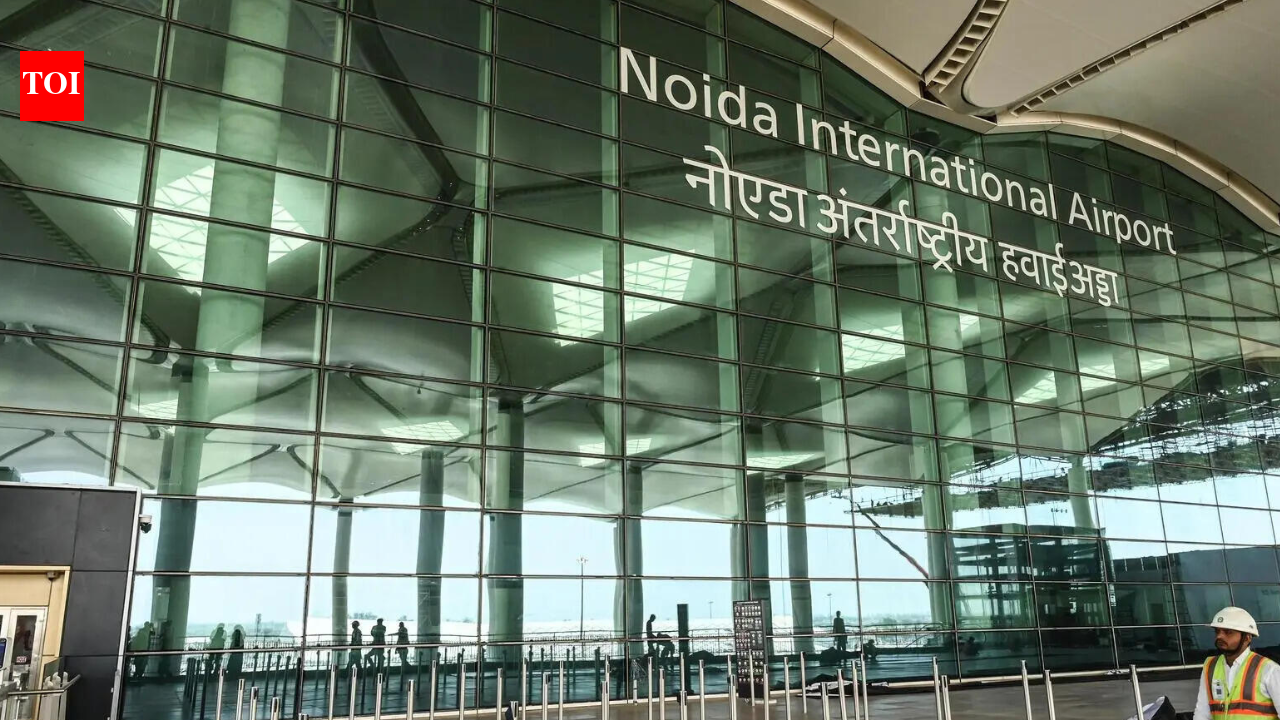
NOIDA: Noida International Airport, which was inaugurated by Prime Minister Narendra Modi on Saturday and will become operational this summer, opens up the gateway for a transformation of vast, open farmlands of western UP, particularly along the 165km long Yamuna Expressway, into a manufacturing and logistics corridor.Besides the first phase of the terminal building, the airport will also throw open a multi-modal cargo hub (MMCH), with an initial handling capacity of 2.5 lakh tonnes annually. The facility is designed to move farm and dairy produce from west UP districts, also called Harit Pradesh in these parts, quickly to other domestic as well as international markets. Over time, capacity is planned to expand sixfold to 15 lakh tonnes, in phases.The cargo hub could replicate global manufacturing trends where proximity to airports drives investment decisions. For instance, Foxconn chose its Apple iPhone plant at Devanahalli largely for its closeness to Bengaluru airport — only 14km away — enabling swift inbound movement of components and rapid export of finished goods. A similar advantage could make the Yamuna Expressway belt attractive to high-value manufacturing sectors.
The region, historically known for agriculture and traditional industries such as Agra’s leather goods, petha and Firozabad’s glassware, is already witnessing a shift. UP govt has set up several industrial clusters aligned to the airport, among them data centres, a semiconductor unit (HCL-Foxconn), a medical devices park, an apparel park and a toy manufacturing park. This airport-linked infrastructure is expected to draw electronics, textiles, pharmaceuticals and automotive firms to the corridor.A spokesperson for Noida airport said it has partnered with Air India SATS (AISATS) to build and operate the cargo hub. The facility will handle a wide range of shipments, including general cargo, pharmaceuticals, perishables and high-value goods. It will include temperature-controlled storage, cold-chain systems for perishable items and specialised handling zones for sensitive cargo, giving the logistics supply chain of Delhi-NCR a boost by adding a second base after Delhi’s IGI, strategically located to the capital’s fast-developing eastern sprawl.The airport’s MMCH will also feature a dedicated logistics zone with warehousing and transhipment facilities, positioned close to key industrial and consumption centres in northern India. This, the official said, is expected to streamline cargo movement and reduce logistics costs. “Its proximity to manufacturing hubs and the region’s growing consumption base makes it an attractive option for airlines, freight forwarders, exporters, and importers alike,” said an NIA spokesperson.In its initial phase, the airport operator expects strong volumes of electronics, textiles, agricultural produce and pharmaceuticals. The use of digital platforms, real-time tracking and tech-enabled planning is aimed at improving predictability for shippers, seen as a key requirement for sectors such as electronics and healthcare.“By driving supply chain optimisation and enhancing global competitiveness through reduced logistics costs and improved cargo handling, NIA’s integrated approach will make India a preferred location for regional distribution hubs, aligning perfectly with national initiatives like Make in India,” the airport official said.The primary catchment area for the cargo hub will span northern India, covering Uttar Pradesh’s industrial and agricultural output as well as the consumption hubs of Delhi-NCR. It will also serve nearby centres such as Agra, Mathura, Vrindavan, Faridabad in Haryana and Ghaziabad.The integrated cargo and logistics ecosystem could also help position the Jewar region as a distribution base for domestic and international markets, aligning with the state’s broader efforts to boost manufacturing and exports.TajSATS sets up kitchen at NIATajSATS, a subsidiary of Tata’s Taj Hotels, which provides flight catering services, has set up a kitchen facility across 45,000 sq feet within NIA premises that will be able to dish out 25,000 meals daily. In the second phase, the kitchen’s capacity will be doubled, and it will dish out 60,000 meals daily, like at its biggest kitchens at IGI and Mumbai airports.


