



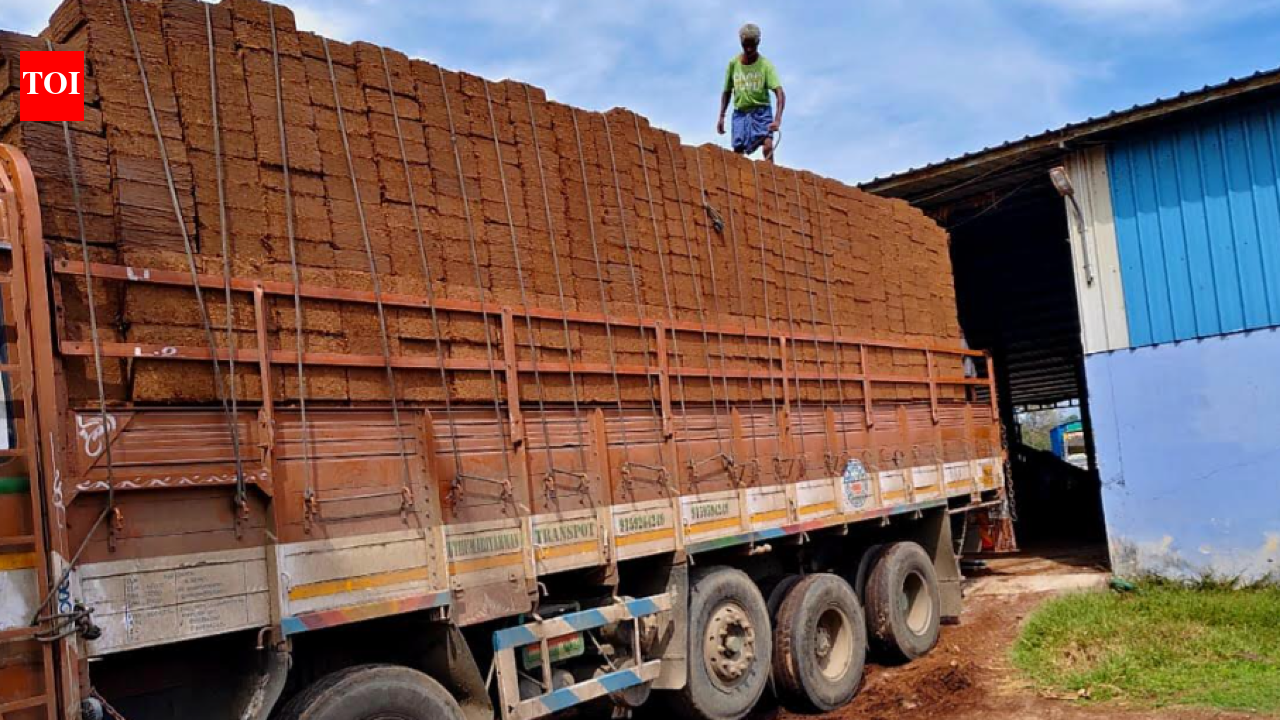
COIMBATORE: The West Asia war involving Israel, the US and Iran has dealt a major blow to coir pith and coir fibre exports from Tamil Nadu, with manufacturers in Pollachi and nearby areas of Coimbatore district facing severe shipping delays and mounting losses. Exporters said international cargo movement was thrown into disarray after the closure of two key Gulf transit ports that earlier served as crucial hubs for onward shipments to the European Union and other destinations. With vessels unable to berth at these ports, several consignments were left stranded at sea, disrupting schedules, delaying deliveries and creating uncertainty for buyers and sellers across the supply chain.K Sethu alias Palanisamy, general secretary of the Federation of Tamil Nadu Coir Association, said the region has around 500 to 700 coir pith and coir fibre manufacturing units, many of which depend heavily on exports. He said exporters are currently unable to dispatch finished goods for shipping, resulting in significant financial stress for manufacturers and traders. Palanisamy said coir-based products from Pollachi are exported to more than 125 countries and generate annual export revenue of over Rs 3,000 crore. Of this, that business worth around Rs 500 crore is linked to Gulf markets. He cited Iran as a long-standing destination, where coir pith is used for soilless agriculture. Explaining the scale of the disruption, he said one tonne of coir pith sells for about Rs 40,000 and a container typically carries around 22 tonnes. He added that his most recent consignment remains stuck on a vessel at sea, with no clarity on when it would reach its destination. He said more than Rs 200 crore worth of coir pith and coir fibre are currently stagnating in Pollachi and surrounding areas, and prolonged delays could translate into heavy losses for manufacturers.S K Gowthaman, founder president of the National Coir Federation and a former Coir Board member, said January to June is the peak production season because summer conditions allow producers to dry pith effectively. He noted that exports earlier fell by about 40% due to US tariffs, but shipments to the US began improving after relaxation. However, he said the war badly hit exports to the European Union and GCC, which together account for about 60% of shipments, forcing exporters to explore alternative markets such as Australia, New Zealand, Singapore, Cambodia and Malaysia.A Coir Board official said manufacturers have not yet approached the board regarding Gulf shipment issues, adding that any representation would be forwarded to the Union govt for necessary action.


